


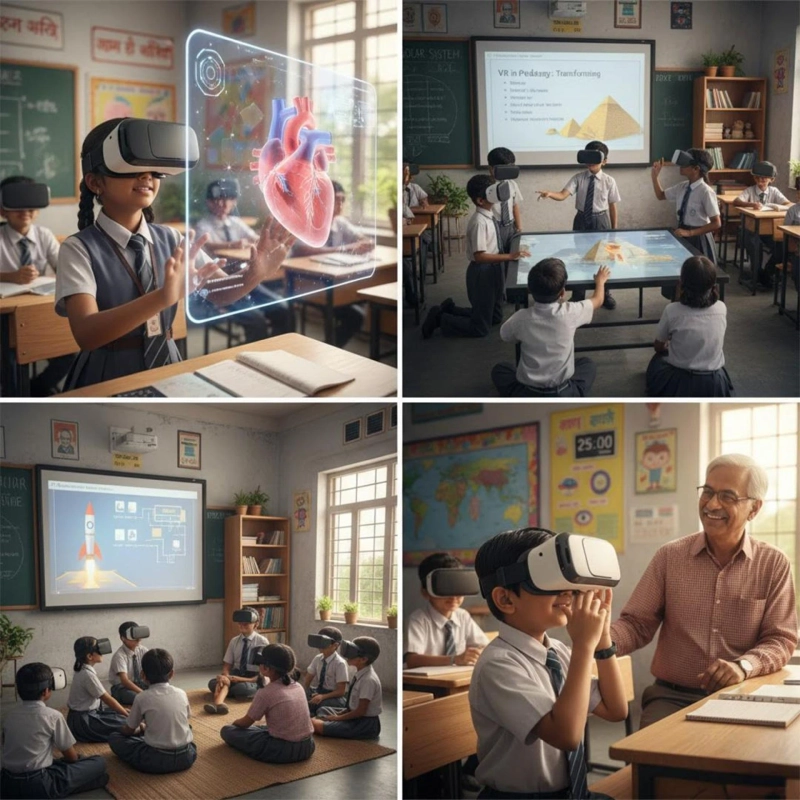
Virtual reality in schools is changing how students experience lessons daily. It creates engaging environments that improve understanding through interaction. As digital tools expand, educators adopt immersive methods for better learning outcomes. As a result, classrooms now blend technology with imagination. This supports curiosity and active participation. It also helps students understand subjects more deeply.
The Rise of Virtual Reality in School
Virtual learning tools have evolved as schools adopt immersive technologies steadily. Initially, institutions used basic simulations for demonstrations and visual support. However, modern systems now deliver interactive experiences that encourage exploration. As a result, educators integrate these tools to improve attention, memory retention, and concept clarity across subjects.
Use Cases of VR in Education
Virtual tools support many learning activities in academic settings. They help teachers explain complex topics through interaction. Moreover, students gain practical exposure without physical risks or limitations. The following use cases show how immersive systems improve understanding, flexibility, and engagement in structured learning environments.
Immersive 3D Environments and Real-Time Interaction
Immersive environments allow students to explore concepts visually and interact instantly. Learners observe processes, manipulate objects, and receive immediate feedback. Consequently, virtual reality in schools supports experiential learning that improves focus and comprehension. This approach helps students take part actively instead of just listening.
Personalised Learning Paths and Adaptive Scenarios
Personalised learning helps students progress at their own pace. It adjusts lessons based on performance and understanding. As a result, learners stay motivated and focused throughout activities.
- Custom starting points let learners begin based on what they already know.
- Real-time difficulty scaling adjusts tasks instantly as performance improves.
- Learners are guided to the right challenges based on their skills.
- Timed progress checks help to ensure steady learning without added pressure.
- It helps students revise concepts without feeling overloaded.
- Feedback helps students improve by correcting mistakes right away.
- Flexible goals help teachers match activities to learning goals.
The Future Outlook
Future classrooms will increasingly combine immersive tools with traditional teaching methods. Schools will be able to focus on AR VR labs that supports low cost, easy expansion, and matching the curriculum. As technology improves, devices will become lighter, safer, and easier to manage. Therefore, teachers will confidently integrate immersive experiences into everyday lessons.
Moreover, data related information will refine lesson planning and student assessments. Schools will choose low-cost options that fit in the curriculum. As collaboration features grow, students will learn together in shared virtual spaces. As a result, immersive education helps students gain digital skills for future jobs.
Virtual learning environments will continue reshaping education through innovative and accessibility. Also, they encourage curiosity, understanding, and practical knowledge development. When schools use immersive education responsibly, learning becomes more balanced. Overall, smart use of technology helps teachers teach better and keeps students interested.