



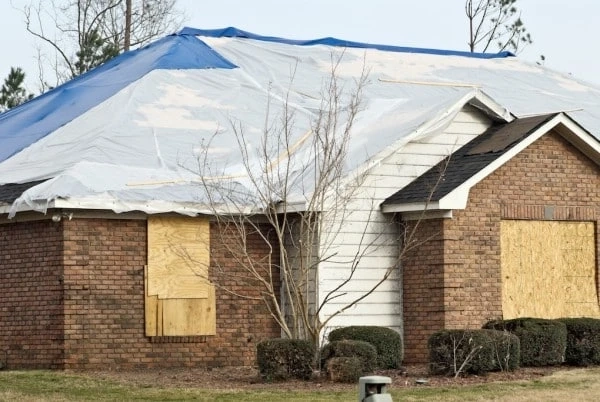
Tarping a roof is a temporary option for protecting a damaged roof from additional exposure to the elements. It is usually done in an emergency when v. Roof tarping is a quick and effective solution to prevent more damage to a building\'s interior while repairs or replacements are planned.
Roof tarping entails covering the damaged area with a heavy-duty tarp fastened to the roof with nails, screws, or weights. Waterproof and tear-resistant fabrics such as polyethylene, vinyl, or canvas are commonly used to make tarps.
One of the primary advantages of roof tarping is that it provides a quick and straightforward solution to a potentially hazardous scenario. In an emergency, time is of the essence, and roof tarping may be completed swiftly to prevent more interior damage. Roof tarping also provides temporary relief for building inhabitants who may have been displaced or had their daily lives interrupted due to the injury.
Another advantage of roof tarping in Fort Lauderdale is that it is a low-cost alternative. Tarping is a far less expensive choice than a complete roof replacement. It is also a solution that can be implemented without long planning or building phases.
Roof tarping is another versatile solution that may be utilized on various roof types, such as shingle, tile, metal, and flat roofs. This makes it an excellent choice for many structures, including residences, companies, and industrial facilities.
While roof tarping is a temporary remedy, it should be noted that it is not a long-term solution. Tarping is intended to provide temporary protection until permanent repairs or replacements can be completed. Tarps can deteriorate if left in place for a lengthy period, causing leaks and more damage to the roof.
It is also worth noting that roof tarping is not a do-it-yourself project. A professional roofing contractor\'s knowledge is required to assess the damage and carefully secure the tarp to prevent future damage. Professional roofing contractors have the equipment and skills to ensure the tarp is securely fixed and can resist extreme weather conditions.
Roof tarping can be utilized as a preventative strategy in addition to being employed in emergency scenarios. Tarping, for example, can shield a building\'s roof from damage before a storm arrives if it is in a region prone to severe weather conditions. This can save both time and money by avoiding costly repairs or replacements.
Conclusion :
Roof tarping is a last-ditch effort to keep a damaged roof from additional exposure to the elements. It is a quick and practical approach to prevent future damage to a building\'s interior while repairs or replacements are prepared. Roof tarping is extremely important in emergency scenarios in Fort Lauderdale, where severe weather events such as hurricanes are typical.
Roof tarping entails covering the damaged area with a heavy-duty tarp fastened to the roof with nails, screws, or weights. The tarp is meant to endure severe winds, rain, and other weather conditions and is custom-fitted to the damaged region of the roof.