



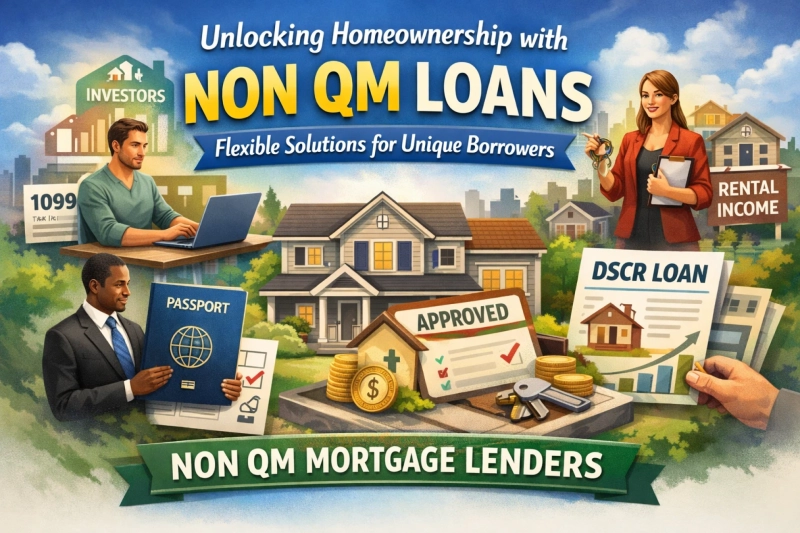
In today’s dynamic housing market, traditional mortgage rules don’t fit everyone. That’s where non QM loans step in — a flexible alternative for borrowers whose financial situations fall outside the rigid box of conventional underwriting. Whether you’re self-employed, an investor, or rely on non-traditional income, Non QM mortgage lenders can offer tailored solutions that help turn the dream of homeownership into reality.
What Are Non QM Loans?
Non QM loans (short for non-qualified mortgage loans) are mortgage products that don’t strictly comply with the standard underwriting rules set by federal regulators like the Consumer Financial Protection Bureau (CFPB). Unlike traditional “qualified mortgages,” which require steady W-2 income, strict debt-to-income ratios, and documented employment history, non QM options allow greater flexibility in how applicants demonstrate their ability to repay.
This flexibility doesn’t mean a lack of responsibility on the part of lenders — rather, Non QM mortgage lenders use alternative documentation and customized underwriting methods to assess borrowers’ financial fitness.
Why Non QM Mortgage Lenders Matter
For many borrowers, the typical path to a mortgage feels like navigating a maze. Traditional lenders often require:
- Two years of consistent salary income
- Strict credit score thresholds
- Debt-to-income ratios no higher than 43%
But these rules don’t reflect the reality for millions of Americans whose incomes come from diverse or irregular sources — independent contractors, gig workers, business owners, and real estate investors to name a few. Non QM mortgage lenders bridge that gap by offering loan programs tailored to real-world financial situations.
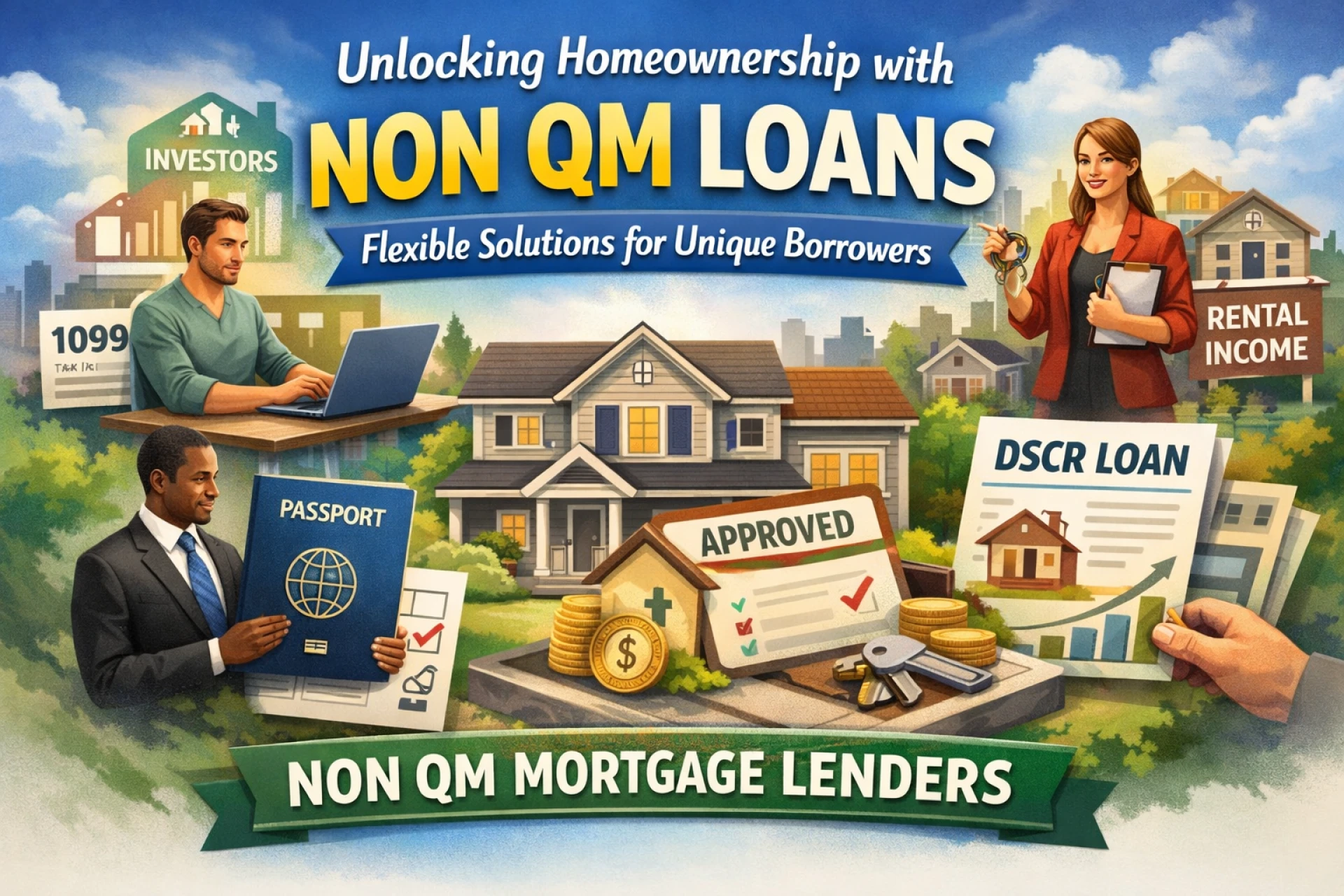
NonQMLending.com, for example, lists over 30 non-QM loan programs designed specifically for borrowers who might otherwise be turned down by conventional financing. These include options like DSCR (Debt Service Coverage Ratio) investor loans, bank statement loans, 1099-only documentation loans, and foreign national mortgage programs.
Who Can Benefit from Non QM Loans?
One of the biggest advantages of non QM financing is inclusivity. These loans are ideal for people who:
✔ Are Self-Employed or Freelancers
Self-employment often means variable income that doesn’t fit neatly into traditional lending formulas. Instead of W-2s and tax returns, some non QM lenders accept 12-24 months of bank statements, profit and loss statements, or 1099 earnings to show cash flow.
✔ Have Irregular or Non-W2 Income
Consultants, commissioned sales professionals, and freelancers with fluctuating monthly earnings can struggle to qualify for standard loans. Non QM mortgage lenders will often work with alternative income proof to paint a clearer picture of financial strength.
✔ Are Real Estate Investors
Investment property financing has unique challenges. For investor borrowers, lenders may evaluate rental income or debt service ratios rather than personal income alone. Programs like DSCR loans help investors leverage income potential from rental properties to secure financing.
✔ Have Experienced Recent Credit Events
Traditional lenders usually enforce “waiting periods” after credit events like bankruptcy or foreclosure. Some non QM lenders are more forgiving, allowing borrowers to secure a mortgage sooner, provided their overall financial situation is sound.
✔ Are Foreign Nationals or High-Asset Individuals
Borrowers without a U.S. credit history, such as foreign nationals, may find limited options with conventional lenders. Non QM loan programs often allow alternative credit evaluations and can factor in assets as part of the qualification process.
How Non QM Loans Work
Non QM loans aren’t “no-doc” or “risk-free” — they still involve careful underwriting and documentation. However, the criteria are broader and tailored to the borrower’s financial reality.
Here’s what sets non QM products apart:
- Alternative Income Verification
Bank statements, investment accounts, rental income, and other proof may replace traditional pay stubs and W-2s.
- Flexible Debt-to-Income Ratios
While conventional loans often cap DTI at 43%, non QM lenders may allow higher ratios based on overall financial strength.
- Unique Loan Structures
Some lenders offer interest-only payments, extended terms, or customized loan products that better fit your financial goals.
- Higher Down Payments or Rates
In exchange for flexibility, borrowers may face larger down payment requirements or interest rates slightly above conventional financing.
Choosing the Right Non QM Mortgage Lender
Selecting a Non QM mortgage lender is a crucial step in achieving your homeownership goals. Here are key considerations:
🔹 Experience in Alternative Lending – Look for lenders with a strong track record in non QM financing.
🔹 Program Variety – A wide selection of loan options ensures you’re more likely to find a fit for your unique financial profile.
🔹 Transparency in Fees – Be sure you understand interest rates, points, closing costs, and any potential prepayment penalties.
🔹 Clear Documentation Requirements – Know what documentation you need before applying to avoid delays.
Final Thoughts
Non QM loans have become an essential part of the mortgage landscape, offering flexibility and solutions that traditional lending often can’t provide. For borrowers who earn income unconventionally, have strong assets, or face unique financial circumstances, Non QM mortgage lenders open doors to homeownership and investment opportunities that might otherwise remain closed.
These loans aren’t just an alternative — they’re a tailored strategy that aligns lending with the real world. Whether you’re pursuing your first home, expanding your real estate portfolio, or refinancing existing property, exploring non QM lending options could be the key to achieving your financial goals.