


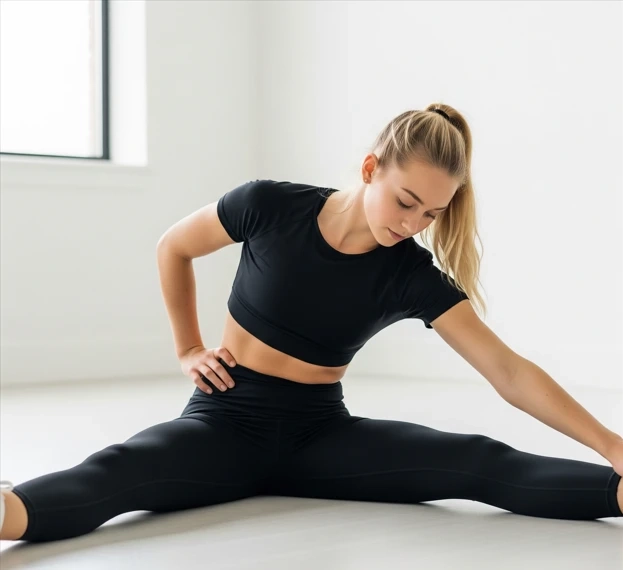
Stretching is the simplest method to maintain your body pain-free, strong, and flexible - but it's commonly neglected. Even if you sit at your desk all the time or you're in training regularly, you're going to find that stretching ensures that your muscles remain balanced and your joints remain loose.
Here at Stretch Burner, we aim to simplify and make practical the art of stretching. Here in this article, you'll discover the most prominent forms of stretches, how to do an easier lower back stretch, and some glute stretches beneficial for better posture, better movement, and increased comfort.
1. The Primary Types of Stretches
Not all stretches are equal. There is a reason behind each type and at which time it's at its best.
Static Stretching
Static stretching involves putting yourself in some position and holding it for 20 to 30 seconds - such as standing and leaning forward in an attempt to reach your toes or holding an arm across your chest.
- Best done at the end of the day or following exercise.
- Assists in relaxing and lengthening muscles.
- Don't jerk or squeeze the stretch.
Dynamic Stretching
Dynamic stretches require motion, like leg swings, circular arms, or hip turns.
- Ideal for warm-ups before exercising.
- Prepares your muscles for movement.
- Should be done slowly and in control.
PNF Stretching
It involves contracting and relaxing muscles in an effort to achieve the deep stretch.
- Employed in professional flexibility training.
- Superb with a partner or resistance band.
- Best after you've warmed your whole body.
When to Use Them:
- Dynamic stretches prior to exercising to warm you up.
- Apply static or PNF stretches following exercises to relax and recover.
2. Lower Back Relief: The Knees-to-Chest Stretch
Your lower back is the backbone of all that you do - walking, sitting, lifting, even standing. It's also one of the areas that stiffen with the hours of sitting. One of the best techniques for loosening it all out is the Knees-to-Chest Stretch.
How to Do It
- Lie flat on your back on something cushy.
- Get on your knees and hold the ground with your feet.
- Draw one knee across the chest and hold with both hands.
- Keep the other leg loose.
- Hold for 20 to 30 seconds, then switch sides.
- To go further in this position, bring both knees towards your chest and hold.
Tips for Comfort
- Be careful - do not pull too hard.
- Relax your shoulders and breathe deeply.
- Try it every day, especially before bed or after long sitting sessions.
These transitions progressively expand the back of the hips and spine gently, stimulate blood circulation, and release the muscles. It's ideal with other basic movements such as Cat-Cow, Child's Pose, or hip flexor stretch.
3. Glute Stretching to Reduce Hip and Back Pain
Your gluteal muscles - the muscles in the hip area and at the posterior of your butt - determine the motion in which you move. When your gluteal muscles get tight, your low back or hips become painful or stiff. Gluteal stretches regularly enhance flexibility, ease pain, and facilitate movement.
Figure - Four Stretch
- Get on your back and bring your right ankle across your left knee.
- Lift left leg and hold behind left thigh.
- Slowly elevate both legs toward you.
- For 20-30 seconds, hold and then switch sides.
Why it's effective: It engages deep glute muscles, which become short with sitting or marathon running.
Seated Glute Stretching
- Sit upright on a chair or the ground.
- Lift the one ankle across the other knee.
- Press the crossed knee outward with gentle force.
- Bend forward slightly to achieve greater extension.
Why it's effective: It opens your hips and loosens tension - just what you need during short work pauses.
Standing Glute Stretch
- Stand with your feet together and one ankle over the other knee.
- Sit your hips back like you're in a chair.
- Experiment with holding your balance and breath for some breaths.
Why it makes the list: This version creates balance with higher hip and glute flexibility.
Habitually going through these three stretches can relieve tension within your lower back and improve flexibility during the course of the day.
4. How These Stretches Work Together
Your entire frame is all connected - tight hips can cause pulling in the lower back region, and weak glutes can affect your stance. Stretching both your glutes and your lower back in balance helps all areas.
It may be something like this daily routine:
Morning: Do some active stretches such as leg swings or torso twists.
Daytime: Break to do seated glute stretch for brief periods.
Evening: Finish with the Knee-to-Chest stretch and static stretches at bedtime.
You do not need long durations - 10 to 15 minutes a day can generate quite a difference.
5. Common Issues to Prevent
Though it's easy to stretch, some poor habits may inhibit you from advancing or injure you.
- Do not push or jerk your body into the position.
- Breathe in and do not hold your breath.
- Stretch both sides equally.
Stop if you ever do sharp pain - the stretching should be like mild tension, never pain.
6. The Gains of Daily Stretching
Stretching doesn't only render you flexible - it also enhances your overall well-being.
Physical Effects
- Increases flexibility and motion.
- Better balance and poise.
- Suppresses muscle stiffness and pain.
- Speeds recovery of training.
Mental Benefits
- It calms and relaxes the body.
- Reduces tension and clears the mind.
- It improves concentration and general mood.
7. Begin with Little and Persist Daily
You won't need fancy gear or some long routine - just regularity. Start with some basic moves like the Knees-to-Chest Stretch and the Figure-Four Stretch, and move upwards.
Stretching is all about patience rather than intensity. Listen to your body, take deep breaths in, and allow yourself time to develop. Gradually you'll become looser, stronger, and more at ease in movement.
Conclusion
Stretching is one of the best investments you can ever make in your health. By mastering the right kinds of stretches and practicing simple movements for your gluteal area and low back area, you're going to minimize pain, be more supple, and move more easily throughout your life.