



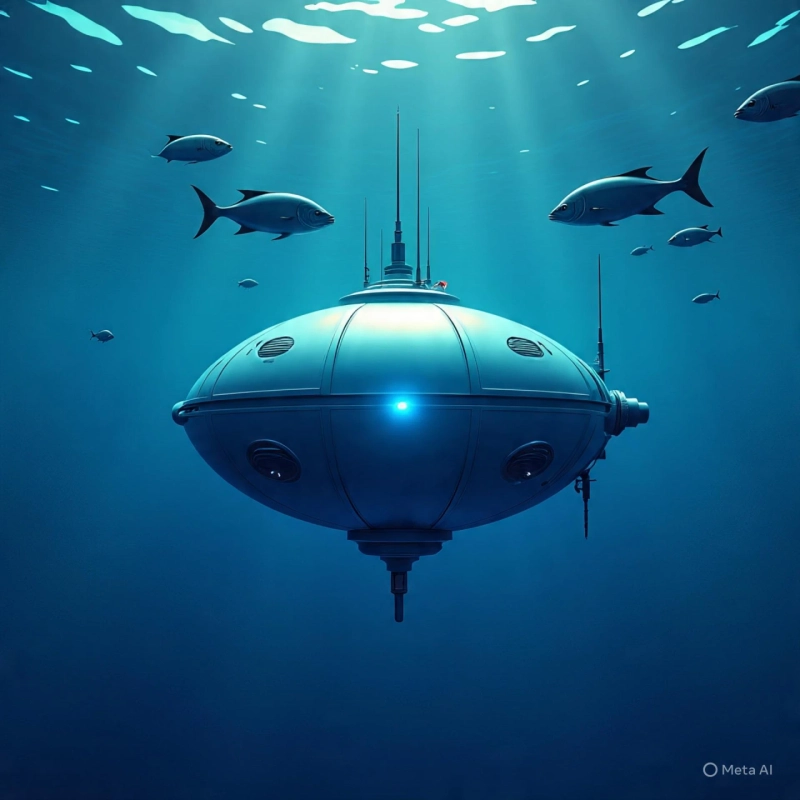
The ocean is one of the most mysterious parts of our planet. Covering more than 70% of the Earth’s surface, it hides an entire world beneath its waves. Sunken ships, underwater mountains, unique marine species, and coral reefs all remain largely unexplored. Human eyes cannot see very far underwater, especially in the deep ocean, because sunlight cannot penetrate beyond a few hundred meters. To explore and understand this hidden world, humans rely on technology. One of the most important tools in modern ocean exploration is the Underwater Sonar Pod.
An Underwater Sonar Pod is a device that uses sound waves to detect, map, and study objects underwater. Unlike cameras, which depend on light, sonar pods work by sending sound pulses through the water. When these pulses hit an object, they bounce back as echoes. The device then analyzes these echoes to determine the location, size, and shape of underwater objects.
Sonar pods are widely used by scientists, fishermen, naval forces, and underwater engineers. They help humans navigate safely, locate fish, study marine life, and find submerged objects like shipwrecks. In this article, we will explore everything about Underwater Sonar Pods: how they work, their types, applications, advantages, and future developments. The article is written in very simple language so anyone can understand the importance of this technology in exploring the deep ocean.
Understanding What an Underwater Sonar Pod Is
An Underwater Sonar Pod is a small but powerful device designed to detect and study objects underwater. The word “sonar” stands for Sound Navigation and Ranging, which means using sound waves to measure distances and locate objects.
The device works by sending sound waves, also called “pings,” into the water. When these waves hit an object like a fish, rock, shipwreck, or underwater structure, they bounce back as echoes. The pod then calculates the distance and size of the object by measuring the time it takes for the echoes to return. This information can be displayed visually as an image or map of the underwater area.
Underwater sonar pods are used by marine scientists to monitor ecosystems, by fishermen to locate fish, and by naval forces to detect submarines or mines. Engineers also use them to inspect pipelines, offshore platforms, or underwater construction sites. Modern sonar pods are compact, durable, and designed to work under extreme conditions like high pressure, cold temperatures, and darkness.
In simple terms, an Underwater Sonar Pod acts as the human eye in the deep ocean. It allows us to “see” and explore underwater areas that would otherwise remain invisible. The device is essential for research, navigation, fishing, and defense purposes.
How the Underwater Sonar Pod Works Effectively
The working principle of an Underwater Sonar Pod is based on the reflection of sound waves. The pod sends sound pulses into the water. When these pulses encounter an object, they bounce back as echoes. The pod measures the time it takes for the echoes to return and calculates the distance, size, and shape of the object.
There are two main types of sonar used in these pods: Active Sonar and Passive Sonar.
- Active Sonar: This system sends sound pulses and listens for the returning echoes. It is commonly used in sonar pods because it provides accurate and detailed results for detecting underwater objects and mapping the seafloor.
- Passive Sonar: This system does not emit sound. Instead, it listens for natural sounds produced by objects, marine animals, or vehicles in the water. Passive sonar is mainly used in naval operations for stealth detection.
Modern sonar pods include digital processing systems that convert echoes into visual maps or 3D images. Some advanced models also include GPS, real-time data transmission, and wireless connectivity.
Sound travels faster and farther in water than light, which is why sonar is more effective than cameras underwater. Even in dark or turbid water, sonar pods can provide precise information about the surroundings. This makes them extremely useful for safe navigation, research, and underwater exploration.
Different Types of Underwater Sonar Pods
There are several types of Underwater Sonar Pods, each designed for specific tasks:
- Single-Beam Sonar Pods: These emit a single sound beam directly downward. They are mainly used to measure water depth and detect objects below a vessel.
- Multi-Beam Sonar Pods: These emit multiple beams simultaneously, scanning wide areas and creating detailed 3D maps of the seafloor.
- Side-Scan Sonar Pods: These scan to the sides of the vessel, providing clear images of the seabed, sunken ships, and underwater structures.
- Forward-Looking Sonar Pods: These scan ahead of a moving vessel, helping detect obstacles and avoid collisions.
Each type of sonar pod has its advantages. Single-beam sonar is simple and efficient for basic measurements. Multi-beam sonar is ideal for large-scale mapping. Side-scan sonar helps locate specific objects or structures. Forward-looking sonar ensures safe navigation in unknown or dangerous waters.
Modern sonar pods are lightweight, portable, and durable. They can also be mounted on underwater drones or AUVs (autonomous underwater vehicles), allowing exploration of deep-sea areas that humans cannot reach. This variety of sonar pods makes them versatile tools for research, industry, and defense.
Applications and Uses of Sonar Pods
The Underwater Sonar Pod has many applications across different fields:
- Marine Research: Scientists use sonar pods to study fish populations, monitor coral reefs, and map underwater habitats. This provides valuable data about ecosystems and environmental changes.
- Fishing Industry: Fishermen use sonar pods to locate fish efficiently, saving time, fuel, and effort. Modern fishing vessels often have sonar systems integrated for better results.
- Naval Operations: Navies use sonar pods to detect submarines, mines, and other underwater threats. They also help with navigation in unknown waters.
- Underwater Construction: Engineers rely on sonar pods to inspect pipelines, offshore platforms, and bridges. Accurate data ensures safety and proper maintenance.
- Archaeology: Sonar pods help locate shipwrecks, sunken ruins, and other historical sites without the need for extensive diving.
Additionally, sonar pods are used in environmental monitoring, detecting pollution, sediment changes, and underwater damage. They allow researchers to gather information without disturbing marine life, making them eco-friendly tools for exploration.
Benefits of Using Underwater Sonar Pods
Using an Underwater Sonar Pod provides numerous benefits:
- High Accuracy: Sonar pods give precise information about the size, shape, and location of underwater objects. This is essential for navigation, research, and safety.
- Enhanced Safety: They reduce the need for divers in deep or dangerous waters, lowering the risk of accidents.
- Cost-Effective: Sonar pods cover large areas quickly, saving time and operational costs compared to manual inspections.
- Works in All Conditions: Sonar works effectively in darkness, murky water, or extreme depths, unlike cameras or human observation.
- Environmentally Friendly: When used responsibly, sonar pods do not harm marine life and help monitor underwater ecosystems.
The Underwater Sonar Pod is therefore a versatile, reliable, and essential tool for marine research, industrial operations, navigation, and environmental protection.
Future Developments in Sonar Pod Technology
The future of Underwater Sonar Pods is bright with technological advancements.
Artificial Intelligence (AI) is being integrated into sonar systems to automatically identify objects, analyze patterns, and provide real-time insights. This will make underwater exploration faster and more precise.
Next-generation sonar pods are expected to include 3D and 4D imaging, creating detailed visualizations of underwater environments. These advancements will help scientists, engineers, and naval officers make better decisions.
Integration with autonomous underwater vehicles (AUVs) allows sonar pods to explore extreme depths, collect data, and map areas unreachable by humans. Eco-friendly designs are also being developed to minimize disturbances to marine life.
In the coming years, the Underwater Sonar Pod will continue to revolutionize ocean exploration, environmental monitoring, and underwater industrial operations.
Conclusion
The Underwater Sonar Pod has changed the way humans explore and understand the ocean. It provides a safe, accurate, and efficient method to map the seafloor, locate objects, and study marine life. From sunken ships to coral reefs, sonar pods allow us to explore areas that were once invisible.
With technological improvements, sonar pods are becoming smarter, lighter, and more versatile. They are vital for research, naval operations, fishing, and environmental monitoring. The Underwater Sonar Pod remains a key technology for discovering the mysteries of the deep sea.
Frequently Asked Questions (FAQs)
1. What is an Underwater Sonar Pod?
It is a device that uses sound waves to detect, map, and study underwater objects and environments.
2. How does an Underwater Sonar Pod work?
It sends sound pulses that bounce back as echoes when they hit objects. The device analyzes these echoes to create images and measure distances.
3. Who uses sonar pods?
Marine scientists, fishermen, navies, and underwater engineers use sonar pods for research, navigation, and industrial purposes.