


Water damage is one of the most common—and most expensive—surprises a homeowner can face. Whether caused by a burst pipe, a leaking roof, a failed appliance, or a severe storm, the price tag for water damage restoration depends on many moving parts. In 2025, homeowners should expect costs to reflect not only the scope of the damage but also regional labor and materials markets, contamination level, and how quickly mitigation begins. This guide breaks down what drives cost, realistic price ranges you’ll see in 2025, how insurance usually plays a role, and practical steps to keep restoration bills from ballooning.
Quick headline numbers (what you’ll typically see in 2025)
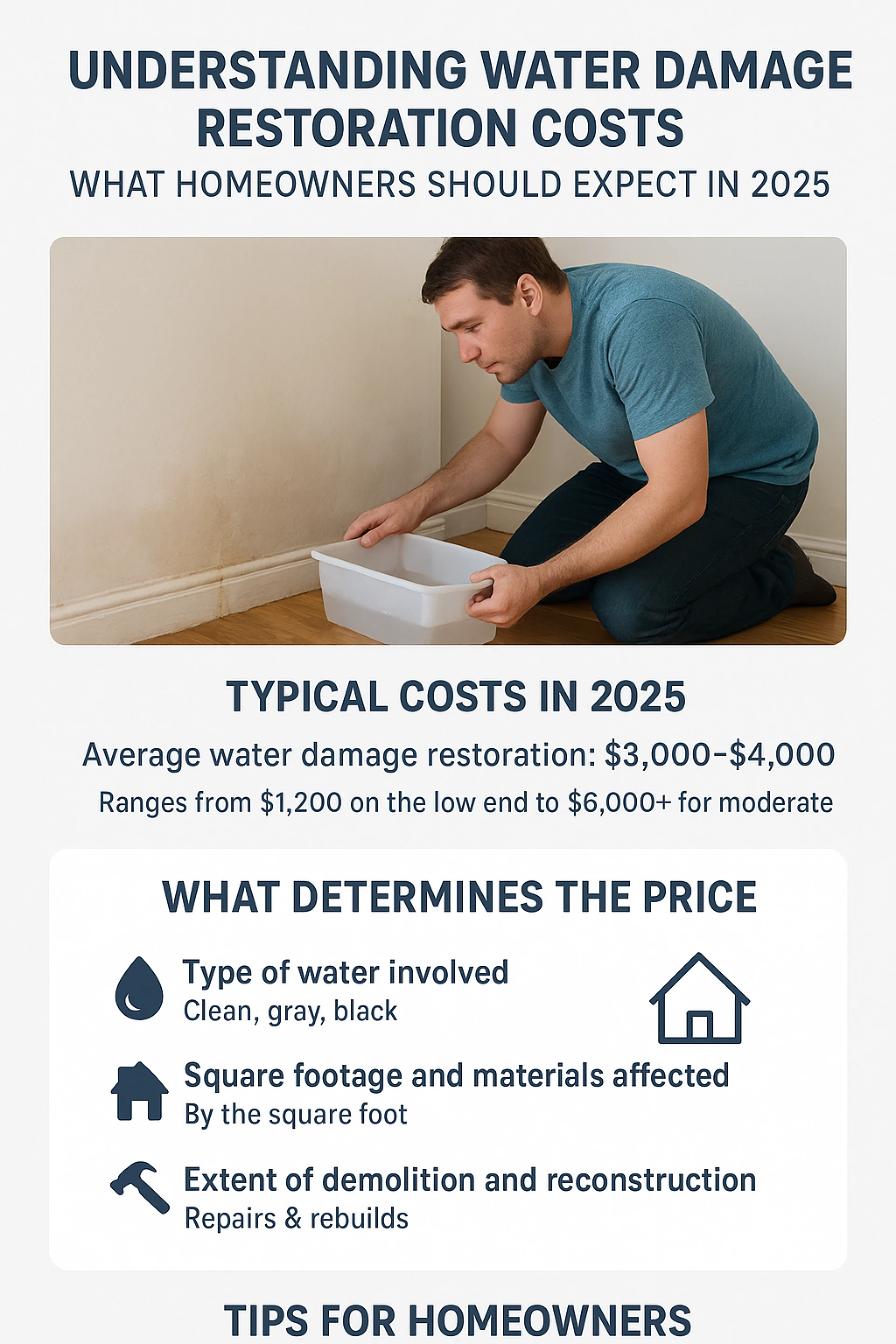
For single-event restoration jobs in the U.S., industry trackers in 2025 report national averages in the low-to-mid thousands. Typical average figures most homeowners encounter are roughly $3,000–$4,000 for a standard water-damage restoration project, with typical ranges stretching from about $1,200 on the low end to $6,000+ for moderate jobs. Larger flood events or jobs that require structural repairs and mold work can push totals into the tens of thousands. These national estimates are useful as ballpark figures, but your final cost will depend heavily on the factors covered below.
What determines the price: the main cost drivers
- Type of water involved (clean, gray, black): Clean water from an overflowed sink or supply line is cheaper to remediate than gray water (appliance discharge, slightly contaminated) or black water (sewage, floodwater), which demand more protective gear, disposal, and often more demolition. Jobs involving black water commonly add significant labor and hazardous-waste handling fees.
- Square footage affected and materials saturated: Restorers often estimate by the square foot. Typical ranges in 2025 run roughly $3–$7.50 per square foot for mitigation, with additional costs for replaced flooring, drywall, and cabinet work. If water soaks into subflooring, insulation, or structural framing, expect higher repair and drying costs.
- Extent of demolition and reconstruction: Extraction and drying are only part of the job. Removing and replacing damaged drywall, insulation, flooring, and trim increases costs substantially. Structural repairs (roofs, framing, HVAC) are billed separately and can easily become the largest line items.
- Mold containment and remediation: If mold is present or likely (water was standing >24–48 hours), remediation becomes necessary. Typical mold remediation jobs vary widely but commonly cost in the low thousands and can escalate depending on square footage and containment complexity.
- Equipment, time, and emergency response: Specialized equipment (industrial pumps, air movers, dehumidifiers) and rental time contribute to cost. Emergency or after-hours calls and rapid response teams often carry a surcharge.
- Location and season: Labor rates, permit costs, and material prices vary by region. Storm seasons or areas with frequent flooding may see higher demand and higher rates.
Typical cost breakdown (line items you’ll see on a quote)
- Inspection & assessment: $150–$600 — initial survey, moisture mapping, documentation.
- Water extraction & pumping: $500–$3,000 — depending on volume and equipment.
- Drying & dehumidification: $300–$3,500 — equipment rental and monitoring.
- Cleaning & sanitization: $300–$2,500 — odor control, disinfecting, and salvage cleaning.
- Mold remediation (if present): $1,200–$7,000+ — containment, removal, HEPA vacuuming, testing.
- Repairs & reconstruction: $1,500–$20,000+ — drywall, flooring, cabinets, structural work (very variable).
The percentages above will change dramatically depending on whether the job is mostly mitigation (short term) or a full restoration (mitigation + reconstruction).
Insurance: what to expect and what might be excluded
Most standard homeowner policies cover sudden and accidental water damage (for example, a burst pipe), but they often exclude damage from neglected maintenance or long-term seepage. Flooding from external sources (storm surge, overflowing rivers) usually requires a separate flood policy. When you call your insurer, document everything (photos, videos, notes) and get a written claim number. Restorers frequently work with insurance adjusters—some companies will even bill an insurer directly—but you should verify what’s covered before signing any major repair contracts. Expect deductibles and possible depreciation adjustments when repair costs are calculated. (Always read your policy or consult your agent for specifics.)
Why quick action saves money
Time is money in water damage. Rapid extraction and drying reduce the chance of secondary damage—mold growth, swelling of wood, and deterioration of finishes—that often accounts for the lion’s share of repair costs. Industry guides and restoration firms consistently emphasize that early mitigation can reduce total restoration costs by preventing escalation into structural or mold remediation work. This is one of the most cost-effective things a homeowner can do: call a professional mitigation team quickly, document the scene for insurance, and follow guidance on shutting off utilities or stopping the source, if safe to do.
DIY vs. professional restoration: when to call the pros
Small spills or limited clean-water incidents can sometimes be handled with shop vacs and home dehumidifiers, but be cautious. Call professionals when:
- Water contamination is unknown or appears to be gray/black.
- Water has soaked into walls, ceilings, or subflooring.
- Moisture has been present more than 24–48 hours.
- You detect mold, structural sagging, or insulation saturation.
Professionals bring moisture meters, thermal imaging, industrial drying systems, containment equipment, and training in safe removal—all of which protect health and preserve more of your home’s materials.
Ways to reduce your bill (smart, practical tips)
- Act immediately: The faster you extract water and start drying, the less demolition will be needed.
- Document everything for insurance: Photos, timestamps, receipts for emergency services (hotel, temporary repairs) can help your claim.
- Ask for itemized bids: Get 2–3 quotes and ensure each is itemized so you can compare line-by-line.
- Salvage what you can: Professional content restoration can often save furniture, documents, and electronics—ask for this service if needed.
- Consider preventive upgrades: Backflow valves, water-sensing alarms, automatic shutoff valves, and regular maintenance on appliances can prevent future losses and may lower premiums over time.
Common pricing pitfalls and red flags
- One-price “fix-it-all” quotes: Beware of vague or blanket pricing without detailed scope.
- No written contract or insurance communications: Everything should be written and timestamped.
- Pressure to sign immediately: While quick action is important, high-pressure sales tactics are a red flag—get at least a basic second opinion if something feels off.
- Restorers offering to “work only with the insurance” but refuse to provide itemized documentation: Transparency matters.
Long-term considerations: mold, structural issues, and resale
Even after visible repairs are complete, water damage can have lingering consequences: hidden mold, corroded systems, and reduced property value if not fully and properly corrected. Documented professional remediation and repairs protect both your health and future resale prospects. If mold is found later, having documented mitigation and remediation efforts helps with liability and resale disclosures.
Final checklist for homeowners facing water damage in 2025
- Make safety first: Turn off electricity and gas if water threatens wiring or appliances (only if safe).
- Stop the water source if possible (shut off valves).
- Document with photos and short videos; note times and actions taken.
- Call your insurer to report the claim and ask about coverage steps.
- Call a reputable restoration company for an immediate mitigation plan and a written estimate.
- Keep receipts for any emergency repairs, temporary housing, or related expenses.
- Follow up with reconstruction quotes and check references before hiring for rebuild work.
Bottom line
In 2025, water damage restoration remains a service where small, early actions often prevent much larger costs later. Expect a typical restoration to run in the low thousands for modest jobs, but be prepared for significant increases if the loss involves widespread contamination, mold, structural repairs, or flood damage. Arm yourself with documentation, quick action, and multiple written bids—those steps are the best defense against surprise bills and unnecessary repairs.
#WaterDamageRestorationCost
#WaterDamageRestoration
#WaterDamageRepair
#WaterDamageMold
#WaterDamageMoldRemediation
#WaterDamageRemediation
#WaterDamageCeiling
#WaterDamageRestorationNearMe