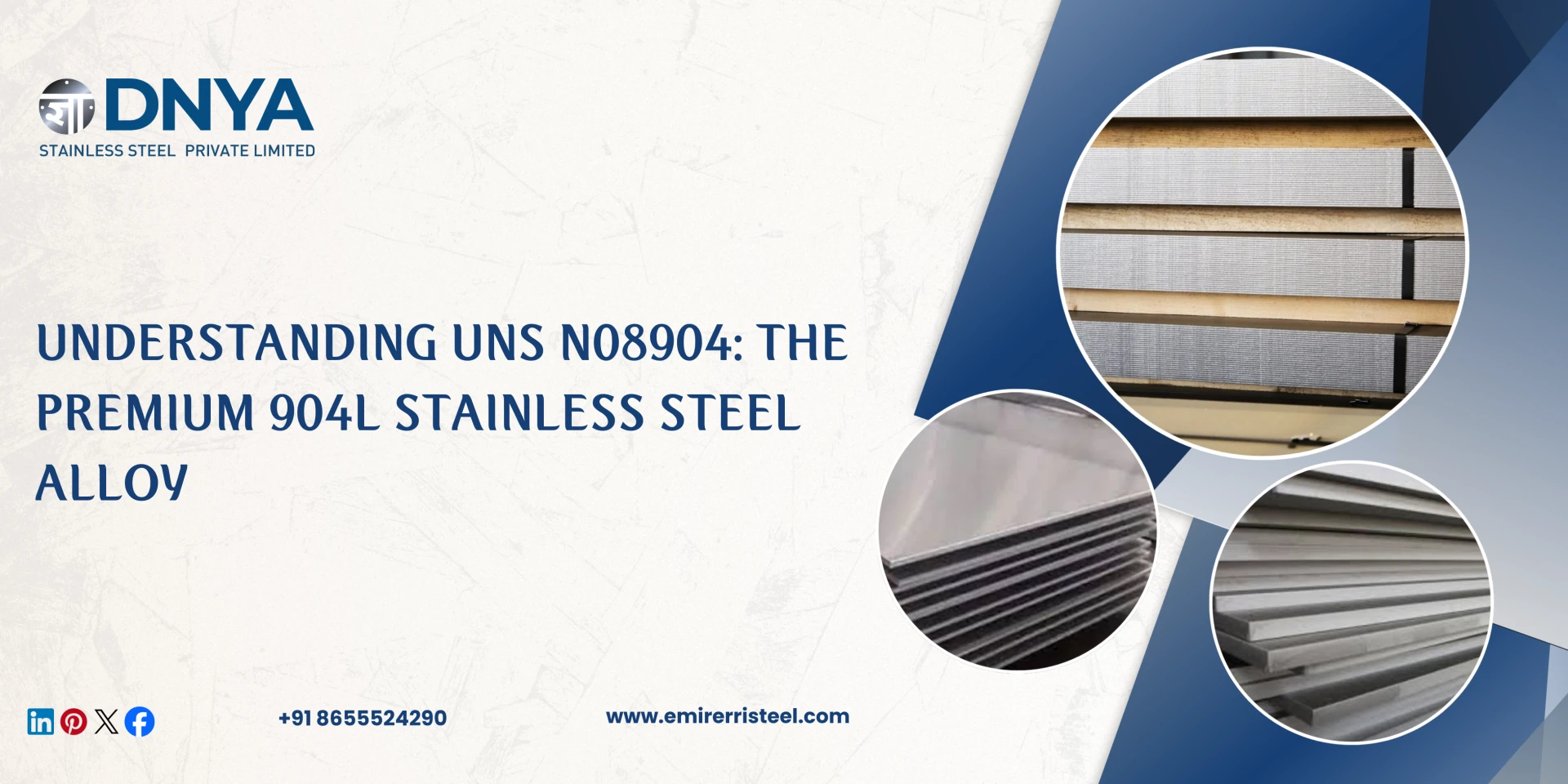
UNS N08904 is a high-performance austenitic stainless steel known globally for its remarkable corrosion resistance and mechanical strength. Often specified in demanding industrial environments, this alloy is synonymous with 904L stainless steel, particularly when corrosion resistance and durability are essential. Engineers and material specialists often refer to this as 904L UNS N08904 to highlight both its grade and its unique corrosion-resistant chemistry.
In this comprehensive guide, we’ll explore the UNS N08904 material, its equivalents, chemical and mechanical characteristics, applications, and why it’s a go-to choice for aggressive industrial environments.
What Is UNS N08904?
At its core, UNS N08904 is the Unified Numbering System designation for 904L stainless steel — a super-austenitic stainless steel that incorporates high levels of nickel, chromium, molybdenum, and copper. Compared to other stainless steels, this alloy delivers superior corrosion resistance, especially against reducing acids and chloride-based environments.
The low-carbon nature of UNS N08904 also reduces the risk of sensitization during welding, meaning it maintains excellent corrosion resistance even after fabrication.
UNS N08904 Equivalent and 904L 1.4539
One key factor when specifying UNS N08904 material is understanding its international equivalents. Engineers often encounter different standards and designations globally. Fortunately, this grade is widely recognized and cross-referenced in numerous standards:
- AISI/ASME: 904L
- UNS: N08904
- DIN/EN/Werkstoff: 1.4539 (X1NiCrMoCu25-20-5)
- JIS: SUS 904L
- AFNOR: Z2 NCDU 25-20
- Swedish SS: 2562
These equivalents ensure that materials sourced from different regions meet the same performance criteria, making 904L UNS N08904 a truly global material.
Chemical Composition of 904L UNS N08904
The excellent corrosion resistance of 904L UNS N08904 arises from its optimized alloy chemistry. The major elements and their roles include:
- Nickel (Ni): 23.0–28.0% – Enhances formability and corrosion resistance.
- Chromium (Cr): 19.0–23.0% – Crucial for oxidation and general corrosion resistance.
- Molybdenum (Mo): 4.0–5.0% – Improves resistance to pitting and crevice corrosion.
- Copper (Cu): 1.0–2.0% – Aids resistance to reducing acids like sulfuric acid.
- Carbon (C): ≤0.02% – Low carbon minimizes carbide precipitation and enhances weldability.
- Manganese (Mn), Silicon (Si), Phosphorus (P), Sulfur (S): Minor elements balanced to optimize mechanical behavior and industrial usability.
This carefully balanced chemistry gives UNS N08904 material its signature performance in harsh chemical and marine environments.
Mechanical Properties of UNS N08904
Along with its corrosion resistance, 904L stainless steel delivers reliable mechanical performance. Typical properties include:
- Tensile Strength: ≥ 490 MPa
- Yield Strength (0.2% offset): ≥ 220 MPa
- Elongation: ≥ 35%
- Hardness: ≤ 90 HRB
These properties make 904L UNS N08904 suitable for structural components that must withstand both corrosive attack and mechanical loading.
Corrosion Resistance: A Major Advantage
One of the defining strengths of UNS N08904 is its superior corrosion resistance compared to standard austenitic grades such as 304L or 316L stainless steels:
- Sulfuric Acids and Reducing Environments: The significant copper content improves resistance to strong reducing acids — environments in which many stainless steels fail.
- Chloride Stress Corrosion Cracking: High nickel and molybdenum levels enhance resistance to chloride damage, a common issue in seawater and industrial brines.
- Pitting and Crevice Corrosion: The alloy maintains excellent performance in localized corrosion zones thanks to its balanced microstructure and alloying elements.
This robustness is precisely why 904L 1.4539 is preferred in aggressive service environments where long-term reliability is essential.
Typical Applications of 904L Stainless Steel
Due to its blend of corrosion resistance and mechanical strength, UNS N08904 material is widely used across industries including:
- Chemical Processing: Reactors, piping, and heat exchangers handling sulfuric and phosphoric acids.
- Oil & Gas: Offshore equipment, desalination units, and robust piping systems.
- Marine and Seawater Equipment: Condensers, cooling systems, and seawater piping.
- Pharmaceutical and Food Processing: Hygienic process equipment with strict corrosion standards.
- Power Generation: Flue gas desulfurization, cooling systems, and boiler components.
In all these sectors, 904L UNS N08904 ensures extended service life, reduced maintenance, and dependable performance.
Fabrication and Welding
Despite its high alloy content, UNS N08904 stainless steel shows good weldability and fabrication behavior. Its low carbon content prevents sensitization, making post-weld corrosion resistance reliable. It can be cold or hot formed, although higher forming forces may be required compared to lower alloyed materials.
Machining is moderate, typically requiring sharp tools and controlled speeds due to the alloy’s tough microstructure.
Conclusion
UNS N08904 represents a class of high-performance stainless steel engineered for demanding, corrosive environments. Known globally through its equivalents such as 904L UNS N08904 and 904L 1.4539, this material combines excellent corrosion resistance, sound mechanical properties, and reliable fabrication characteristics. Whether in chemical plants, marine applications, or power generation, UNS N08904 material continues to be a top choice for engineers seeking durability and performance.Understanding UNS N08904: The Premium 904L Stainless Steel Alloy