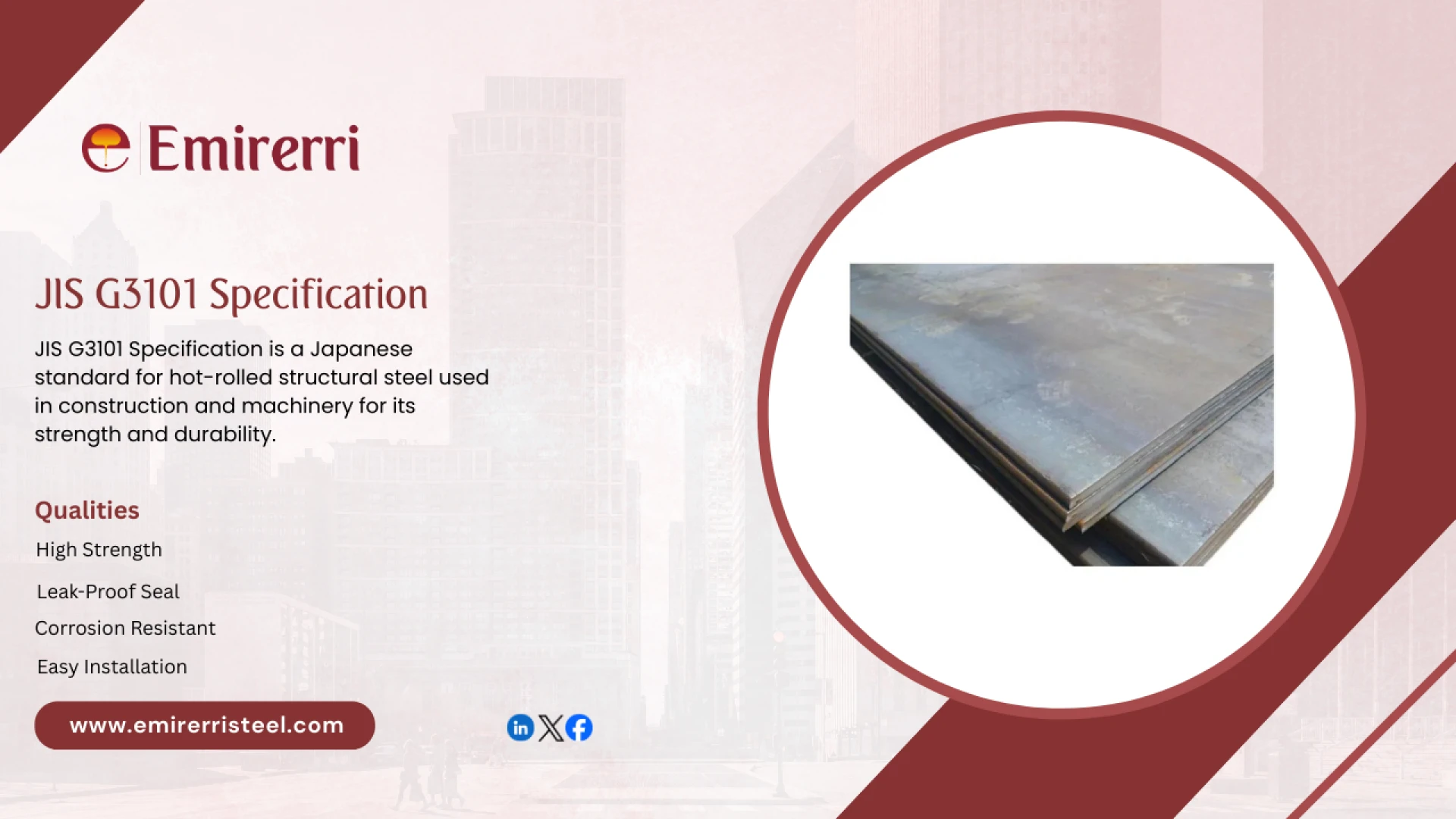
The JIS G3101 Specification is one of the most widely recognized standards for carbon steel used in structural applications. Developed by the Japanese Industrial Standards (JIS), it defines the requirements for hot-rolled steel used in construction and engineering projects. Companies worldwide rely on this standard to ensure consistent quality, mechanical properties, and durability in structural steel products.
What is JIS G3101 Specification?
The JIS G3101 Specification applies to hot-rolled steel plates, sheets, and strips intended for structural use. It is primarily used for applications that require reliable strength, toughness, and weldability. This specification sets the foundation for producing steel suitable for bridges, buildings, industrial machinery, and other heavy-duty structures.
One of the key advantages of steel manufactured under the JIS G3101 Specification is its balance between strength and ductility. This makes it an ideal choice for construction projects where safety and stability are critical.
Types and Grades under JIS G3101
The JIS G3101 Specification covers a variety of steel grades, each designed for different structural applications. The common grades include:
- SS400: This is the most popular general-purpose structural steel under the JIS G3101 standard. It is widely used in construction and general engineering projects due to its excellent weldability and moderate tensile strength.
- SS490: Offers higher tensile strength compared to SS400, making it suitable for structures that require additional load-bearing capacity.
- SM400 / SM490: These are structural steels with guaranteed minimum yield strengths, commonly used in bridges, buildings, and heavy machinery frameworks.
Each grade under the JIS G3101 Specification has specific chemical composition limits and mechanical properties that manufacturers must adhere to, ensuring consistent performance across different applications.
Chemical Composition
The chemical composition is a critical aspect of the JIS G3101 Specification. It ensures the steel has the desired mechanical properties, corrosion resistance, and weldability. The primary elements specified include:
- Carbon (C): Controls hardness and strength. The limit varies depending on the grade.
- Manganese (Mn): Improves tensile strength and toughness.
- Phosphorus (P) and Sulfur (S): Kept at low levels to enhance ductility and prevent brittleness.
For example, SS400 typically contains a maximum carbon content of 0.25%, manganese between 0.35–0.60%, and low phosphorus and sulfur content (0.050% maximum each). These limits ensure that the steel can be used safely in structural applications without compromising strength or ductility.
Mechanical Properties
The mechanical properties defined in the JIS G3101 Specification ensure that structural steel can withstand the stresses and loads it will encounter in service. Key mechanical properties include:
- Tensile Strength: The maximum stress the steel can withstand while being stretched before breaking.
- Yield Strength: The stress at which steel begins to deform permanently.
- Elongation: Measures ductility, indicating how much the steel can stretch without breaking.
For SS400, the tensile strength ranges between 400–510 MPa, with a minimum yield strength of 245 MPa and elongation of 20% or more. These properties make it suitable for load-bearing structures, ensuring safety and longevity.
Applications of JIS G3101 Structural Steel
Steel produced according to the JIS G3101 Specification finds application across multiple industries due to its reliable performance:
- Construction: Used for beams, columns, and frameworks in residential and commercial buildings.
- Bridges: High-strength grades like SS490 and SM490 are suitable for heavy-load structures.
- Industrial Machinery: Provides durability and stability in machine frames and supporting structures.
- Shipbuilding and Automotive: Certain grades of JIS G3101 steel are also suitable for manufacturing vehicle chassis and ship components due to their toughness and weldability.
The versatility of JIS G3101 steel makes it a preferred choice for engineers and architects who prioritize both strength and workability.
Standards Compliance and Testing
Adherence to the JIS G3101 Specification requires strict testing and quality control during production. Common testing methods include:
- Tensile Tests: To verify yield and tensile strength.
- Bend Tests: To ensure ductility and bending performance.
- Impact Tests: To determine toughness, particularly in cold environments.
Manufacturers supplying JIS G3101 steel ensure that all products meet these standards, providing consistency, safety, and reliability for structural applications.
Advantages of JIS G3101 Steel
Using steel compliant with the JIS G3101 Specification offers several advantages:
- High consistency in quality and performance.
- Excellent weldability for easy fabrication.
- Balanced strength and ductility suitable for a wide range of applications.
- Compliance with internationally recognized standards, promoting confidence in global projects.
Conclusion
The JIS G3101 Specification remains a cornerstone in structural steel manufacturing. From construction projects to industrial machinery, this specification ensures that steel products meet the necessary strength, durability, and safety requirements. Engineers, architects, and manufacturers worldwide rely on JIS G3101 steel to deliver reliable and high-performing structural solutions.
For businesses seeking quality steel that meets international standards, understanding and utilizing products under the JIS G3101 Specification is essential. Whether it’s SS400 for general construction or higher-grade SS490 for heavy-duty structures, this specification provides a trusted benchmark for excellence in structural steel.