
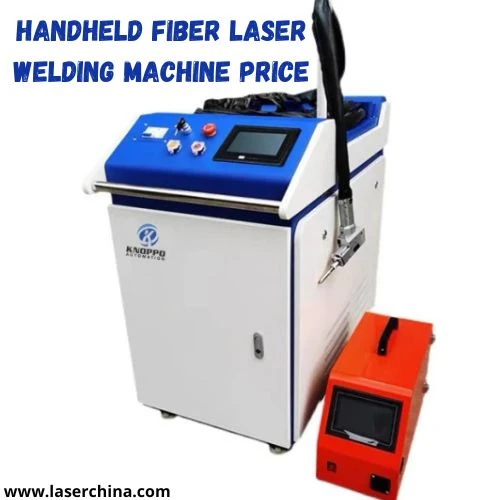
In the fast-changing landscape of metal fabrication and manufacturing, the demand for efficient, portable, and precise welding solutions continues to rise. Among these modern technologies, the handheld fiber laser welding machine has become a trusted tool for professionals seeking both flexibility and reliability. Yet, one of the most common questions remains — what determines the handheld fiber laser welding machine price?
Understanding the pricing factors is not only about comparing numbers. It’s about understanding how power, performance, and design align to meet the unique needs of your operation. This article explores every crucial aspect that affects cost, usage, and long-term value of a handheld fiber laser welder.
Market Overview of Handheld Fiber Laser Welding Machines
The metal fabrication sector has evolved dramatically over the past decade. Traditional welding techniques such as MIG, TIG, and arc welding, while still relevant, are gradually being complemented or replaced by laser welding systems. The handheld fiber laser welding machine has proven to be a practical solution for industries demanding clean welds, high precision, and minimal post-processing.
In recent years, the market has seen substantial growth in the adoption of handheld laser welders. This surge is primarily due to increasing demand in industries such as automotive, aerospace, construction, and even consumer product manufacturing. The handheld fiber laser welding machine price varies depending on region, manufacturer, and technical specifications, but global competition has driven more accessible pricing without compromising quality.
Factors That Influence Handheld Fiber Laser Welding Machine Price
When exploring the handheld fiber laser welding machine price, there isn’t a single fixed rate. The total cost depends on several variables that collectively define machine performance and longevity. Below are the main elements influencing the pricing structure.
1. Laser Power Output
Laser power is a key determinant of the machine’s capability. Models are typically available in 1000W, 1500W, 2000W, and even 3000W variations. The higher the power output, the more expensive the unit becomes. High-power machines can handle thicker materials and sustain longer working periods, which makes them more suitable for industrial-scale operations.
2. Laser Source Brand and Quality
The laser source — often from reputable brands such as IPG, Raycus, or Max — is one of the most critical components affecting cost. Machines equipped with premium laser sources tend to be priced higher due to their stable beam quality and long service life. This directly impacts welding precision and operational reliability.
3. Cooling System
Effective cooling ensures that the laser operates within optimal temperature ranges. Handheld laser welders may include air-cooled or water-cooled systems. Water cooling systems, though more efficient for heavy-duty use, usually increase the overall handheld fiber laser welding machine price due to their added complexity.
4. Portability and Design
Ergonomic design and compact structure add significant value. Machines built with lightweight welding guns, user-friendly interfaces, and flexible cable management systems often command a higher price tag. This is because they improve ease of operation and reduce operator fatigue, especially during prolonged use.
5. Automation and Control System
Modern laser welders feature intelligent control panels with digital displays, real-time parameter adjustments, and safety features. These smart controls enhance precision but also influence cost. The more advanced the software integration, the higher the handheld fiber laser welding machine price tends to be.
6. Material Compatibility
Some machines are optimized for specific metals like stainless steel, aluminum, copper, or carbon steel. The broader the material compatibility, the more advanced the configuration required — which affects price.
7. After-Sales Service and Warranty
A comprehensive warranty and technical support add value to the purchase. Manufacturers offering extended warranties and 24/7 support tend to position their products at a higher pricing level, reflecting confidence in quality and reliability.
Typical Price Range
Depending on configuration, brand, and power, the handheld fiber laser welding machine price generally falls between USD 4,000 and USD 12,000. Entry-level models designed for small workshops may be closer to the lower end of the range, while high-end models with higher wattage, premium sources, and advanced cooling systems can exceed the upper range.
Custom options, such as integrating wire feeders or multi-function laser systems (welding, cutting, and cleaning combined), can further elevate costs. However, the investment pays off in productivity and reduced operational expenses over time.
Industrial Applications and Value
The versatility of handheld fiber laser welders makes them suitable for a wide variety of industries. Fabricators use them for joining thin metal sheets, frames, tubes, and even complex assemblies. Automotive manufacturers rely on them for precision welding of car body components, while construction professionals use them for metal railings and structural welding.
In smaller workshops, these machines allow artisans and repair technicians to perform precision work without bulky setups. The handheld fiber laser welding machine price becomes justifiable when considering its multi-material capability and reduced rework requirements.
Comparing Global Markets
Pricing varies across regions due to manufacturing costs, import duties, and brand reputation.
- China remains a major hub for production, offering competitive pricing without compromising performance.
- Europe and the U.S. typically have higher prices due to labor costs, certification standards, and brand prestige.
- Emerging markets in Southeast Asia, Latin America, and the Middle East are adopting Chinese and European models depending on their industrial scale.
Thus, understanding regional pricing trends helps buyers determine where to source the most cost-effective solution.
Why Investing in Quality Matters
When purchasing, it’s essential not to focus solely on the initial handheld fiber laser welding machine price. Long-term value comes from energy efficiency, lower maintenance, and extended service life. A higher upfront cost often translates into reduced operational expenses in the long run.
Professional buyers also consider safety features, software stability, and component quality. Poor-quality welders may require frequent servicing, resulting in downtime and lost productivity. In contrast, reputable brands maintain performance consistency even under continuous operation.
Evaluating Total Cost of Ownership
Beyond purchase price, operational expenses contribute significantly to the total cost of ownership. These include electricity consumption, consumables, maintenance, and operator training. Fortunately, handheld laser welders are known for low power usage and minimal consumables.
Their durability and ability to produce clean welds without filler materials or grinding reduce additional costs over time. Hence, evaluating total cost rather than upfront handheld fiber laser welding machine price provides a clearer picture of long-term savings.
Purchasing Considerations
Before investing, professionals should evaluate their production requirements:
- Material types and thickness levels
- Required welding speed and accuracy
- Working environment (indoor or outdoor)
- Frequency of use
These parameters help determine the optimal power rating and configuration, ensuring that the chosen model aligns with both budget and operational demands.
Final Thoughts
When it comes to choosing the right handheld fiber laser welding machine, understanding its pricing structure is essential. The handheld fiber laser welding machine price represents not just the cost of the equipment but the value of performance, durability, and productivity that follows.
A thoughtful investment can transform welding efficiency and quality, leading to better results and long-term savings. Whether for industrial manufacturing or small-scale production, recognizing what drives the price helps professionals make confident, informed decisions that enhance both output and profitability.