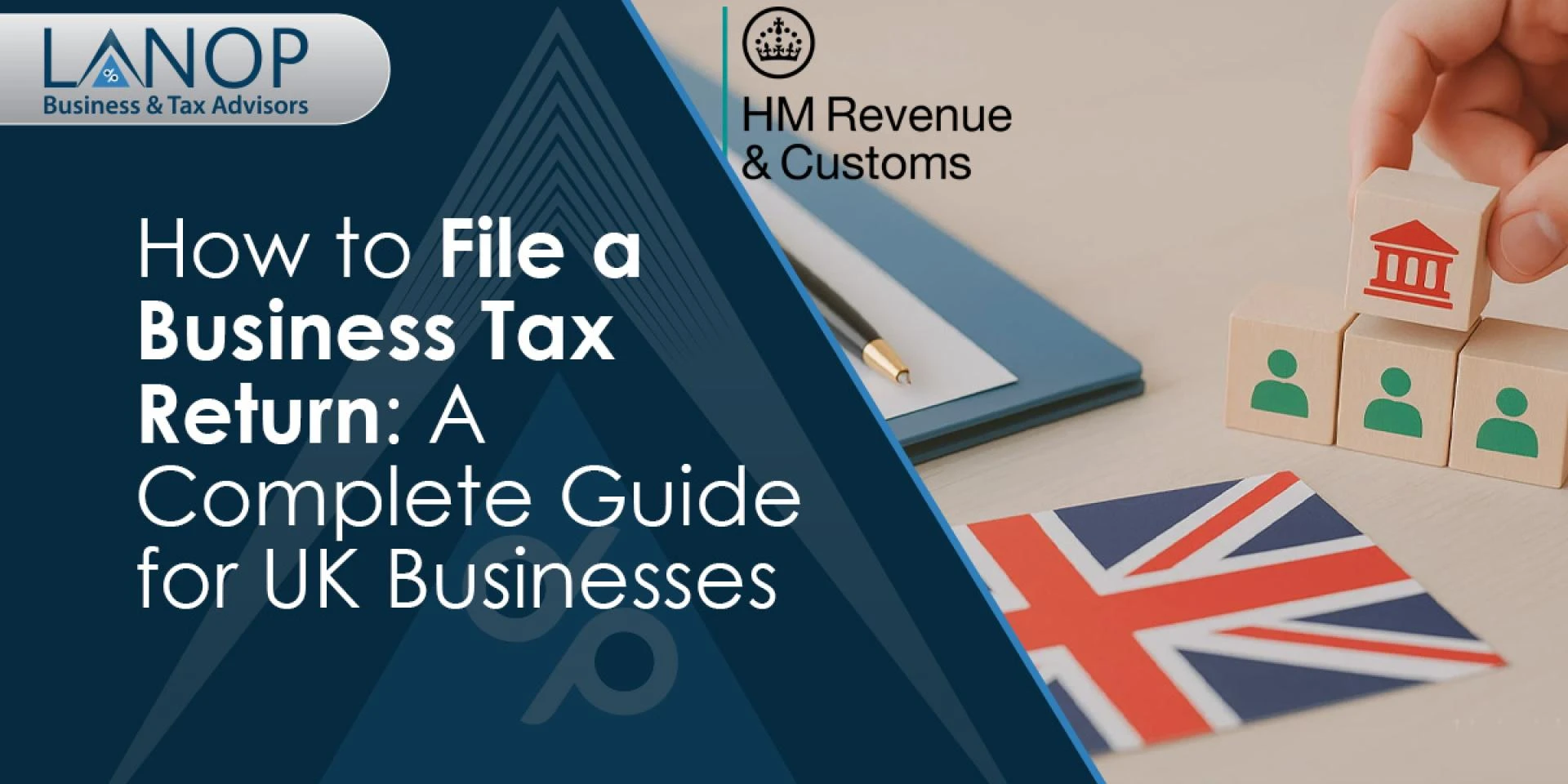
I still remember the moment the reality of tax season truly hit me. It was late evening in my small home office, that quiet time of day when the world slows down and business owners like me finally sit with our thoughts. A pile of unopened envelopes had been growing beside my laptop for weeks. I convinced myself they could wait, but deep down I knew what was inside them. When I finally opened the one stamped with the HMRC logo, the reminder stared back at me like a long overdue appointment. It was time to file my Business Tax Return.
At that point in my entrepreneurial journey, I had been so focused on client work, marketing strategies, and day-to-day operations that I had forgotten about the most fundamental part of running a business. The numbers. The structure. The responsibility. There is something grounding about facing your financial year honestly. Filing a Business Tax Return forces you to pause, reflect, and acknowledge how far your business has come.
What felt intimidating at first became a turning point that taught me discipline, planning, and confidence. And this guide, written in a narrative style built from real experience and practical insight, is designed to take you through that journey with structured clarity. Whether you are preparing your Sole Trader Tax Return, navigating UK Tax Filing, or submitting forms for Corporation Tax UK, this complete storytelling guide brings everything into focus.
Chapter 1: The Wake-Up Call That Every Business Owner Experiences
That night in my office taught me something important. Filing your Business Tax Return is not just a legal requirement. It is a moment of self-awareness for your business. Every form, every number, every line represents something you built through effort, choices, and determination.
At the beginning, I felt the same confusion many UK business owners feel. Which form do I file? Where do I submit it? What counts as income? What expenses are allowed? How do I avoid penalties? This confusion is completely normal. But once you understand the process, filing becomes far less daunting.
A Business Tax Return is simply your financial story for the year. And like any story, it gets easier to tell when it is well organised.
Chapter 2: Understanding What You Need to File Based on Your Structure
Your business structure determines your filing responsibilities. Before I incorporated my company, I operated as a sole trader, and everything went through Self Assessment UK. Later, when my business grew, I had to prepare a full set of company accounts for Corporation Tax UK. Both experiences taught me how different the requirements can be depending on the structure.
Sole Traders
If you run your business as a sole trader, your business income and expenses are reported through Self Assessment UK. This process involves completing the appropriate section for your Sole Trader Tax Return within your annual personal return.
Partnerships
Partners file individually, each reporting their share of profits or losses on their own tax return.
Limited Companies
Once you incorporate, you must submit a company tax return for Corporation Tax UK. This requires full-year-end accounts and a CT600 form. Even if your company did not trade or earn a profit, filing is still required to remain compliant.
Understanding your structure avoids confusion, helps you gather the correct information, and ensures your Business Tax Return is accurate and complete.
Chapter 3: Tax Deadlines UK and Why Timing Is Everything
One of the most stressful moments in my early business years came when I misjudged a deadline. I thought I had weeks left. In reality, I had days. That panic taught me to treat deadlines as anchors in my business calendar rather than suggestions.
Here are the crucial Tax Deadlines UK to keep in mind:
For Sole Traders
- File the Self Assessment UK return by 31 January
- Pay any tax owed by the same date
For Limited Companies
- Submit the company return for Corporation Tax UK within 12 months of the accounting year end
- Pay any corporation tax within 9 months and 1 day after the year-end
Missing deadlines results in penalties and unnecessary stress. Filing early or preparing ahead of time removes anxiety and keeps your business in good standing.
Chapter 4: Records Are the Foundation of a Strong Business Tax Return
There was a year when I had invoices stored on my computer, receipts stuffed in drawers, and notes scattered across random notebooks. When tax season arrived, I felt like I was piecing together a puzzle with missing edges. That experience taught me that good record-keeping is not optional. It is the core of your Business Tax Return.
Before you begin filing, ensure you have:
- All income records
- Receipts for business expenses
- Bank statements
- Mileage logs
- Invoices issued and received
- Payroll information
- Year-end accounts for companies
- Any dividend or director salary information
Strong records create accuracy. Accuracy creates confidence. Good records also make the HMRC Tax Guide easier to follow and reduce the risk of mistakes.
Chapter 5: Step-by-Step Guide To Filing Your Business Tax Return
Let me guide you through the same process I follow each year. Once you know the steps, filing your Business Tax Return becomes straightforward.
Step 1: Begin With The Right System
Most business owners file online using digital software or through HMRC’s online services. This is the fastest and most reliable method for UK Tax Filing.
Step 2: Access the Correct Tax Form
- Sole traders complete the business section of Self Assessment UK
- Limited companies complete the CT600 for Corporation Tax UK
Step 3: Enter Your Financial Figures
Input your income, subtract allowable expenses, and report your profit or loss. Companies must match figures to their year-end accounts and make tax adjustments where necessary.
Step 4: Add Relevant Income and Allowances
Include director salaries, dividends, and any reliefs. Reliefs such as capital allowances reduce your taxable profit.
Step 5: Review All Data Carefully
Small mistakes can create big issues. Reviewing ensures every figure aligns with your financial records.
Step 6: Submit Your Return
Once everything is correct, submit it through the portal. If you file online, you receive confirmation instantly.
Step 7: Pay Any Tax Due
Plan your payments early. Paying on time is part of smooth UK Tax Filing and avoids interest charges.
Step 8: Store All Records
Keep your tax records, calculations, and confirmations for at least six years. This protects you in case HMRC ever requests verification.
Chapter 6: Common Mistakes That Slow Down the Filing Process
Over time, I have witnessed the same mistakes repeated across businesses of all sizes. Avoiding these helps you stay compliant and confident.
- Missing Tax Deadlines UK
- Keeping poor records
- Mixing personal and business expenses
- Using the wrong tax form
- Forgetting to file even when the business made no profit
- Not understanding tax reliefs and allowances
These mistakes usually occur because business owners are overwhelmed or pressed for time. With planning and awareness, they are easy to avoid.
Chapter 7: Planning Ahead Makes Next Year Easier
The best time to prepare for your next Business Tax Return is immediately after you submit the current one. A strong system removes stress and gives you clarity throughout the year.
Consider this approach:
- Organise expenses monthly
- Use bookkeeping software
- Save a portion of income for tax obligations
- Review your financial performance quarterly
- Keep documents sorted by category
- Update your records regularly
Once I adopted this approach, tax season stopped feeling like a race and became a simple routine.
Chapter 8: Stories From Real Business Owners
Sarah The Freelancer
Sarah had a full client schedule but never tracked her expenses. When it came time for her Sole Trader Tax Return, she spent days searching through emails and bank statements. She missed several legitimate claims and paid more tax than she should have. The next year, she logged every expense weekly, and the difference was remarkable.
Adam, The New Director
Adam recently formed a company and assumed he did not need to file until he made a profit. When he learned that every company must file for Corporation Tax UK, he scrambled to complete his return. The experience taught him to keep his calendar aligned with Tax Deadlines UK and organise his records from day one.
These stories mirror the experiences of thousands of business owners across the UK. Filing your Business Tax Return is not simply an obligation. It is a lesson in structure that helps you grow.
Chapter 9: Final Checklist Before Submitting
Before you submit, make sure:
I have gathered all income records
I have collected all business expenses
I have prepared year-end accounts where needed
I understand my filing requirements based on the structure
I have double-checked my calculations
I am aware of all Tax Deadlines UK
I have planned for any payments due
I have stored all the records safely
Completing this checklist brings clarity and confidence to your filing process.
Chapter 10: Closing Thoughts And Your Next Step Forward
As years passed, I realised something important. Filing my Business Tax Return no longer felt like a challenge. It became a chapter I closed with confidence each year. It showed me how much my business had grown and what direction it was heading. Filing is not merely about compliance. It is a reflection of your journey.
When you sit down to file, you are acknowledging the wins, the lessons, the expenses, the income, and the decisions that shaped your year. Filing tells your business story with honesty and clarity.
If today is your filing day, begin with calm confidence. Gather your documents, follow the steps, and trust the process. Your business deserves clarity, and you deserve peace of mind. This year, let your Business Tax Return be a reminder of how far you have come and how prepared you are for the road ahead.