On the surface, mixing materials doesn’t seem to be a particularly difficult operation. However, increasing production requires quickly combining bulk materials, making blending chemicals that aren’t inherently compatible more challenging.
The term “mixer” may refer to any tool with the purpose of mixing different components or raw materials used in a manufacturing process. Food, chemical, pharmaceutical, plastic, and many other product-processing mixers fall within this category.
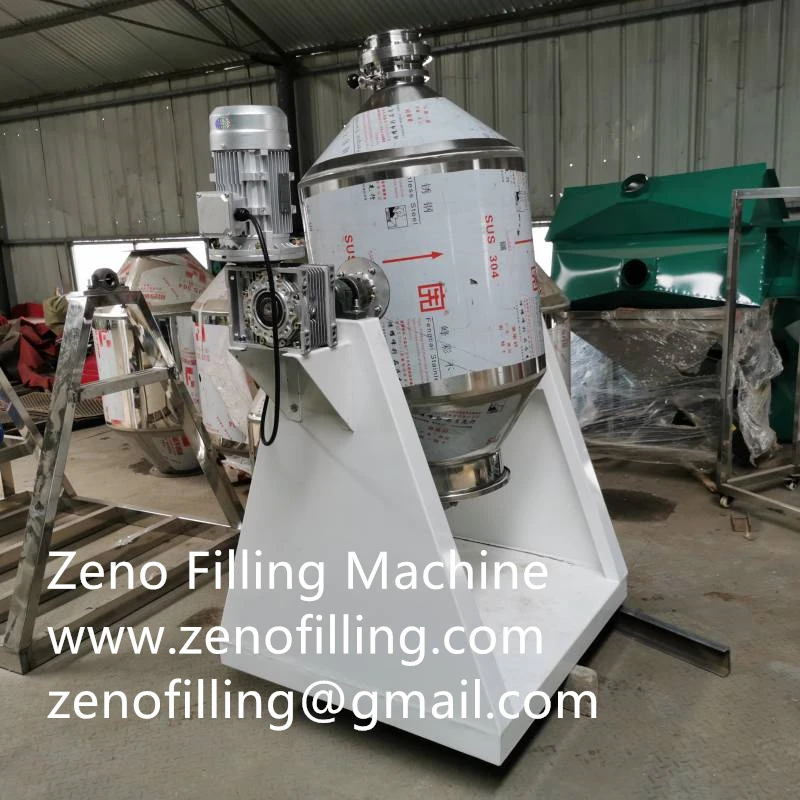
The industrial powder mixer machine is comprehensive, accurate, and sophisticated. It has several industrial and productional uses, including the mixing and combining chemicals and other substances. Industrial mixers come in a wide variety of sizes and types, with some able to rapidly combine polymeric polymers for plastic manufacture. In contrast, others can crush and blend granules and solids. Different types of industrial mixers have sparked revolutions in various sectors because of their central role in mass manufacturing.
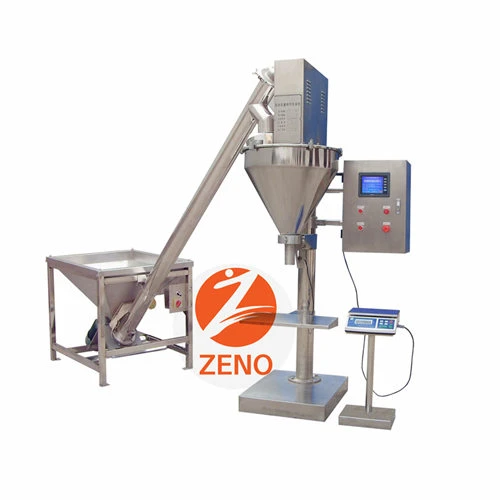
Because mixing is an integral aspect of the process of production in the food, pharmaceutical, and cosmetics industries, mixers are indispensable to these sectors. Because of the inherent connection, most people think of mixing when they think of food production. There is an almost infinite variety of applications for mixers outside the food industry. Any business dealing with mixing chemicals, whether similar or different, will use powder filling machine.
Different Types of Industrial Mixers You Should Know
There can’t be a single kind of mixer because of the wide range of ingredients and raw materials. You must adjust how you mix things to account for the fact that the materials you’re working with have distinct qualities, traits, and features. Dispersers, particle reducers, and homogenizers are all subsets of mixers.
Many mixers fall into three categories: diffusion, shear, and convection.
In a diffusion mixer, gravity propels materials as the machine tumbles around its axis.
The static shell of a convective mixer may be any of a variety of shapes, both horizontal and vertical. Impellers or mixers, such as blades or paddles, finish the mixing process.
Within the category of convection processes, shear mixing stands out by its rapidity. To make materials smooth and simpler to mix, the shearing process uses the fast movement of an impeller to shear, distribute, pulverize, and significantly influence them.
Horizontal Ribbon Mixer
Ribbon mixers, sometimes ribbon blender mixers, transfer materials from side to side using two twisted metal strips resembling a double helix. Mixing occurs when the substance travels in both directions. A horizontal ribbon mixer is a common tool for mixing solids and powders in many different processing types, including food and chemicals.
Paddle Mixer
Although it uses a softer motion, a paddle mixer is functionally equivalent to a horizontal ribbon mixer. Compared to a horizontal ribbon mixer, the paddle mixer combines ingredients with a kinder, softer motion. The ingredients are mixed in the mixer with each stroke of the paddles. Salsas, dressings, and other dense or semi-solids are common ingredients in commercial and industrial mixers of this sort.
Emulsifiers help mix immiscible or essentially incompatible substances like oils. They are devices that break down the structure of liquids and make them mix more efficiently by forcing them through tiny filters and tubes under high pressure.
Planetary Mixer
The agitators of a planetary mixer rotate in a round motion to mix substances in a vessel. The mixing vessel may either remain still or spin to facilitate the mixing process. To combine the ingredients, the agitator might include a paddle, whisk, or beaters. Mixing dough and similar items is a common usage for this sort of professional food mixer.
Tumbler Mixer
The purpose of a tumbler mixer is to use the forces of rotation and gravity to mix substances, most often liquids. Varieties of tumbler mixers range from slant mixers to those with two conical ends and a v-shaped base. Tumbler mixers are great for delicate liquids since they don’t need an agitator or impeller.
Drum Mixer
Drum mixers have a wide range of uses. Although their designs vary, most follow a standard layout. They combine storage and mixing capabilities in one massive tank (a drum). Materials with medium to low viscosity, such as cement or mixtures, often need these.
Static Mixer
Gases or mixtures of gases and liquids are the most common uses for static mixers. Like an emulsifier, the static mixer can use a sequence of obstacles to compress the components and degrade them into a mixable state.