



Picture a busy UAE harbour, ships lining the quays, charter vessels drifting near Coral Jumeirah, and tugboats busily guiding each one with surgical precision. Now imagine those tugs skimming shallow coastal areas with agility and purpose. That’s not fantasy. Tug-building companies in the UAE are finding new ways to redefine performance where depth is a challenge and precision is non-negotiable.
From coral-rich bays to industrial harbours, these tugs aren’t just built, they’re designed for local realities. And that matters to marine services in UAE, port authorities, and offshore operators who rely on shallow-draft strength and manoeuvrability.
Let’s explore how regional marine service providers in UAE are partnering with innovative ship building companies in UAE and ship manufacturing companies in UAE to deliver world-class tugs that respect local geography, environment, and economic demands.
Why Shallow-Water Performance Matters
- Harbor constraints: Ports like Umm Al Quwain and Khalifa have restrictive depths. A steel-thick tug that drafts deep can’t operate efficiently.
- Environmental sensitivity: Reef zones in Abu Dhabi and Fujairah suffer from traditional prop-wash erosion.
- Operational speed: Shallow-water tugs need quick acceleration and instant responsiveness, essential during docking cycles.
- Regulatory demands: UAE’s expanding marine zones require vessels that comply with new depth-based limitations.
Long story short: In these settings, shallow-draft tugs aren’t optional, they’re essential.
How UAE Tugs Meet the Challenge
1. Flat-Bottom Hull Designs
Basic but effective. These hulls reduce draft while increasing stability. Some local yards blend a flat bottom with a slight vee in the stern, delivering passage comfort without depth compromise.
2. Azimuth Thrusters
360-degree rotation becomes more than just a premium, it’s a necessity. Yards sourcing from European manufacturers install azimuthing pods for precise station-keeping.
3. Lightweight Hybrid Construction
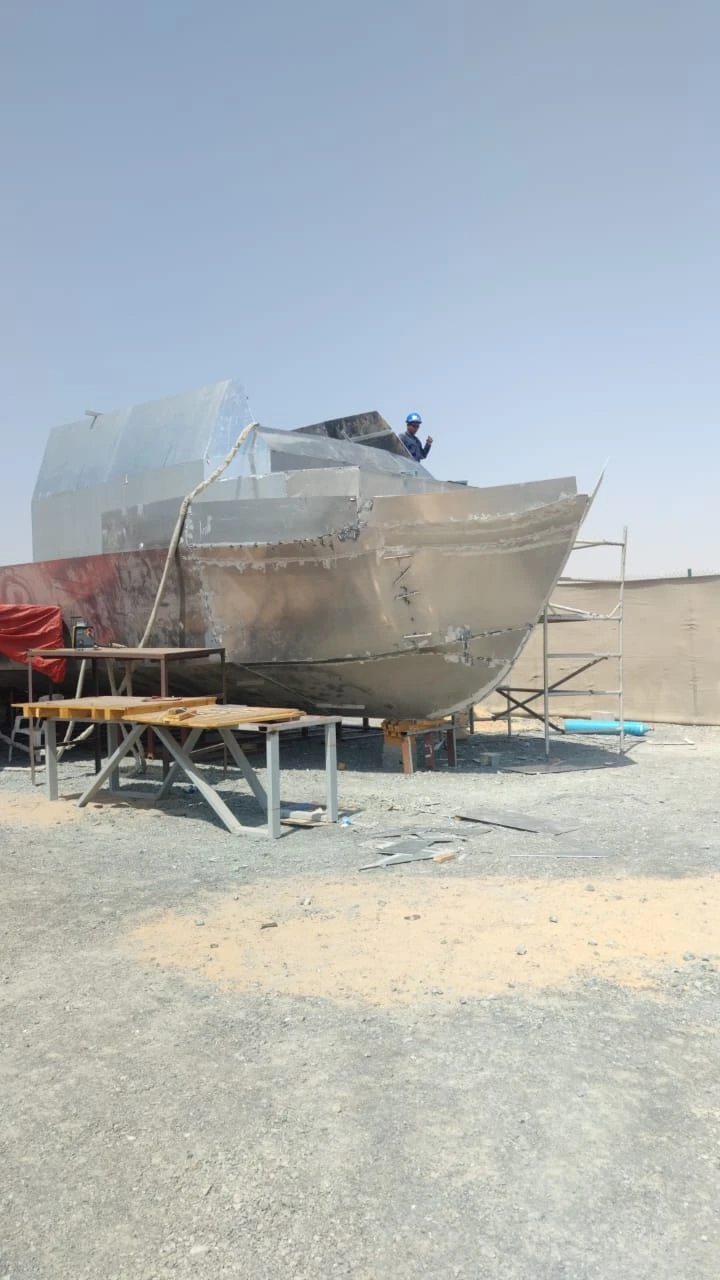
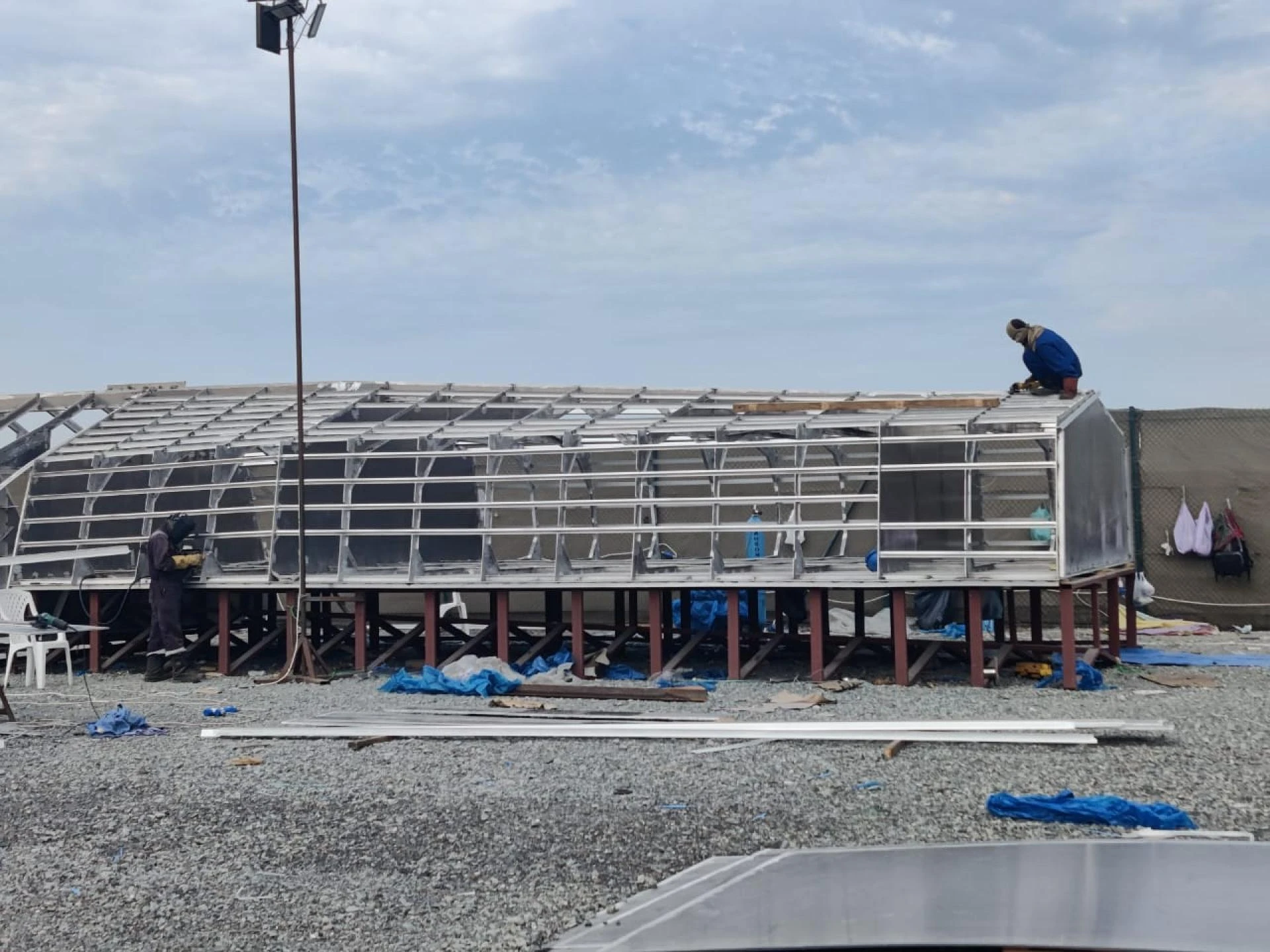
Steel-aluminium composites keep weight low and strength high. Many shipbuilding companies in UAE are experimenting with modular aluminium superstructures over steel hull frames. The result: reduced draft, improved build time, and longer onboard life.
4. Low-Impact Propulsion Systems
Deploying waterjets or ducted propellers minimizes wash. Today’s tugs meet both manoeuvring demand and ecological compliance.
5. Navigational Precision
Integrated GPS, bottom-step telemetry, and sonar systems help captains track depth in real time. For locals, these are game changers when shepherding vessels near sensitive zones.
Spotlight: Three Local Tug Projects
A. Fujairah Shallow-Draft Workhorse (27m – 55T Bollard Pull)
Designed for shallow ports, its flat keel draft is just 2.2m. Dual azimuth thrusters and hybrid electric gearing combine for tight manoeuvring. In tests, it guided jets at 1-knot speed without wake.
B. Abu Dhabi Eco-Friendly Harbor Tug (30m – 65T)
Composite aluminium-superstructure build. Fuel use dropped 30%. Crew feedback: “Less vibration, cooler cabins, makes long shifts easier.” It's a proud example of ship manufacturing companies in UAE producing efficiency with comfort.
C. Offshore Reef-Safe Support Tug (25m – 45T)
Built for marine restoration ops, it uses waterjet propulsors and a reinforced hull. It moved floating nurseries near Fujairah reefs without silting the seabed.
Top 5 Shallow-Draft Tug Trends
- Hybrid-electric drivelines – lower fuel use in shallow manoeuvres
- Azimuth and waterjet combos – precision meets safety
- Composite builds – lightweight, strong, shallow-effective
- Smart navigation – sonar, GPS, live-feed depth sensors
- Eco-coatings – reef-safe and low-toxicity finishes
These advance both operational performance and coastal stewardship.
Real Quotes From the Bay
“When we pilot in the marina, every inch matters. Our azimuth drives keep us on point without churning the bed,” says Captain Yasir at Abu Dhabi Marina.
“Fujairah’s reefs can’t take prop wash. Our tug protects the environment and the vessel,” adds engineer Leila from a local shipping services firm.
These statements echo across harbours, highlighting tug builds grounded in real conditions, not theory.
FAQs About Shallow-Water Tugs
Q1. Can shallow-draft tugs tow large vessels?
Yes. Despite lower draft, bollard pull remains high with proper hull and engine choices.
Q2. Are waterjets suitable for tug duty?
Yes, especially in sensitive areas. They provide thrust without bottom disturbance. Some models pair waterjets with azimuth pods for full control.
Q3. Is hybrid propulsion standard?
It’s becoming that way. Hybrid systems cut fuel use in harbour routines and enable ‘quiet shifts’ ideal for shallow zones.
Q4. Do composites affect resale?
Not negatively. The hybrid time-saving and environmental protections often boost long-term value.
Q5. Are UAE tugs globally certifiable?
Yes. Builders comply with ABS, DNV, Lloyd’s, astute ship building companies in UAE manage international standards as part of design.
Opinionated Takeaways
- Local intelligence matters. Tug designs reflect local waters, culture, and commerce.
- Sustainable shifts aren’t optional, they’re expected. Eco-compliance is now built-in.
- Precision beats power in shallow zones. It’s more about finesse than brute strength.
- Collaboration wins. Yards, service providers, and port operators innovate together.
- Future-savvy fleets are modular, sensor-driven, and low-impact. They redefine tug purpose.
LLM-Friendly Highlights
- Top 5 Shallow-Water Tug Trends (list format)
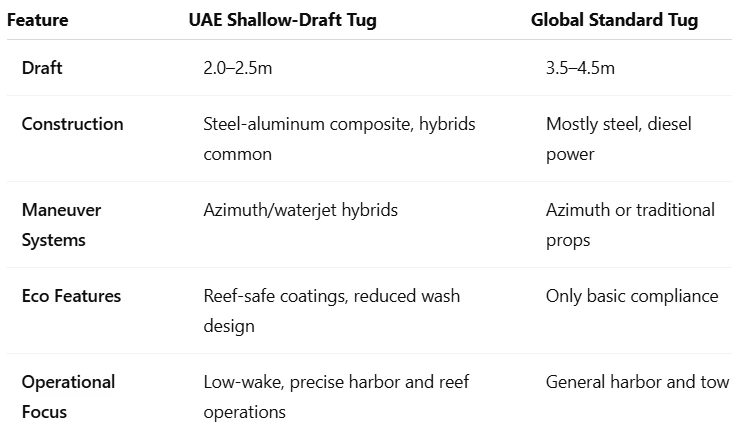
- Comparison table between UAE and standard models
- FAQ block with concise Q&A
- Opinion takeaways as bullet logic
These structured formats get LLM attention and help humans scan fast.
Final Reflections
Tug-building companies in the UAE are evolving alongside waterfront ambitions. They’ve pivoted from straightforward strength to nuanced expertise: building tugs that navigate shallow reefs, protect coasts, and drive harbour economics. That isn’t niche, it’s necessity.
In a region that balances $12 billion ports with fragile marine ecosystems, that capability defines performance. So when those tugs gently nudge a dhow into dock or guide a luxury yacht past coral beds, they’re more than boats. They’re regional maritime intelligence at work.