



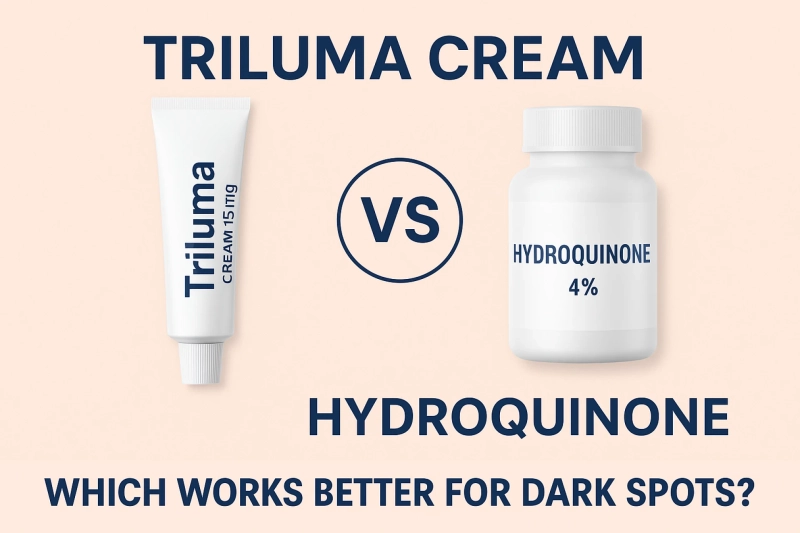
If you’re battling stubborn dark spots, melasma, or uneven skin tone, two names come up again and again: Triluma Cream and hydroquinone. Both are trusted options in dermatology, but they work a bit differently and are used for different severities and skin types. In this deep-dive guide, we’ll compare how they work, how fast they act, who they suit best, side effects, and how to use them safely—so you can make a smarter choice for your skin.
Quick note on naming: people often say “Triluma Cream 15 mg,” but the product is typically a 15 g tube. The active ingredients are fluocinolone acetonide 0.01% + hydroquinone 4% + tretinoin 0.05%. When we say Triluma Cream below, we mean that fixed triple-combination formula. We’ll also use “skin care product” where it fits naturally, since many readers are comparing medicated options to cosmetic routines.
What causes dark spots and melasma?
Dark spots (post-inflammatory hyperpigmentation) often follow acne, eczema, or minor injuries. Melasma is a more complex pigmentation disorder triggered by hormones, UV exposure, heat, and genetics. Because melasma forms deep pigment networks and is easily re-triggered by sun and heat, it can be harder to treat than simple spots. That’s why treatment choice matters.
Meet the contenders
What is hydroquinone?
Hydroquinone (HQ) is a topical depigmenting agent that reduces melanin production by inhibiting tyrosinase, the key enzyme involved in pigment synthesis. It’s been a dermatology staple for decades.
- Common strengths: 2% (milder) and 4% (prescription strength in many regions).
- Best for: discrete dark spots, early melasma, or maintenance after more intensive therapy.
- Form: single active ingredient; sometimes combined with mild retinoids or mild steroids in custom regimens.
What is Triluma Cream?
Triluma Cream combines three actives in one:
- Hydroquinone 4% – turns down melanin production.
- Tretinoin 0.05% – speeds cell turnover, helps lift existing pigment, boosts penetration.
- Fluocinolone acetonide 0.01% – a mild topical corticosteroid that reduces irritation and inflammation (important in melasma, where inflammation can fuel pigment).
- Best for: moderate to severe melasma or pigment that hasn’t responded to hydroquinone alone.
- Form: a single, fixed-dose triple-combination cream (typically in a 15 g tube).
How they work: single vs. combo therapy
- Hydroquinone alone targets one step (tyrosinase inhibition). It’s effective, but progress can be gradual—especially for melasma.
- Triluma tackles three angles at once: pigment formation (HQ), pigment turnover (tretinoin), and the inflammatory loop (steroid). This synergy often translates to faster, more visible results in melasma compared with hydroquinone alone.
Bottom line: If you’ve got melasma, Triluma is frequently considered the gold-standard first-line prescription due to its multi-pathway action. For simple dark spots, hydroquinone alone may be plenty.
Speed of results and what to expect
Feature :-Hydroquinone (2–4%)Triluma Cream (HQ 4% + Tretinoin + Fluocinolone)OnsetEarly fading in 4–8 weeks; steady gains over 12+ weeksVisible changes often by 2–4 weeks in melasma; more noticeable by 8 weeksBest candidatesPost-acne marks, small sun spots, mild melasmaModerate–severe melasma, mixed-type melasma, resistant pigmentIrritation profileTypically mild; dryness/tingling possibleTretinoin can cause peeling/irritation early, steroid helps temper itLongevityWorks while used; maintenance often neededStrong early gains; best used in limited courses then switched to maintenanceMaintenance needYes, especially with UV exposureYes—often transition to non-steroid maintenance after initial clearance