
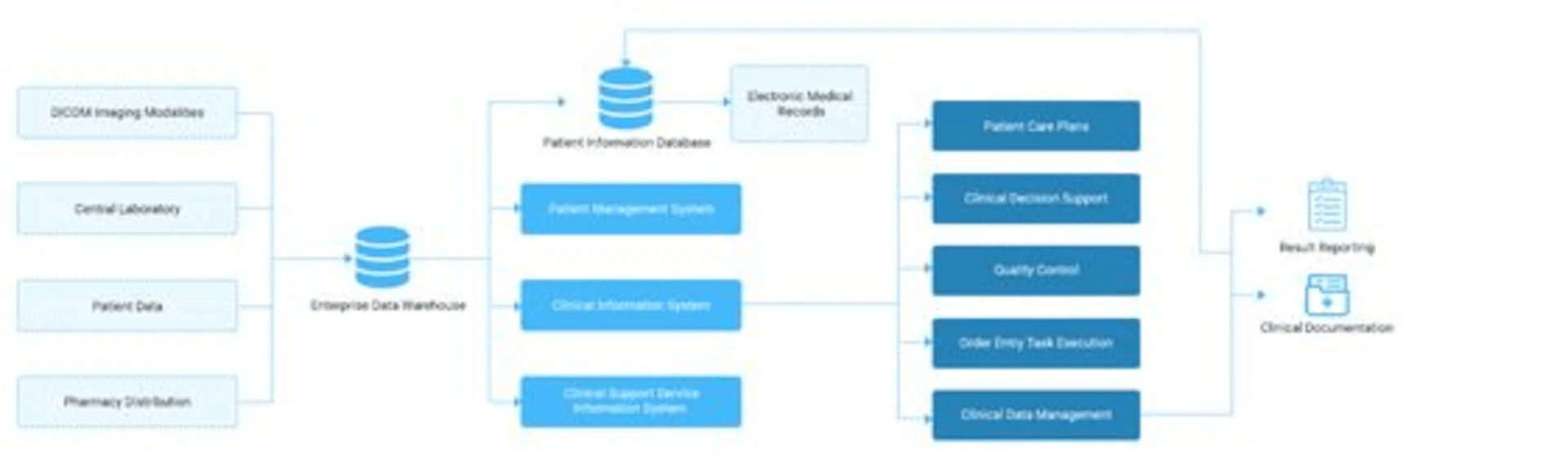
In today’s fast-paced healthcare environment, efficient management of hospital operations is crucial for providing high-quality care. Hospital Management Systems (HMS) have emerged as vital solutions, streamlining various administrative and clinical functions within healthcare institutions. These systems integrate diverse processes such as patient management, appointment scheduling, billing, electronic health records (EHR), and lab management into a unified platform, thus improving operational efficiency and patient care.
Key Features of Hospital Management Systems:
A comprehensive HMS offers a suite of tools that enhances the hospital’s daily operations. These features include patient management, appointment scheduling, billing and claims, lab management, and operation theatre management. By centralizing patient information, the system ensures that medical records, treatment history, and lab results are easily accessible, allowing healthcare providers to make informed decisions quickly.
- Appointment and Scheduling: An Hospital Management Software Solution simplifies the scheduling of patient appointments, ensuring efficient resource allocation and minimizing overbooking or scheduling conflicts. Features like online appointment booking, automated reminders, and real-time updates enhance patient satisfaction and hospital efficiency.
- Patient Management: The patient management module organizes patient records, including demographics, medical history, and visit details. This feature allows for accurate and seamless data entry, improving care coordination and personalized treatment plans.
- Billing and Claims Management: HMS automates financial operations, including invoicing and insurance claims processing, thus reducing errors and accelerating reimbursement cycles. The integration with patient records ensures transparent and accurate billing, enhancing the hospital’s financial management.
- Lab Management: Integrated lab management tools streamline test orders, sample tracking, and result reporting. By automating workflows and reducing turnaround times, this feature contributes to faster and more accurate diagnoses, directly improving patient outcomes.
- Operation Theatre Management: The system manages surgical schedules, resource allocation, and staff coordination, ensuring optimal use of operating theatres. By providing real-time updates and managing pre-operative assessments, HMS helps in reducing surgical delays and enhancing patient safety.
- Supply Management: An efficient supply management module tracks the procurement, inventory, and distribution of medical supplies, reducing wastage, preventing stockouts, and ensuring that resources are used optimally.
Benefits of Implementing a Hospital Management System
- Cost Efficiency: By automating processes, an HMS reduces manual efforts, minimizes errors, and optimizes resource utilization. This leads to cost savings and improved financial health for healthcare institutions.
- Reduced Medical Errors: With integrated features like EHR and decision support systems, an Hospital Management Solutions minimizes the chances of medical errors, ensuring that healthcare providers have accurate patient data at their fingertips, thus enhancing patient safety.
- Improved Patient Data Access: An HMS maintains organized electronic health records, making it easier for healthcare professionals to retrieve patient information quickly. This streamlined access helps improve decision-making, care delivery, and overall healthcare service quality.
- Enhanced Operational Efficiency: The automation of various tasks—from appointment scheduling to billing and lab management—boosts operational efficiency, allowing healthcare providers to focus more on patient care rather than administrative tasks.
- Better Communication and Coordination: By integrating all departments and functions within a hospital, an HMS ensures smooth communication and coordination, which is critical for delivering timely and effective care. This leads to faster diagnoses, treatments, and better overall patient outcomes.
Mobile Integration and Cloud Solutions
The integration of mobile applications and cloud-based platforms further enhances the functionality of a hospital management system. Cloud solutions provide scalability, data backup, and remote access, enabling healthcare professionals to access critical information anytime, anywhere. Meanwhile, mobile app integration optimizes the accessibility of hospital management systems, allowing healthcare workers to interact with the system on-the-go, thus improving real-time decision-making and patient monitoring.
Future Prospects of Hospital Management Systems
As technology continues to evolve, so will the capabilities of Hospital Management Software. Future innovations may include the integration of Artificial Intelligence (AI) for predictive analytics, the use of Internet of Things (IoT) devices for real-time patient monitoring, and enhanced patient engagement features via mobile apps. These advancements will further streamline hospital operations, improve care quality, and ensure that healthcare providers are better equipped to meet the needs of a growing and diverse patient population.
Conclusion
Hospital Management Systems are essential for modernizing healthcare operations, offering numerous benefits such as increased efficiency, reduced errors, and enhanced patient satisfaction. By automating routine tasks, facilitating real-time access to patient data, and streamlining communication across departments, HMS enables healthcare institutions to focus on what matters most—providing high-quality care. As healthcare technology continues to advance, the role of HMS in supporting the digital transformation of the healthcare sector will only become more significant, offering promising solutions to challenges faced by healthcare providers worldwide.