


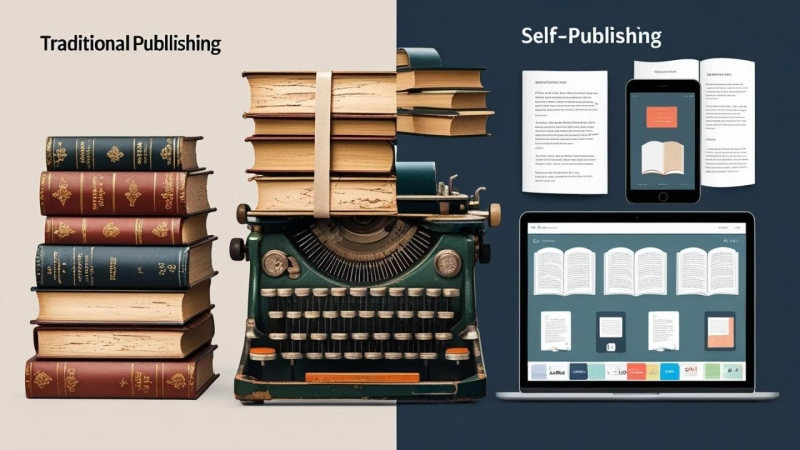
Traditional publishing vs. self publishing is probably the first question that pops into any new writer's head after they’ve typed 'The End'. And trust us, it’s not just a technical choice. It’s an emotional one, a financial one, and a strategic one. Should you wait for the validation of a publishing house? Or take matters into your own hands and hit "publish" today?
Let’s dive deep. But first, here’s what you’ll take away from this guide:
- What traditional and self publishing actually mean
- How they differ in control, cost, time, and exposure
- What works for different types of authors
- Honest insights backed by real stats
What Does Traditional Publishing Mean?
Traditional publishing means your book is published by a professional publishing house. You either get signed through a literary agent or pitch directly. Once accepted, the publisher takes over. Editing, cover design, printing, marketing, and distribution all get handled by them. This model has been around for over a century. It's often associated with bookstore presence, media coverage, and literary prestige. Many Indian publishers like HarperCollins India, Penguin Random House, and Rupa Publications still follow this route.
But it isn’t all glitz. The wait time is long. Control is limited. And the competition? Brutal. Most publishers receive thousands of unsolicited manuscripts a year. Only a fraction makes it to shelves.
What Does Self Publishing Mean?
Self publishing puts you in charge. You write the book. You design it. You choose the platform. And you decide when to go live. Platforms like Amazon Kindle Direct Publishing (KDP), Notion Press, and Kobo Writing Life are commonly used.
You can hire freelance editors and designers or go fully DIY. There's no gatekeeping. That means freedom. But it also means responsibility. If the cover looks amateur or the editing is poor, readers will notice. And reviews won’t be kind. Still, the appeal is strong. Many Indian writers are bypassing the old route and going indie. Because time matters. Because creative freedom matters. And because royalties matter, too.
How Long Does Each Publishing Route Take?
Let’s talk about time. If you're planning a book release, the timeline matters.
Traditional Publishing Timeline
It can take anywhere between 12 to 24 months. Here’s why:
- Finding a literary agent: 3 to 6 months
- Pitching to publishers: 3 to 6 months
- Contract negotiations and production: 6 to 12 months
That’s assuming everything goes smoothly. Delays are common. If your book is slotted for a later season or if the editing process takes longer, the wait stretches. Traditional publishers operate on fixed calendars and strategic release plans. You don’t decide the launch date. They do.
Self Publishing Timeline
This is where things speed up. Once your manuscript is ready and edited, you can self publish within weeks. The timeline can look like this:
- Editing and proofreading: 2 to 4 weeks
- Formatting and design: 1 to 2 weeks
- Publishing and listing: A few days
Many authors finish the process in 1 to 2 months. Some even faster. The pace is entirely up to you. If you have a deadline or you’re working around a launch campaign, self publishing gives you that flexibility.
Who Controls The Book?
This one’s personal. Because when you’ve poured your heart into a manuscript, handing over the reins isn’t easy.
Control In Traditional Publishing
Traditional publishing means you give up quite a bit of control. The publisher might:
- Change your book’s title
- Choose the cover without your approval
- Edit content to suit market trends
- Decide pricing and formats
You can voice your opinion, but the final call? That’s theirs. In some cases, even your marketing blurb and back cover copy will be rewritten by the in-house team. This can be a blessing if you’re unsure or new to the process. But if you’re particular about how your book looks and feels, it may be frustrating.
Control In Self Publishing
Self publishing means total creative control. Every decision is yours. From font styles to chapter titles, from pricing to promotion. You choose what stays and what goes.
This freedom is powerful. But it also means every mistake is on you. There’s no editor to catch plot holes unless you hire one. No design team to spot layout issues unless you invest in one. It’s liberating, but it’s work.
How Much Do You Earn In Each Model?
We’re not just writing for fun, right? Royalties matter. So do costs.
Earning In Traditional Publishing
Here’s how it works:
- You may get an advance (anywhere between ₹50,000 to ₹5,00,000 depending on publisher and genre)
- You earn royalties on each sale after the advance is covered
- Royalties range from:
- 7% to 10% for paperbacks
- 10% to 15% for hardcovers
- Around 25% for ebooks
The publisher covers production costs. That’s great. But your earnings per book are lower because they’re splitting it multiple ways (distributors, retailers, internal teams).
Earning In Self Publishing
You pay for everything. But you also earn more per book. Here’s what it looks like:
- On Amazon KDP, you get up to 70% royalty (on ebooks priced between ₹39 to ₹2,00)
- You can set your own price
- You can track sales in real time
Expenses include editing, cover design, ISBN purchase, formatting, and advertising. But once that’s done, every sale goes into your bank account with minimal deductions. Some Indian authors are earning 5 to 6 figures monthly via self publishing alone.
Who Markets The Book?
Let’s bust a myth. Whether you publish traditionally or independently, you’re expected to market your book.
Marketing In Traditional Publishing
Publishers do offer basic support:
- Press releases
- A few bookstore displays
- Author interviews (if the book is expected to be a hit)
But don’t count on viral campaigns. Unless you're a celebrity or a past bestseller, the budget will be minimal.
Most traditionally published authors still:
- Manage their own Instagram or LinkedIn presence
- Schedule interviews and podcasts
- Pitch to bloggers and influencers
Marketing In Self Publishing
You’re the marketer, the publicist, and the brand. That may sound overwhelming, but it’s empowering.
Self published authors often:
- Build email lists of readers
- Run Facebook and Amazon ads
- Partner with bookstagrammers and bloggers
- Offer launch giveaways and contests
And guess what? If done right, this works. More than one Indian romance or thriller author has built a fanbase of thousands entirely through self promotion.
Where Does The Book Get Sold?
Distribution changes everything. Visibility is vital.
Distribution In Traditional Publishing
Traditional publishers have access to:
- Bookstores (like Crossword, WH Smith, Sapna)
- Libraries and schools
- Literary fairs and fests
- International distributors
This visibility boosts credibility. Your book is cataloged, stocked, and often reviewed.
Distribution In Self Publishing
With self publishing, you mostly start digital:
- Amazon Kindle Store
- Flipkart ebooks
- Apple iBooks
- Kobo
- Google Play Books
Print-on-demand services allow physical copies, but getting into physical stores is tough unless you directly approach them. But here’s the trend: Over 60% of Indian readers below age 35 now prefer reading on their phones. Digital distribution isn’t a limitation anymore. It’s an opportunity.
What’s The Cost Of Getting Published?
Publishing isn’t free. It’s just a matter of who’s paying upfront.
Cost In Traditional Publishing
The publisher pays for:
- Editing
- Design
- Printing
- Marketing (basic level)
- Distribution
You may end up spending on:
- Author websites
- Travel for launch events
- Social media ads
Still, traditional publishing is lower risk financially. You don’t pay to publish.
Cost In Self Publishing
You pay for everything:
- Editing: ₹1 to ₹5 per word
- Cover design: ₹3,000 to ₹20,000
- Formatting: ₹2,000 to ₹7,000
- ISBN (if not using free one): ₹1,500 or more
- Ads: As per your budget
You can self publish on a budget of ₹20,000 to ₹1 lakh, depending on quality. But it’s a long-term investment.
Which One Is More Respected?
This is a hot topic.
Reputation Of Traditional Publishing
Many people still see traditional publishing as more legitimate. It feels curated, professional, and selective. It’s easier to get media coverage, awards, and academic credibility. If your dream is to be a literary name, traditional publishing opens that door.
Reputation Of Self Publishing
Things are changing. Thanks to platforms like KDP and readers who care about content more than the logo, self publishing is now seen as legitimate.
But you have to deliver quality. If your book is well edited, beautifully designed, and well marketed, readers won’t care how it was published. Remember, some of the bestselling books of the last decade started as self published titles.
Final Thoughts
Choosing between traditional publishing vs. self publishing isn’t about which is better. It’s about which works for your goals, your timeline, and your audience.
Want guidance, distribution, and validation? Traditional may be your route.
Want speed, ownership, and full royalties? Self publishing may be for you.
Either way, you’re still a published author. And in the end, that’s what counts.