



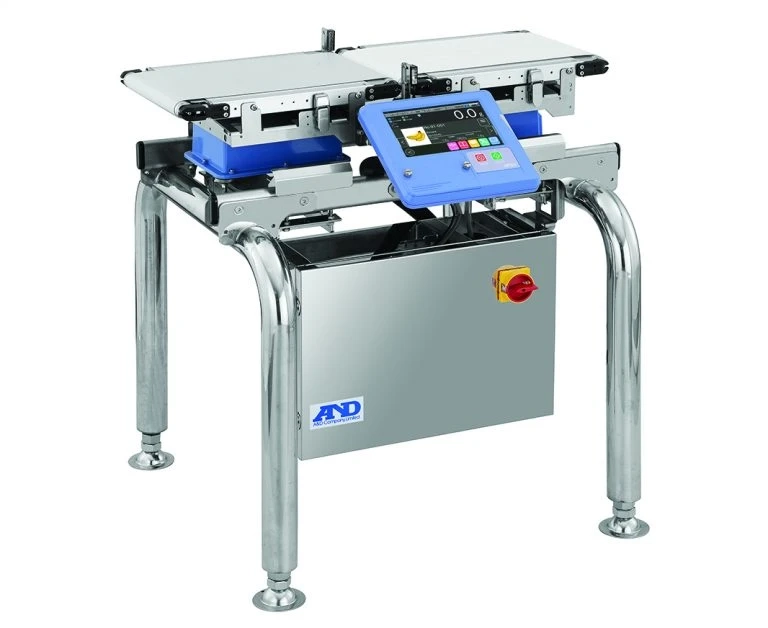
In the fast-paced world of manufacturing and packaging, accuracy and efficiency are non-negotiable. Whether you're producing food, pharmaceuticals, cosmetics, or industrial components, every gram counts. That’s why E-Mark checkweighers are becoming a must-have in modern production lines.
E-Mark is known for delivering precision-engineered checkweighing systems designed to enhance quality control and operational productivity. But not all checkweighers are created equal. When you're selecting an E-Mark checkweigher for your facility, you need to look beyond just the price tag and focus on the features that truly impact performance and compliance.
Why Choosing the Right Checkweigher Matters
Checkweighers play a critical role in:
- Ensuring product weight consistency
- Avoiding underfilled or overfilled packages
- Meeting legal metrology requirements
- Minimizing material waste
- Reducing costly recalls
E-Mark checkweighers are built for performance, but to get the best out of your investment, it's essential to select a model with features suited to your production line's needs.
Top Features to Look for in an E-Mark Checkweigher
1. Accuracy
Arguably the most crucial feature, accuracy ensures that your products meet weight specifications every time. Look for:
- High-precision load cells for fast and reliable readings
- Sensitivity down to 0.01g, especially for pharmaceutical and high-value items
- Real-time compensation for environmental factors like vibration or temperature shifts
Pro Tip: Ensure the model has been tested under actual production conditions, not just in a lab.
2. Data Logging and Traceability
Modern manufacturing demands data for quality control, auditing, and traceability. Key features include:
- Internal data storage of production runs and rejected items
- Export options (USB, Ethernet) for integrating with external systems
- Batch-level reporting, including timestamps and product IDs
- User access control for tamper-proof logging
This feature is essential for facilities working under HACCP, ISO 9001, GMP, or FSMA requirements.
3. Speed and Throughput
Speed is critical in high-volume operations. Consider:
- Checkweighing speed in packages per minute (PPM)
- Ability to maintain accuracy at higher conveyor speeds
- Adjustable settings for different product sizes and weights
E-Mark checkweighers are known for handling high speeds while maintaining precision—some models support up to 250 PPM depending on the product type and conveyor setup.
4. Connectivity and Integration
In today’s Industry 4.0 environment, seamless integration is key. Look for:
- Ethernet, Modbus, Profibus, or OPC UA connectivity
- Remote diagnostics and control
- Compatibility with ERP/MES/WMS systems
- Wi-Fi or Bluetooth for remote monitoring
This connectivity allows for centralized monitoring, faster decision-making, and proactive maintenance.
5. Compliance Certificates
To meet legal and industry standards, especially in food and pharmaceuticals, checkweighers must be certified. Look for:
- OIML and MID certification for legal metrology
- CE certification for safety and performance
- GAMP 5 and FDA 21 CFR Part 11 for pharmaceutical compliance
These certifications not only ensure reliability but are also critical during audits and inspections.
Buyer's Checklist: Choosing the Right E-Mark Checkweigher
Here’s a step-by-step checklist to simplify your selection process:
1. Define Your Product Range
- What are the minimum and maximum weights?
- What are the product dimensions?
- Are they wet, dry, dusty, or sticky?
2. Determine Throughput Requirements
- What is your line speed in packages per minute?
- Will the checkweigher be a bottleneck?
3. Identify Environmental Conditions
- Is the production environment hot, cold, or humid?
- Are there vibrations, dust, or wash-down requirements?
4. Consider Compliance Needs
- Do you need MID/OIML certification?
- Are there traceability requirements for audits?
5. Review Data Handling Capabilities
- Do you need integration with existing ERP/MES systems?
- Is historical data logging required for QA reports?
6. Evaluate Space and Layout
- What’s the available footprint?
- Do you need a modular or custom conveyor?
7. Plan for Future Scalability
- Will your product range expand?
- Is the model modular or upgradeable?
8. Check Support and Warranty
- Is local support available?
- What is the warranty period?
- Are spare parts easily available?
Conclusion: Invest for Long-Term Value
Choosing the right E-Mark checkweigh isn’t just about ticking boxes—it’s about ensuring your production line runs smoothly, accurately, and compliantly. Whether you're a small food producer or a high-volume pharmaceutical company, the right features will save you time, reduce waste, ensure compliance, and protect your brand reputation.
Basic models are a great fit for operations with tight budgets and simple needs, while advanced models are essential for automated lines, regulated industries, and facilities aiming for top-tier performance and data integrity.