


Intro to Wood Pellet Manufacturing Lines
The worldwide change towards renewable energy sources has actually positioned wood pellets as a foundation of lasting biomass fuel manufacturing. A wood pellet line represents an innovative production system designed to change raw wood materials right into pressed, energy-dense pellets ideal for heating, power generation, and commercial applications. Recognizing the parts, procedures, and factors to consider associated with wood pellet production is crucial for organizations aiming to enter this growing market or maximize their existing operations.
What is a Timber Pellet Line?
A wood pellet mill machine is an incorporated manufacturing system that transforms different wood materials-- consisting of sawdust, wood chips, wood shavings, and forestry residues-- into consistent cylindrical pellets. These pellets commonly measure 6-8mm in size and 10-30mm in length, supplying a standardized gas source with constant energy output. The assembly line includes numerous stages, from basic material prep work to final product packaging, each playing a vital duty in figuring out the high quality and effectiveness of completion item.
Trick Components of a Timber Pellet Assembly Line
1. Basic Material Function and Storage
The structure of any type of effective wood pellet line starts with appropriate raw material handling. This stage includes getting systems for different wood feedstocks, storage space silos or storage facilities, and sharing equipment to deliver materials to the processing area. Appropriate storage avoids wetness contamination and makes certain a constant feed supply to downstream tools.
2. Size Reduction Devices
Timber chipper and hammer mills create the first handling phase, lowering larger timber pieces to appropriate sizes for pelletization. This tools should handle differing timber thickness and moisture materials while creating consistent bit dimensions. The uniformity of this decrease process directly impacts pellet high quality and production efficiency.
3. Drying System
Dampness content is essential in timber pellet production. The drying out system reduces basic material dampness from generally 30-55% down to the optimal 10-15% range required for pelletization. Rotating dryers, drum dryers, or air flow clothes dryers make use of hot air produced from biomass heaters or various other heat resources. Energy-efficient drying out systems can considerably decrease operational costs while keeping item high quality.
4. Pellet Mill
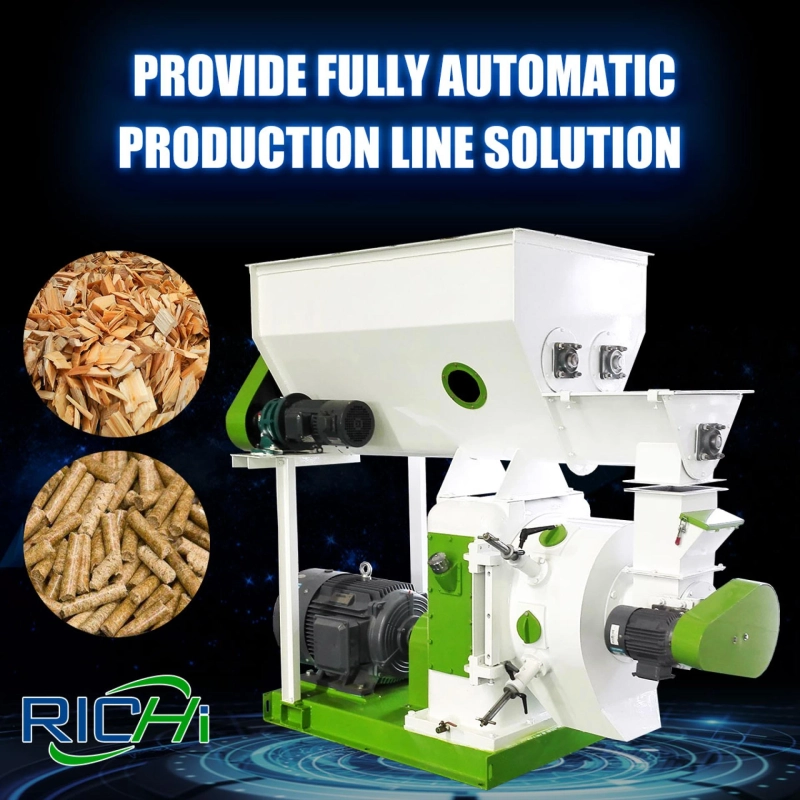
The pellet mill stands for the heart of the timber pellet line. This equipment presses dried wood particles with dies under high pressure and temperature, forming dense pellets. 2 main types exist:
Apartment Die Pellet Mills: Suitable for small to medium-scale production, these mills provide lower preliminary financial investment and much easier upkeep. They work well for procedures generating 1-5 tons per hour.
Ring Die Pellet Mills: Developed for massive commercial production, ring die mills use greater capacity (5-20+ heaps per hour), far better durability, and premium pellet quality. The turning ring die and fixed rollers create intense stress, producing denser, much more consistent pellets.
5. Air conditioning System
Fresh created pellets emerge from the mill at temperature levels of 80-90 ° C with moisture content of 15-18%. The cooling system lowers temperature level to near ambient while reducing dampness to 8-10%, protecting against pellet destruction throughout storage. Counter-flow colders supply one of the most effective air conditioning while maintaining pellet stability.
6. Screening and Quality Assurance
Vibrating screens different fines and busted pellets from finished products. These fines commonly go back to the pellet mill for reprocessing, decreasing waste. Quality control systems may consist of automated sampling, durability screening, and dampness analysis to make certain constant item requirements.
7. Packaging and Storage
Final products require security from moisture and damages throughout storage space and transport. Automated nabbing systems, bulk storage space silos, and palletizing tools complete the assembly line, preparing pellets for circulation to end users. For more information about complete wood pellet production facilities and turnkey solutions, visit: https://richipelletizer.com/wood-pellet-factory/
Capability Factors To Consider for Timber Pellet Lines
Wood pellet assembly line come in numerous capacities to match various market needs:
Small Lines (1-2 tons/hour): Suitable for ranches, small companies, or neighborhoods producing pellets for regional intake. Lower capital investment yet higher per-unit production costs.
Medium-Scale Lines (3-5 tons/hour): Appropriate for regional providers offering numerous consumers. Well balanced financial investment and functional performance.
Massive Industrial Lines (10-20+ tons/hour): Made for major producers providing utility business, export markets, or big commercial customers. Greatest effectiveness and least expensive per-unit costs yet needing significant capital expense.
Raw Material Factors To Consider
The success of a timber pellet line depends greatly on feedstock choice and schedule:
Sawdust: Suitable feedstock requiring minimal preprocessing, generally readily available from sawmills and timber handling facilities.
Timber Chips: Need added dimension decrease however offer regular top quality and availability.
Forestry Deposits: Cost-efficient yet may need extensive preprocessing and quality management.
Agricultural Residues: Alternative feedstocks like straw or corn stalks can supplement timber materials, though they may need dish adjustments.
Top Quality Parameters for Wood Pellets
Specialist wood pellet lines must produce pellets satisfying global standards such as EN And Also or PFI (Pellet Fuels Institute) requirements:
Bulk Thickness: 600-750 kg/m TWO.
Dampness Content: Maximum 10%.
Ash Content: Less than 0.7% for superior grades.
Sturdiness: Minimum 97.5%.
Size: 3.15-40mm.
Size: 6mm ( ± 1mm) or
8mm( ± 1mm). Power Effectiveness and Environmental Perks.
Modern wood pellet lines include energy healing systems, utilizing production warmth for drying procedures and reducing waste. The ecological benefits include:.
Carbon-neutral fuel when sourced from lasting woodlands.
Decreased reliance on nonrenewable fuel sources.
Reduced particle emissions compared to raw timber combustion.
Usage of forestry and timber handling waste.
Support for woodland administration and rural economic situations. Learn more about this wood pellet production line and how RICHI Machinery supports global renewable energy projects.
Financial Investment and Financial Considerations.
Developing a wood pellet line requires careful monetary planning. Resources costs differ substantially based on capacity, automation degree, and regional elements. A complete turnkey system could vary from $200,000 for small-scale procedures to numerous million dollars for huge industrial facilities.
Running costs include resources (typically 50-60% of overall prices), power consumption, labor, maintenance, and logistics. Break-even analysis needs to take into consideration neighborhood feedstock accessibility, energy costs, market demand, and marketing rates.
Market Opportunities and Future Trends.
The international wood pellet market continues expanding, driven by renewable energy policies, carbon reduction commitments, and heating fuel shifts. European markets lead usage, while North American and Asian markets reveal rapid growth. Future trends include:.
Boosted automation and Industry 4.0 assimilation.
Advanced procedure control systems for top quality optimization.
Multi-feedstock versatility.
Enhanced energy healing systems.
Blockchain for supply chain openness, click this.
Maintenance and Operational Best Practices.
Effective timber pellet line procedure needs:.
Routine die and roller inspection and replacement.
Lubrication routines for all relocating parts.
Precautionary maintenance programs.
Operator training on troubleshooting and optimization.
Raw material quality tracking.
Process parameter paperwork and optimization.
Final thought.
A well-designed timber pellet line stands for a strategic investment in the expanding renewable energy market. Success requires understanding the complete production process, picking proper tools for your capability requires, making certain reputable feedstock supply, and keeping top quality criteria. Whether offering local home heating markets or industrial power generation, wood pellet production provides ecological benefits while developing financial opportunities in the biomass energy industry.
As global need for lasting power services proceeds climbing, timber pellet lines will certainly play a progressively essential role in the change away from nonrenewable fuel sources. Proper planning, quality devices selection, and functional excellence setting producers for lasting success in this vibrant market. Discover RICHI’s 3T/H wood pellet plant in Romania, a complete biomass fuel production solution designed for high efficiency and sustainability.