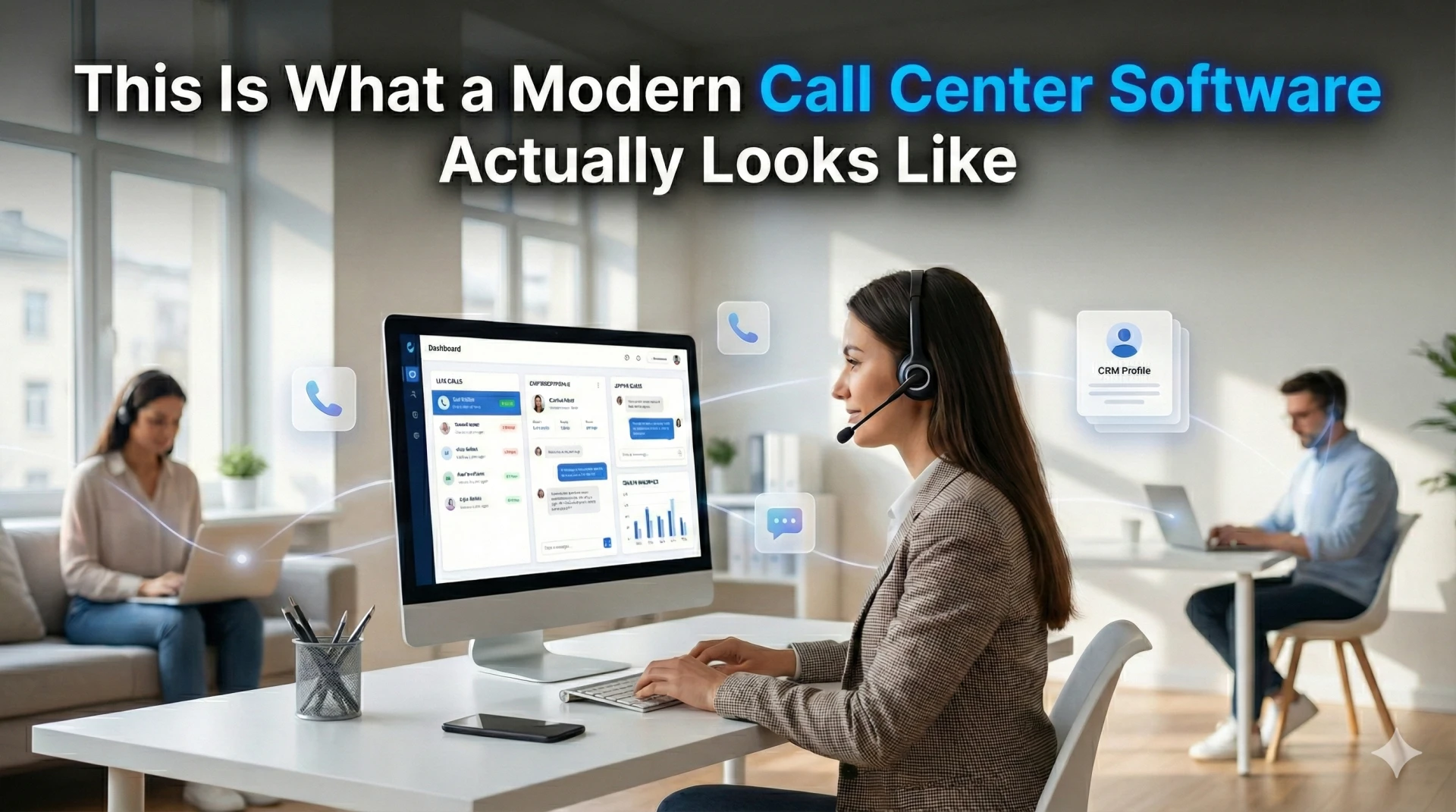
If you still imagine a call center as a big room full of agents holding phones, taking calls manually, and switching between tools… that picture is outdated. Today, a modern call center looks completely different. It’s smart, digital, cloud-powered, and built around speed. Businesses no longer rely on old systems. They run everything through call center software that handles calls, tracks customers, manages teams, and makes support faster and more reliable.
And if you’re working in sales or support, you already know how demanding customers have become. They don’t want delays. They don’t want to repeat their problems. They don’t want to wait in long queues. They want quick, friendly, and accurate help — and they judge your business based on how you communicate.
That’s exactly why the modern call center has changed so much.
The biggest change: everything runs on a single, smart platform
In older setups, agents worked with phones, spreadsheets, and separate CRMs. This made their job slow and stressful. But the modern call center works like a well-organized digital workspace. An agent logs in, and suddenly everything is in front of them:
- who’s calling
- what conversations happened before
- what issue the customer is facing
- what product or service they use
- what the next step should be
No switching screens. No searching. No guessing.
This single-view approach helps agents respond in seconds, not minutes. It also helps businesses avoid repeated mistakes like asking customers for the same information again and again.
And honestly, your customers notice this difference.
Real-time context = faster, warm, more human conversations
A modern call center doesn’t just manage calls — it manages conversations.
Whenever a customer calls, the system instantly shows their details. This changes the tone of the call completely.
Instead of saying:
“Hello, may I know your name? Can you explain your issue again?”
Your agent can confidently say:
“Hi, I see you had an issue with your last order. Let me help you quickly.”
This creates trust. Customers feel heard. And they appreciate the effort.
Most businesses that adopt modern systems notice a clear improvement in customer satisfaction because conversations feel more personal and less robotic.
Smart call routing removes waiting and confusion
One of the biggest frustrations for customers is getting transferred from one department to another. A modern call center solves this with intelligent routing. Calls automatically go to the right agent or team based on skills, timing, or customer needs.
No more:
“Please hold, I’m transferring you to another department.”
Instead, customers reach the right person the first time. Businesses that use smart routing usually see faster resolutions and lower call abandonment.
When customers don’t wait, they tend to stay happier — and stay longer.
Calls, chats, WhatsApp, email — everything in one screen
A modern call center isn’t only about phone calls. Your customers message you everywhere: WhatsApp, website chat, email, social media… and they expect the same quick experience on all channels.
That’s why modern call center systems bring all communication into one place.
Agents don’t have to check multiple apps. Everything appears in the same dashboard.
A customer may start on chat, switch to WhatsApp, and later call your team — and the agent will still see the full history.
This seamless experience is what customers want today.
Automation quietly handles the messy work
Think about the time agents waste repeating tasks — dialing numbers, sending reminders, marking follow-ups, updating notes. In a modern call center, the system does this automatically.
It dials numbers on its own.
It schedules follow-ups.
It records calls.
It logs outcomes.
It updates customer profiles.
It sends notifications.
It even collects feedback automatically.
This frees agents to do what they’re best at: real conversations with real customers.
Companies using automation often see their team productivity rise sharply, simply because the boring work is taken care of.
Remote teams are fully supported
A modern call center isn’t tied to an office anymore. Agents can log in from home, from another city, or from a different country — and still work like they’re in the same room.
Supervisors can:
- monitor calls
- track performance
- guide agents through whisper coaching
- view real-time analytics
- manage queues
All through the cloud.
This flexibility also helps companies grow faster. They hire better talent, open new locations easily, and run operations without worrying about hardware or space.
Data shows what’s working and what needs improvement
In old call centers, managers relied on guesswork. In modern call centers, everything is measurable — and visible instantly. You can see:
- how many calls you handled
- how many customers dropped
- which hours are busiest
- which agents need support
- what issues customers face most
- how long calls lasted
- how satisfied customers are
Instead of managing blindly, supervisors make decisions based on real numbers.
Over time, this improves customer experience, team performance, and even revenue.
A smoother, more confident experience for customers
When you put all these elements together — intelligent routing, customer history, automation, multi-channel communication, and trained agents with the right tools — something amazing happens:
Your customers get a smoother experience.
Agents work with confidence.
Managers gain clarity.
And your entire communication system feels more professional.
Modern call center technology turns chaos into structure — and customers feel that difference immediately.
Final Thought
A modern call center is not just about answering calls. It’s about creating fast, smooth, and reliable communication that customers trust. With smart tools, automation, data insights, and flexible cloud features, today’s call centers help businesses serve more customers with less effort. And as expectations continue to rise, companies are choosing advanced contact center crm software to stay responsive, organized, and ready for long-term growth.