



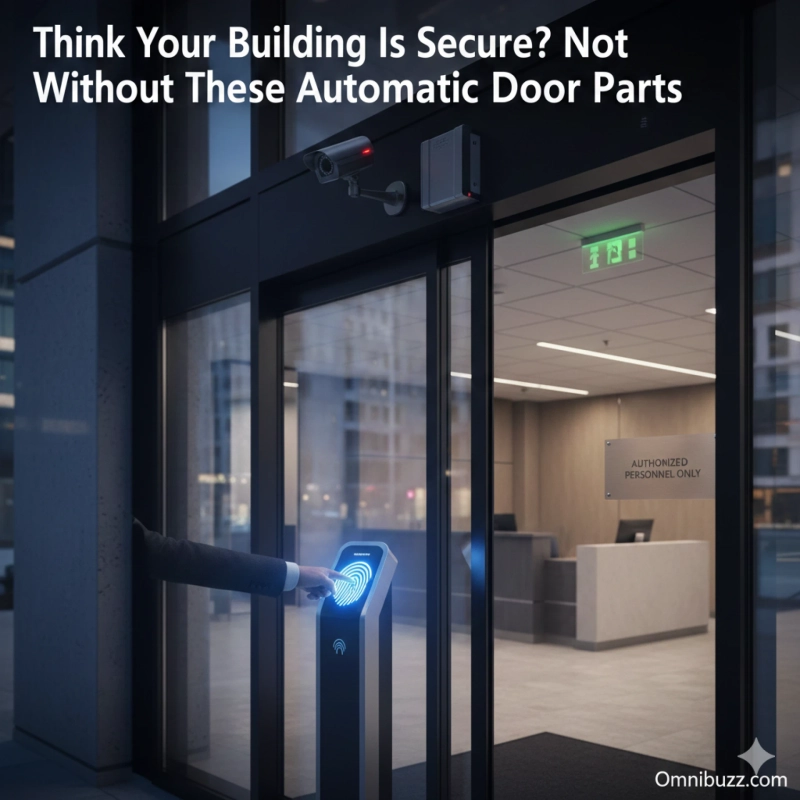
Most building owners work with a weird mindset that security is synonymous with surveillance. And so, they invest heavily in high-definition cameras, motion-triggered alarms, and complex access control software. While these tools record a break-in, they rarely prevent one.
The truth is, an absolute security begins even before the alarm goes off. The physical threshold is where it starts. If the front door doesn't fully latch due to a misaligned sensor or a leaking hydraulic closer, a sophisticated alarm system becomes ineffective.
The mechanical integrity of Automatic Door Parts—the actual hardware that separates your valuables from the external environment—is essential to true protection.
This distinction is recognized by Automatic Door and Hardware, a third-generation family company founded in 1997, which has evolved from a typical distributor to a manufacturing authority. More than just parts are needed for security; the correct parts must be provided immediately.
The Backbone of Commercial Door Security: Commercial Steel Doors and Frames
The frame itself is the most often disregarded aspect of business security. By assaulting the frame and expanding it until the latch slips out of the strike plate, intruders frequently altogether avoid locking systems.
Commercial fire-rated hollow metal steel doors are the industry standard for the highest level of physical security. These are vital life-safety tools, not just anti-theft barriers. The only readily accessible material with a 3-hour fire rating is hollow metal, which guarantees structural integrity even in the case of a catastrophe. Contractors may replace problematic entryways without the usual weeks-long lead time thanks to ADH's thousands of door and frame sizes.
Retail settings, however, necessitate striking a compromise between protection and visibility. These aluminum entrance systems use sturdy aluminum stiles and rails that are resistant to forced entry and prying while offering the glass frontage required for item display. A Ranger door makes sure that "inviting" doesn't equate to "vulnerable."
The "Closer" Look: Why Door Closers & Replacement Parts Are Critical?
Often, a door that looks closed isn't. The deadlatch cannot extend into the strike plate if a door is even slightly ajar. With only air pressure or friction holding it in place, the door is essentially unlocked.
The door closing is often the guilty party. This hydraulic mechanism manages the door's sweep and latching speed. The closer can no longer pull the door firmly against the weather stripping when the seals break and fluid spills. On the other hand, a misaligned closer could cause the door to slam, which would eventually harm the locking mechanism.
Because there are thousands of different bolt patterns and arm varieties, replacing these components is notoriously challenging. A generic "one-size-fits-all" closer frequently results in new drill holes that reduce the fire rating of the door. ADH uses the Door Closer Part Number Tool to resolve this. Facility managers can use this tool to determine the precise replacement closer, ensuring that the mounting holes align precisely and the door latches firmly every time.
Automation and Access: Maverick Automatic Doors
Automation is becoming increasingly prevalent in modern commercial entrances, not only for convenience but also for enhanced security and restricted access. A higher degree of traffic control is provided by the Maverick Automatic Door line, which includes both sliding and swinging systems.
Sensors: Sensors play a major role in automation security. Superior automatic door components, particularly motion and presence sensors, serve two purposes:
Safety: They reduce liability by keeping the door from shutting on a pedestrian.
Security: They minimize the window of opportunity for "tailgating" by making sure the door closes as soon as the pedestrian crosses the threshold (unauthorized entry following an authorized user).
A secure building also needs to be accessible by law. Heavy fines and legal action may result from malfunctioning ADA operators or automated door controls. As essential to business continuity as the front door lock is keeping operational, ADA-compliant operators.
Automatic Sliding Door Parts: The Small Parts That Prevent Big Breaches
While the door and frame form the barrier, smaller hardware components ensure the barrier works.
Panic Bars and Exit Devices: To ensure fire safety, these devices must fulfill a mechanical paradox: they must be tightly closed against external access while permitting free exit. A malfunctioning panic bar may droop, causing the latch to drag and preventing the door from locking.
Hinges and Pivots: A drooping door is susceptible to damage. The door tilts and the lock becomes out of alignment with the strike if the top hinge wears out.
"Fit" Factor: It's crucial to locate the right replacement item. A generic part may nullify the UL designation of a particular fire-rated door. Users can filter results by the make and model of their commercial door using the ADH "Add Your Door" tool. This guarantees that the new components preserve the door's initial security requirements and fire rating.
Why Sourcing Matters In Automatic Door Controls? : The ADH Difference?
Time is of the essence for security flaws. A manufacturer cannot wait three weeks to ship a part for a damaged entry door.
This is where the paradigm is changed by the ADH model. The business has worked under the tenet that speed is a security feature since 1997. ADH makes sure that a security breach is a short-term annoyance rather than a long-term risk by keeping an enormous inventory of automatic sliding door parts and automatic door repair parts, as well as carrying hundreds of automatic door company brands.
A faceless call center does not communicate with building owners or service staff. Experts in the field who can diagnose hardware problems by text or email make up the ADH support staff.
Next Read: “What No One Talks About Replacing Sliding Door Systems in Commercial Buildings?”
Summing Up:
The security of a structure is a complex system. It depends on the hydraulic closer locking securely, the steel frame holding firmly, and the automatic sensors responding quickly. Even the costliest alarm system is useless if these mechanical parts are neglected.
Don't wait until after a security breach or a failed fire inspection to evaluate your hardware. Your building is already at risk if your doors are dragging, slamming, or failing to latch.
Find the precise replacement parts you need right now. To find the ideal fit for your system, use the "Add Your Door" search option or contact the ADH expert team immediately for assistance.