



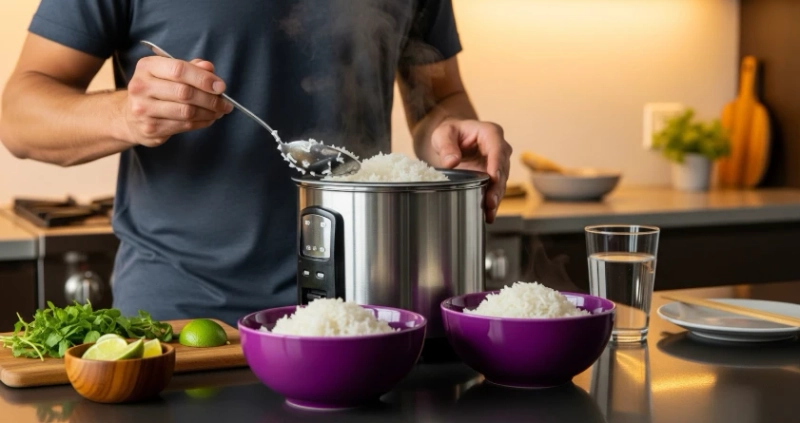
Cooking rice is an act of patience, a ritual that asks for presence. The water must be just so, the heat neither too fierce nor too gentle. There is no rushing the transformation, no shortcut to the soft, yielding texture that comes only with time and attention.
A Ritualistic Approach
Before jasmine rice ever touches water, there is the act of rinsing. Cold water flows over the grains, swirling away the excess starch. This is a cleansing, a preparation for what is to come. The water runs clear, and the rice is ready to absorb what it needs. The pot, heavy and well-seasoned, waits on the stove. The right pot matters — one that conducts heat evenly, that holds the steam close, that allows the rice to breathe just enough.
The ratio of water to rice is a matter of tradition and instinct. Too much, and the grains lose their integrity, becoming mushy and indistinct. Too little, and they remain hard, resistant to the softness they are meant to achieve. The perfect balance yields grains that cling together just slightly, each one distinct yet part of a whole. This is the art of making jasmine rice, a practice that rewards careful hands and a watchful eye.
The Meditation of Heat and Steam
Once the water begins to simmer, the lid goes on. The steam rises, trapped for a time, infusing the rice with its own essence. The kitchen fills with warmth and the faint, floral aroma that gives jasmine rice its name. There is a rhythm to this part of the process: the initial boil, the reduction to a simmer, the final rest off the heat... The rice must not be disturbed. Lifting the lid too soon releases the steam too quickly, disrupting the delicate balance of moisture and texture.
The waiting is part of the practice. The rice cooks in its own time, the grains swelling, softening, becoming what they are meant to be. The scent deepens, rich and comforting, a signal that something good is coming. This is where the meditative quality of cooking reveals itself. The mind can wander, but the body remains present, attuned to the subtle shifts in the pot. The steam, the aroma, the quiet anticipation — all of it is part of the experience.
The Texture of Comfort
When the rice is finally ready, it is revealed in a cloud of steam. The grains glisten, each one plump and tender. Sticky jasmine rice is all about a gentle cohesion, a texture that holds together just enough to be lifted with chopsticks or shaped by hand.
This rice is more than a side dish. It is the foundation of meals that bring people together, a quiet presence that allows the bold flavors of curries, stir-fries, and grilled meats to shine. Its simplicity is its strength. The act of serving it is an offering, a way of saying that care has been taken. The stickiness is a sign of intention, of rice cooked with attention to detail.
The Connection in Every Grain
There is something deeply communal about a pot of jasmine rice. It is a dish that feeds many, that stretches to accommodate whatever is placed beside it. The act of cooking it is solitary, but the act of serving it is shared. The steam rises as the lid is lifted at the table, a final reveal before the meal begins. The aroma lingers, a reminder of the patience that went into its creation.
In some cultures, rice is more than food; it is a symbol of life, abundance, and the cycles that sustain people. Making jasmine rice is a way of participating in that tradition, of connecting to something larger than a single meal. The grains, once separate, become something unified through heat and water, and time. The result is not just nourishment, but a sense of continuity, of being part of a practice that has been repeated for generations.
The Boldness of Simplicity
The beauty of jasmine rice lies in its understatement. It does not demand attention, yet its absence would be deeply felt. It is the quiet counterpart to the vibrant, the spicy, the rich. The act of cooking it is a reminder that some of the best things in life require not grand gestures, but steady hands and a willingness to wait.
Serving it is an act of confidence. The rice does not need embellishment; it needs only to be what it is. The stickiness, the aroma, the way it holds its shape — all of these are evidence of a process honored. The boldness comes not from the rice itself, but from the trust that something so simple can be so profound.
The final grain is eaten, the pot is empty, and the kitchen returns to stillness. The scent lingers, a trace of what has been shared. The act of cooking jasmine rice is complete, but the memory of its warmth remains.