



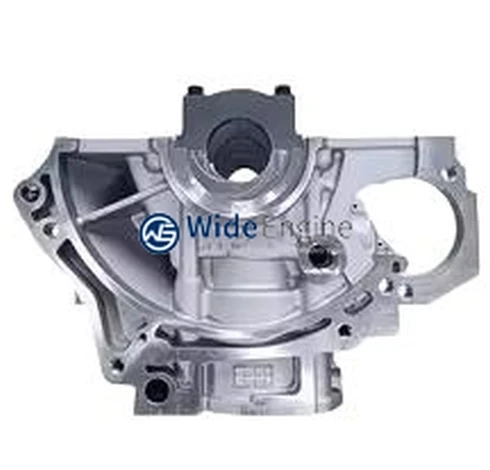
In today’s competitive and fast-evolving automotive and heavy machinery sectors, ensuring the highest quality of engine components has never been more critical. At the heart of every efficient internal combustion engine lies one foundational component: the cylinder block. Whether you’re an Original Equipment Manufacturer (OEM), engine remanufacturer, service provider, or distributor, the reliability of your cylinder block supplier directly impacts engine performance, operational costs, and customer satisfaction.
As we advance into 2026, the landscape of engine manufacturing continues to evolve, driven by stricter emissions regulations, increasing demand for electric and hybrid engines, and technological advances in metallurgy and manufacturing. In this guide, we explore not just what to look for in a cylinder block supplier but how to identify one that aligns with your long-term production strategies and quality goals.
At WideEngine Industries Co., Ltd., we’ve been serving the global automotive and industrial engine industry for over 20 years with precision-engineered cylinder blocks and engine components. This guide is the culmination of decades of experience and insight, tailored for businesses that demand reliability, innovation, and consistent quality.
What Makes a Cylinder Block Supplier Truly Reliable in 2026?
With global sourcing now easier than ever, many suppliers can offer you a price quote—but not all can offer consistent quality, traceability, and on-schedule delivery.
Here are the key qualities of a reliable Cylinder Block Supplier in 2026:
✅ Proven Technical Expertise
A reputable supplier should have:
- In-house design and R&D capabilities
- Skilled engineering and metallurgy teams
- A strong background in producing high-performance or heavy-duty cylinder blocks
✅ Advanced Manufacturing Facilities
Automated casting, CNC machining, thermal refining processes, and precision inspection equipment define a world-class supplier. The manufacturing line should be capable of producing consistent, ASTM/ISO compliant parts at scale.
✅ Robust Quality Control (QC) Systems
Look for:
- QC certifications like ISO 9001:2015, IATF 16949
- Final product dimensional reports, inspection logs
- Traceability across batches
- Non-destructive testing (NDT) capabilities
✅ Supply Chain Resilience
A reliable supplier doesn’t fold under pressure. Check for:
- Multiple raw material sourcing options
- Strong logistics partnerships
- Strategic factory locations
- Scalability to meet increased demand
Red Flags to Avoid When Choosing a Cylinder Block Supplier
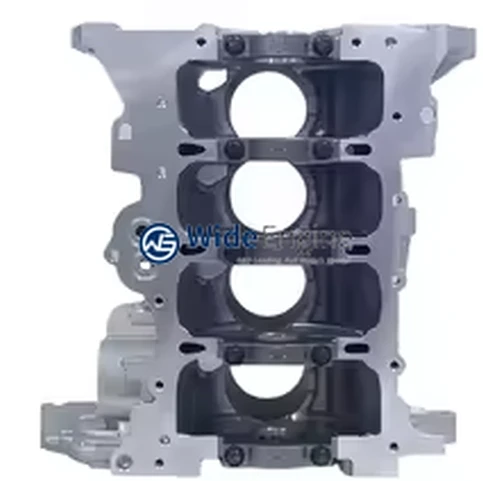
Even experienced buyers sometimes fall into traps when working with new vendors. Here are common red flags that signal a supplier may not be everything they claim:
- Lack of transparency in responding to technical or quality-related questions
- No third-party certification for their inspection and testing methods
- Inconsistent communication or language barriers that cause shipment/order delays
- Unrealistically low pricing that could suggest compromised materials or outsourcing
- No previous export/global trade experience, which leads to customs issues or delays
Avoiding these issues early on ensures not just a quality product, but a smoother business relationship.
Technological Trends in 2026 Impacting Cylinder Block Manufacturing
Cylinder blocks have evolved into precision components that must withstand extreme stresses while meeting fuel efficiency and emission standards. In 2026, several trends are shaping supplier capabilities:
🔧 Lightweight Alloys & Hybrid Castings
OEMs are demanding aluminum alloy blocks to reduce vehicle weight and improve fuel economy. Suppliers using hybrid casting methods (aluminum heads + iron cylinder liners) should be prioritized.
🧠 AI-Assisted Quality Control
Advanced suppliers are leveraging AI to detect deviations during the casting and machining phases, allowing for real-time defect correction.
⚙️ Green Manufacturing Standards
Eco-friendly operations, water recycling, and emissions-controlled foundries are becoming standards in new contracts. Suppliers must comply with local ESG (Environmental, Social, Governance) laws.
🌍 Integrated Global Shipping Platforms
Cloud ERP systems are streamlining international ordering, tracking, customs clearance, and warehousing. Strong integration with global logistics systems ensures smoother operations.
Certifications and Quality Standards to Look For
No matter how excellent a supplier claims to be, always verify their compliance with the latest global standards:
ISO 9001:2015: Ensures standardized quality control
IATF 16949: Automotive industry’s highest quality management benchmark
ISO 14001: Eco-certification—good for CSR and sustainability goals
RoHS Compliance(if using electronic sensors): Ensures environmental safety Always request digital and hard copies of certifications before onboarding your supplier.
Key Questions to Ask Your Cylinder Block Supplier
Before making your final decision, make sure to interview potential suppliers thoroughly using the following checklist:
- What materials and alloys do you commonly use in your cylinder blocks?
- Can you show your QA/QC process documentation from casting through to final inspection?
- What are your current production lead times for MOQ and bulk orders?
- Have you worked with markets in [your country/region]?
- Do you offer post-sale technical support or warranty terms?
- Do you provide dimensional and metallurgical test reports per lot?
- How do you handle pattern/tooling customization for unique engine designs?
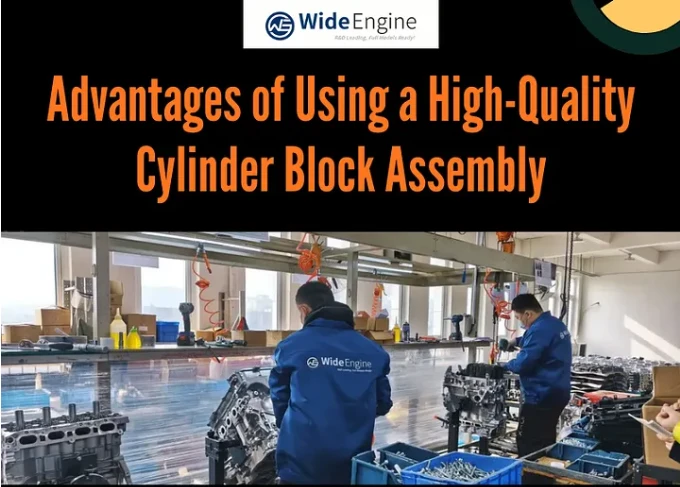
Also Read: Advantages of Using a High-Quality Cylinder Block Assembly [Infographic]
The more transparent and responsive the answers, the more confident you can be in the supplier.
Case Studies: The ROI of Choosing the Right Cylinder Block Supplier
✅ Case Study: Commercial Fleet Operator in Europe
A logistics company sourcing blocks from two different suppliers experienced severe downtime due to engine failures after 50,000 km. After switching to WideEngine Industries Co., Ltd. for high-precision cast iron blocks with traceability certificates, they saw:
-38% decrease in engine failures
-27% total cost reduction
Improved driver satisfaction due to high-performance output
✅ Case Study: US-Based Auto Parts Retailer
An aftermarket supplier needed custom-machined blocks for niche diesel applications. After working with our OEM product development team:
-Reduced prototyping time by 60%
-Enabled exclusive rights on proprietary specs in their region
-Achieved a 3X ROI in just one year
Quality isn’t just about per-part pricing—it's about lifecycle efficiency.
Building Long-Term Relationships with a Cylinder Block Supplier
A strategic relationship with your supplier can unlock:
- Better pricing through volume commitments
- Shared forecasting/planning for smoother production cycles
- Priority support and faster lead times
- Participation in design improvements and R&D projects
Here at WideEngine Industries Co., Ltd., we invest in long-term partnerships, offering flexible shipping options, inventory forecasting support, and co-development of high-efficiency engines.
Choose Smarter, Not Just Cheaper
In 2026, the right cylinder block supplier should be much more than a parts provider. They should be an engineering ally, logistical partner, and a pillar of your supply chain reliability.
Choosing a supplier that aligns with your quality standards, innovation pace, and growth targets sets your business up for long-term success. And with endless suppliers available at a click, standing out means choosing reliability, accuracy, and value over short-term cost savings.
FAQ –
Q1: What materials are commonly used in modern cylinder blocks?
Most engine blocks are made from cast iron or aluminum alloy, depending on desired strength vs weight. High-performance engines often use hybrid solutions involving reinforced aluminum with cylinder liners.
Q2: What is a reasonable MOQ (Minimum Order Quantity) for a cylinder block supplier?
MOQ varies, but typically ranges from 50 to 500 units, depending on material, machining level, and custom specifications.
Q3: How can I verify a supplier’s manufacturing claims?
Request:
-Factory visit (in-person or virtual)
-Video walkthroughs of machining and casting lines
-Quality certificates and inspection reports
-References from other buyers
Q4: What industries typically need cylinder block suppliers?
Industries include:
-Automotive manufacturing (OEM & aftermarket)
-Agricultural machinery
-Marine engines
-Construction equipment
-Generator engines
Q5: Does WideEngine Industries Co., Ltd offer custom cylinder block development?
Yes. Our team supports custom casting, tooling design, and serial production for both OEM and specialty applications.
Q6: How long does it take to ship cylinder blocks internationally?
Average lead times are:
-4–6 weeks for production (after PO)
-2–4 weeks for international freight depending on region
WideEngine works with reliable couriers and offers FOB, CIF, and DDP shipping terms.
Q7: Can I request samples before placing a bulk order?
Yes. We offer sample orders, allowing clients to test machining precision, material durability, and fitment before scaling.