



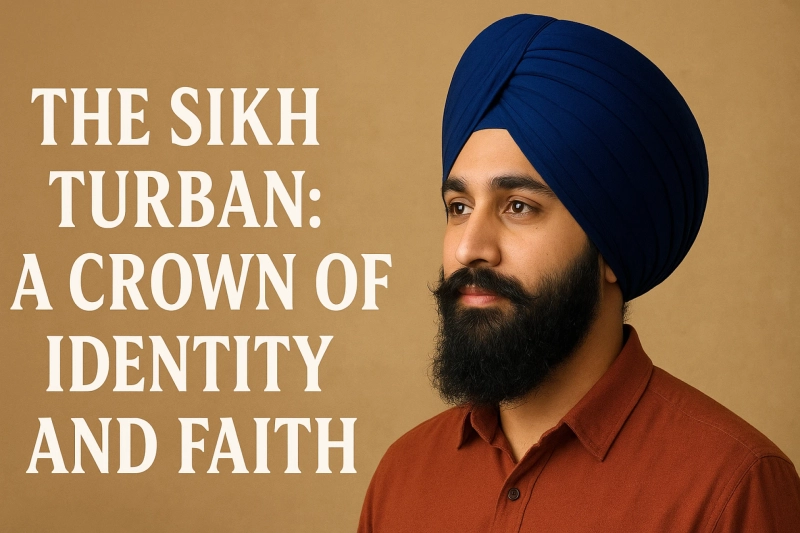
The Sikh turban, known as the Dastar or Pagri, is far more than a piece of cloth—it is a symbol of honor, identity, courage, and spiritual dedication. Worn proudly by millions worldwide, the turban is one of the most recognizable aspects of Sikh culture. For centuries, it has stood as a visual declaration of equality, responsibility, and unwavering faith in the teachings of the Sikh Gurus. Today, whether in villages of Punjab or global cities, the turban continues to carry profound meaning, inspiring respect and curiosity everywhere it is seen.
Historical Roots of the Sikh Turban
The tradition of wearing a turban in India predates Sikhism, but it gained powerful significance when the Sikh Gurus adopted and encouraged it as a mark of self-respect and sovereignty. Guru Nanak Dev Ji, the founder of Sikhism, emphasized equality, dignity, and freedom from societal hierarchies. Later, Guru Gobind Singh Ji formalized the wearing of the turban as part of the Khalsa identity in 1699, elevating it to a sacred symbol of faith.
By wearing a turban, Sikhs embraced the responsibility of living truthfully, standing against oppression, and protecting the vulnerable. Historically, the turban distinguished Sikhs as individuals committed to righteousness and bravery, qualities still celebrated today.
The Turban as a Symbol of Identity
Around the world, the Sikh turban acts like a crown—visible, dignified, and instantly identifiable. It represents a promise to uphold Sikh values, including compassion, honesty, and service (seva). For many Sikhs, tying a turban every morning is not just a routine—it is a spiritual reminder of who they are and the principles they choose to embody.
The turban also plays a key role in Kes (unshorn hair), one of the five articles of faith of the Khalsa. Covering the hair with respect is considered a form of honoring the divine gift of the human body.
Today, countless people search for sikh turban online India, looking not just for a product but for a cultural symbol they want to wear with pride and devotion.
Significance Across Generations
The Sikh turban has a unique role in marking stages of life. For many boys, the first time they tie a turban—often during a ceremony known as Dastar Bandi—is a moment of transformation. It symbolizes the step toward maturity and taking on greater responsibilities within the family and community.
For adults, the turban continues to serve as a daily commitment to integrity and discipline. It requires patience and mindfulness to tie it neatly, which adds to the personal connection with one’s faith. In older generations, the turban becomes a source of wisdom and authority, often associated with respect in social and religious circles.
Different Types and Styles of Sikh Turbans
Sikh turbans come in a wide variety of styles, each reflecting regional, cultural, and personal preferences. Some popular styles include:
1. Patiala Shahi Turban
Known for its royal and rounded appearance, this style originates from Patiala in Punjab. It is worn in multiple layers with neat, broad laṛhs (folds).
2. Amritsar Shahi Turban
Similar to the Patiala style but slightly more compact, this turban is common in rural areas and associated with elegance and simplicity.
3. Dumalla
Traditionally worn by Nihang Singhs and spiritual warriors, the Dumalla is a thick, layered turban tied in a circular form. It represents valor and readiness to protect righteousness.
4. Modern Double Patti or Full Voile Turbans
Many younger Sikhs prefer lighter fabrics like full voile, mal-mal, or rubia, which offer comfort while maintaining structure and style.
The variety of colors also holds significance. White symbolizes peace and purity, saffron represents courage and sacrifice, blue stands for spirituality, and black symbolizes humility and resilience. Whether worn casually or on religious occasions, every turban type carries rich cultural meaning.
Cultural and Spiritual Importance
The Sikh turban creates a strong connection between external identity and internal values. It acts as a constant reminder to uphold the ethics of Sikhism—justice, equality, discipline, and humility. Covering the head in Gurdwaras and during prayer reflects deep respect for the divine.
Moreover, the turban promotes equality by eliminating distinctions in social status. In a society historically divided by caste, wealth, and privilege, the Gurus encouraged all Sikhs to wear turbans to show that everyone is equally royal and worthy in the eyes of God.
Modern Relevance of the Sikh Turban
In today’s global society, the Sikh turban has become an important symbol of representation. As Sikhs excel in professions such as politics, sports, business, and military service, their turbans stand out as markers of heritage and pride.
Social media has also inspired new trends, with stylists and influencers sharing creative turban looks while maintaining respect for tradition. Young Sikhs worldwide are reclaiming their identity with confidence, using the turban as a statement of both culture and individuality.
With increasing demand, many prefer to buy turban online, choosing from premium fabrics, customized lengths, and a wide palette of colors to match personal style or ceremonial needs.
Challenges and Representation
While the turban symbolizes pride, Sikhs have also faced misunderstandings and discrimination due to a lack of awareness in some parts of the world. This has further encouraged the community to educate others about its significance.
Representation in films, media, and global platforms has grown stronger, helping break stereotypes. Many Sikh activists and educators emphasize the message that the turban is a sign of peace, not fear—reflecting values of love and protection.
Conclusion: Preserving Tradition with Modern Convenience
The Sikh turban remains a powerful expression of identity, spirituality, and cultural heritage. It represents centuries of tradition, sacrifice, and dignity that continue to guide Sikhs around the world. As the community grows, so does the need for access to authentic, high-quality turban fabric from trusted sources.
If you are looking to order Sikh turbans online, Sardar Exclusive stands out as one of the best platforms dedicated to premium materials, vibrant colors, and traditional craftsmanship. Their collection combines authenticity with convenience, making it easier for Sikhs everywhere to celebrate their crown of faith with pride.