



The Reggio Emilia Approach: Empowering Young Learners in Preschool Education
In an era where early childhood education is increasingly scrutinized for its long-term impact on development, the Reggio Emilia approach stands out as a beacon of innovative, child-centered pedagogy. Originating in the resilient post-World War II communities of northern Italy, this philosophy transforms preschools into vibrant laboratories of discovery, where children are not passive recipients of knowledge but active architects of their learning journey. Unlike rigid, standardized curricula that dictate what and when children learn, Reggio Emilia emphasizes emergent, interest-driven exploration, fostering creativity, collaboration, and critical thinking from the earliest ages. Today, this approach influences preschools worldwide, proving that when we listen to children, we unlock their boundless potential.
A Legacy Born from Renewal: The Origins of Reggio Emilia
The story of Reggio Emilia begins amid the rubble of World War II in the small industrial town of Reggio Emilia, Italy. In 1945, local women, determined to build a brighter future for their children, pooled resources—selling family tractors and heirlooms—to establish the city's first preschool. At the heart of this movement was Loris Malaguzzi, a young teacher and psychologist who became the approach's visionary founder. Malaguzzi drew inspiration from progressive thinkers like John Dewey, Jean Piaget, Lev Vygotsky, and Jerome Bruner, blending constructivist theories with a deep respect for children's innate curiosity.
By the 1960s, Reggio Emilia's municipal infant-toddler centers and preschools had formed a robust public system, supported by the community and local government. A pivotal moment came in 1976 when national education policies threatened local autonomy, galvanizing parents and educators to advocate for their model. This led to international acclaim: a 1981 exhibition, "The Hundred Languages of Children," toured globally, earning praise from outlets like Newsweek as one of the world's best early education systems. Today, while authentic Reggio schools remain unique to the region—without franchising or accreditation—the approach inspires over 145 countries through organizations like Reggio Children and the North American Reggio Emilia Alliance.
What makes Reggio enduring is its roots in democracy and renewal: education as a communal right, not a privilege, designed to nurture resilient, thoughtful citizens.
The Heart of the Approach: Key Principles
At its core, Reggio Emilia is guided by a profound "image of the child"—a belief that every child is competent, resourceful, curious, and full of potential, capable of co-constructing knowledge through relationships and experiences. This view rejects deficits, embracing children as "protagonists" with rights to explore and express themselves freely.
Central to this philosophy is the metaphor of the "hundred languages of children," poetically captured in Malaguzzi's verse: "No way. The hundred is there." These "languages" represent the myriad ways children communicate and learn—through drawing, sculpting, dramatic play, movement, music, storytelling, and even digital tools—not limited to verbal or written words. The goal? To integrate these expressive modes into daily life, allowing children to symbolize their ideas and hypotheses in rich, multimodal ways.
Another pillar is the emphasis on relationships. Learning doesn't happen in isolation; it's a social endeavor involving peers, families, teachers, and the community. Reggio views education as a collaborative tapestry, where confusion, mistakes, and improvisation are celebrated as pathways to deeper understanding. This relational focus aligns with social constructivism, prioritizing dialogue and peer negotiation over top-down instruction.
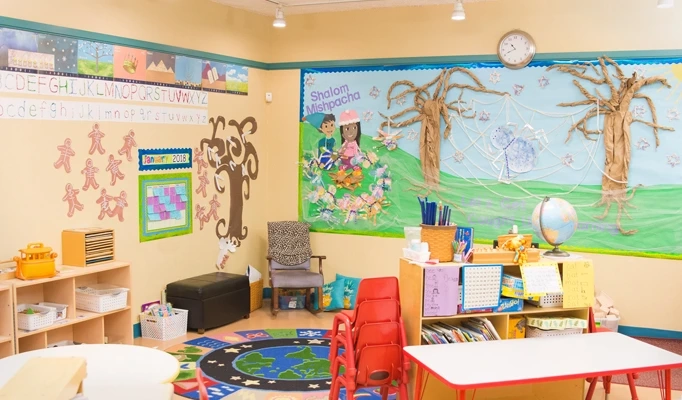
Finally, the environment emerges as the "third teacher"—after parents and educators—intentionally designed to provoke wonder and autonomy. Spaces are bathed in natural light, filled with open-ended materials like loose parts (shells, fabric scraps, pinecones), and arranged for flexible exploration, with mirrors, plants, and child-height shelving to invite independence.
These principles form a flexible framework, adaptable to infants through preschoolers, emphasizing play, inquiry, and real-world problem-solving over rote memorization.
Unveiling the Curriculum: Emergent and Project-Driven Learning
Reggio Emilia's curriculum is not a fixed script but an emergent process, unfolding organically from children's interests and curiosities. Unlike traditional models with predefined lessons, it follows a project-based structure where topics arise spontaneously—from a child's fascination with shadows to a group's inquiry into community recycling—guided by teacher observations and provocations.
The process typically begins with observation: Teachers, as co-learners, listen closely to children's words, actions, and play, documenting these moments to discern patterns of interest. This leads to provocations—thoughtful setups of materials and questions that spark investigation without dictating outcomes. For instance, a basket of translucent fabrics and flashlights might ignite a week-long exploration of light and color.
Projects then evolve collaboratively, often lasting weeks or months, in small, diverse groups that include children with varying abilities. Activities integrate the "hundred languages," blending art, science, drama, and math through hands-on tasks like building models from recyclables or dramatizing natural phenomena. Teachers introduce concepts via multiple forms—print, music, drama—to make ideas accessible and engaging, ensuring alignment with developmental milestones like social-emotional growth and executive function.
Documentation is the curriculum's backbone, making the invisible visible. Teachers collect photos, transcripts of children's dialogues, work samples, and reflections to create "learning stories"—narrative panels or books that trace thinking processes, celebrate revisions, and inform future steps. These not only evaluate progress but also build metacognition, helping children revisit and articulate their growth.
In practice, a Reggio-inspired preschool day might flow without a rigid schedule: mornings for free exploration in ateliers (creative studios led by an "atelierista" artist-educator), followed by group discussions, outdoor adventures, and family-shared meals in open kitchens. The result? A curriculum that's responsive, inclusive, and deeply joyful.
The Ecosystem of Support: Teachers, Families, and Spaces
Teachers in Reggio classrooms are researchers and facilitators, not lecturers. They observe, provoke, and co-plan with children, engaging in ongoing professional dialogue to refine their practice. No standardized tests here—assessment emerges from documentation, focusing on holistic development.
Families are integral partners, co-designing projects and sharing cultural insights, blurring the lines between home and school. Classrooms extend into the community, with excursions to local markets or collaborations with artisans, reinforcing learning's contextual relevance.
The physical space amplifies this: Light-filled rooms with flexible zones for building, quiet reflection, and making; transparent materials for sensory play; and evolving displays of children's work that honor their voices. For infants and toddlers, soft, secure areas with mirrors and natural textures support attachment and sensory discovery.
Global Reach and Proven Benefits
From Atlanta's Peachtree Presbyterian Preschool to urban centers in Australia, Reggio-inspired programs adapt the approach to diverse contexts, proving its versatility. Research highlights its benefits: enhanced executive function, empathy, and creativity; reduced achievement gaps through inclusive practices; and stronger parent-teacher bonds via transparent documentation. Children emerge as confident problem-solvers, equipped for a complex world.
A Call to Imagine: Reggio's Enduring Promise
The Reggio Emilia approach reminds us that education should feel like play, not performance. By honoring children's agency and the richness of their "hundred languages," it cultivates not just knowledge, but wonder and connection. As Malaguzzi envisioned, it's a "lovable, inventive school" where every child is seen, heard, and empowered. For educators and parents seeking to ignite lifelong learning, Reggio offers a timeless blueprint: Listen. Provoke. Document. And let the children lead.