



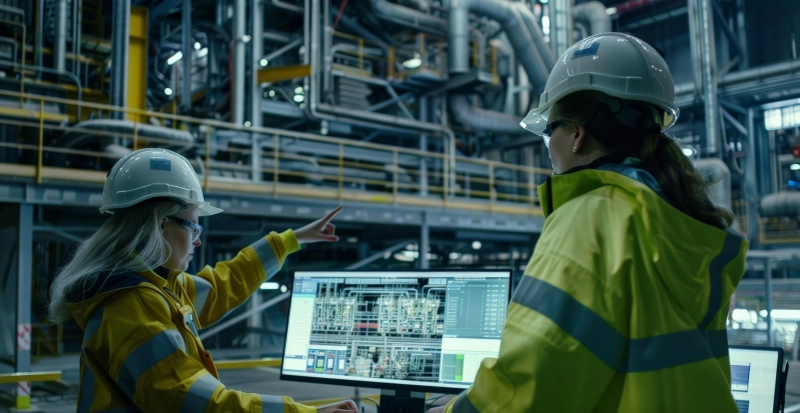
The oil and gas sector is going through one of the biggest digital shifts in its history—driven heavily by custom oil and gas software development. Energy companies now need smarter tools, faster workflows, and real-time automation to stay competitive in a high-risk, high-investment industry. This is why more businesses are adopting tailored digital systems like those offered here: Oil & Gas Software Development.
From improving operational visibility to reducing downtime, custom-built software is powering the future of the industry.
What Is Oil and Gas Software Development? (Definition)
Oil and gas software development is the process of creating tailored digital solutions for the upstream, midstream, and downstream sectors. These solutions streamline workflows, optimize production, and improve safety and compliance.
Common examples include:
- Oil and gas data management software
- Automation systems
- Asset and equipment tracking tools
- Predictive analytics platforms
- Field operations management apps
In simple terms, it’s about building technology that solves real, everyday problems in the energy industry.
Why Does Custom Software Matter for the Oil & Gas Industry?
Short answer: Because every oil and gas operation is unique.
From exploration to transportation, companies have different assets, workflows, regulations, and challenges. Custom software ensures the system fits the business—not the other way around.
Custom software boosts efficiency, enhances safety, cuts operational costs, and creates a strong competitive advantage.
How Is Technology Changing the Oil & Gas Industry?
The energy sector is moving from manual, siloed systems to smart, automated, data-driven operations.
Here’s what’s driving the transformation:
- AI & Machine Learning for exploration and predictive maintenance
- IoT sensors for real-time monitoring
- Automation to reduce human error
- Cloud platforms for cross-location collaboration
- Digital twins for asset simulation
- Robotics for high-risk tasks
Companies adopting these oil and gas technology solutions are seeing huge gains in speed, accuracy, and safety.
Why Is Custom Oil and Gas Software Development Better Than Off-The-Shelf Tools?
Short answer: Custom solutions solve industry-specific problems without limitations.
Here’s why custom software outperforms ready-made solutions:
✔ Built for Your Actual Workflow
Generic apps can’t accommodate complex drilling, exploration, or transportation processes.
Custom systems match your operations perfectly.
✔ Seamless Integration
Energy companies use SCADA, PLC systems, IoT devices, ERPs, and legacy databases.
Custom software integrates smoothly with all existing systems.
✔ Scalable Over Time
As you expand to new wells, regions, or pipelines, your system grows with you.
✔ Stronger Security
Off-the-shelf tools have standard security frameworks.
Custom systems enable advanced security tailored to industry risks.
✔ Long-Term Cost Savings
You eliminate ongoing licensing fees, add-ons, and support restrictions.
The result? Higher ROI over time.
What Are the Biggest Benefits of IT Solutions for the Oil & Gas Industry?
Custom IT solutions for the oil and gas industry offer benefits across every stage of the lifecycle.
🔹 1. Better Decision-Making With Smart Data
Oil and gas operations generate huge volumes of data.
Custom oil and gas data management software centralizes this information for faster and more accurate decisions.
🔹 2. Higher Operational Efficiency
Automation eliminates repetitive manual tasks, ensures process accuracy, and boosts productivity.
🔹 3. Enhanced Safety
Real-time alerts, remote monitoring, and predictive risk detection reduce accidents and downtime.
🔹 4. Reduced Downtime
Predictive maintenance identifies equipment issues before they escalate.
🔹 5. Regulatory Compliance
Software automatically tracks and documents compliance requirements and environmental metrics.
Which Areas of Oil & Gas Benefit Most From Custom Software?
1. Upstream (Exploration & Production)
Custom solutions enhance:
- Seismic data analysis
- Reservoir modeling
- Well lifecycle management
- Drilling performance monitoring
2. Midstream (Transportation & Storage)
Software supports:
- Pipeline performance tracking
- Leak detection
- Fleet monitoring
- Load and dispatch management
3. Downstream (Refining & Distribution)
Solutions improve:
- Refinery planning
- Quality control
- Supply chain management
- Distribution analytics
Custom software for the oil and gas industry improves every operational stage.
What Types of Software Are Most Needed in the Oil & Gas Industry?
Here are the major categories shaping digital transformation:
1. Oil and Gas Automation Tools
Automate operational tasks to reduce manual effort and improve accuracy.
2. SCADA & Real-Time Monitoring
Monitor drilling sites, pipelines, rigs, tanks, and compressors in real-time.
3. Predictive Maintenance Software
Analyze equipment behavior to forecast failures before they occur.
4. Resource & Asset Management Systems
Track machines, parts, vehicles, and field equipment.
5. Data Integration & Analytics Platforms
Deliver insights from geospatial, seismic, and operational data.
6. Supply Chain & Logistics Solutions
Optimize movement of oil, gas, materials, and equipment.
What Technologies Power Next-Generation Oil & Gas Software?
Key technologies shaping the future include:
- Artificial Intelligence
- Machine Learning
- IoT devices
- Automation tools
- Robotic process automation (RPA)
- Cloud & edge computing
- Blockchain for traceability
- Digital twins
These innovations make oil and gas industry solutions faster, safer, and more accurate.
How Do Custom Oil & Gas Technology Solutions Improve ROI?
Short answer: By reducing risk, preventing downtime, and improving productivity.
Common ROI improvements include:
- 20–40% reduction in downtime
- 15–30% maintenance cost savings
- 10–20% production increase
- 25–50% faster reporting processes
- Better equipment lifespan and utilization
Custom tools deliver measurable financial benefits across operations.
Why Are Companies Increasingly Investing in Oil and Gas Automation?
Automation reduces human error and accelerates repetitive processes.
Benefits include:
- Real-time equipment monitoring
- Faster drilling and production workflows
- Better data accuracy
- Safer work environments
- Streamlined compliance and reporting
Companies that invest in oil and gas automation outperform manual and semi-automated competitors.
What Is the Future of Digital Transformation in Oil & Gas?
The next decade will bring even larger transformations driven by:
- Autonomous rigs
- Fully integrated IoT ecosystems
- AI-powered exploration
- Smart pipelines
- Advanced emissions tracking
- Real-time digital command centers
- Automated logistics
- Zero-downtime maintenance
Oil and gas software development will be the backbone of this future shift.
Companies that embrace custom digital solutions will lead the market in performance, safety, and operational efficiency.
Summary
Custom oil and gas software development is essential for companies that want to stay competitive in the rapidly evolving energy sector. Tailored digital solutions offer increased visibility, improved safety, enhanced automation, and long-term scalability.
With advancements in oil and gas technology solutions, companies can optimize workflows across upstream, midstream, and downstream operations. Custom digital tools reduce downtime, improve data accuracy, and support sustainability goals—making them a critical driver of future success.