



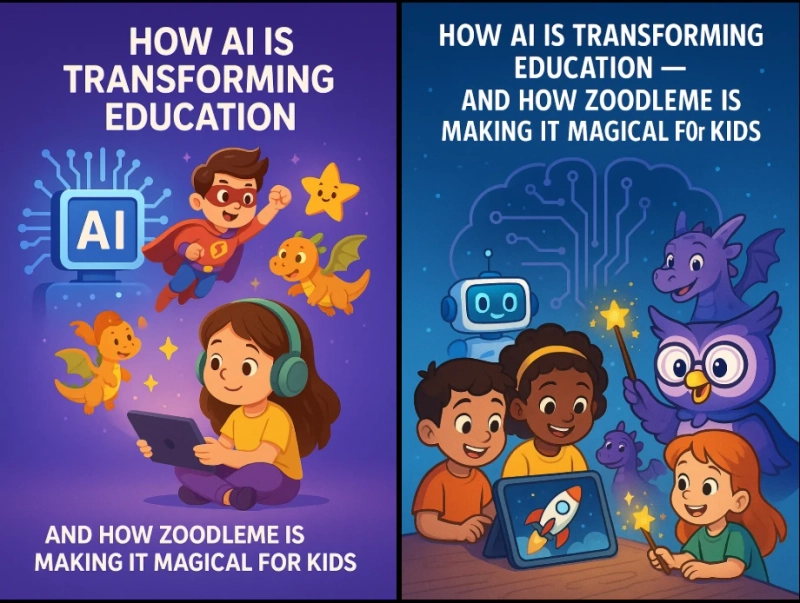
How AI Is Evolving and Reshaping the Future of EdTech
Artificial Intelligence (AI) is no longer just a futuristic concept—it has already started transforming industries across the globe, and education is one of the most promising frontiers. The integration of AI into education technology (EdTech) is not only making learning smarter and more efficient but also more engaging and personalized for learners of all ages.
Today’s classrooms and learning platforms are no longer limited to static books and one-size-fits-all curricula. With AI-powered innovations, children can now learn through interactive tools, adaptive content, and personalized feedback mechanisms. These advancements are shaping a new era where education is more inclusive, immersive, and impactful.
From Content Delivery to Personalized Learning
Traditional education has always faced a major challenge: how to cater to students with diverse learning paces, interests, and styles. AI bridges this gap by creating systems that can adapt to individual learners.
For example, a digital storytelling app can now adjust stories to fit a child’s comprehension level while embedding lessons in math, science, or language within the narrative. Instead of rote memorization, children engage with characters, solve puzzles, and experience stories that teach concepts in a memorable way.
This kind of personalization not only boosts academic understanding but also fosters a lifelong love for learning.
Gamification Meets Artificial Intelligence
Gamification—using game-like elements in learning—has been around for years. However, with AI, gamification has reached new heights. Instead of generic quizzes or challenges, AI can create adaptive games that adjust difficulty levels in real time.
A child struggling with geometry, for example, might be guided through an interactive story maker app where a superhero explains shapes while solving missions. Similarly, AI can reward progress with tailored encouragement, making learning feel less like a chore and more like an adventure.
This trend is especially powerful in early education, where engagement is crucial. When children see learning as fun, they retain concepts faster and apply them more effectively.
Accessibility and Inclusivity
One of the most transformative impacts of AI in EdTech is its ability to make education more accessible. Tools like speech-to-text, real-time translations, and adaptive reading aids are breaking barriers for children with learning disabilities or those from non-English-speaking backgrounds.
AI ensures that no child is left behind. A well-designed learning app for kids can provide customized pathways for every learner—whether they are visual, auditory, or kinesthetic learners. This democratization of education means that knowledge is no longer a privilege but a right accessible to all.
Data-Driven Insights for Better Outcomes
Teachers and parents often struggle to understand where a child is excelling and where they are falling behind. AI solves this problem by analyzing learning patterns and providing real-time feedback. Parents can see not just scores but also insights into how their child learns, what motivates them, and what areas need improvement.
This trend of data-driven education is redefining how progress is measured. It’s no longer about marks alone—it’s about growth, skills, and confidence.
What’s Next? The Future of AI in EdTech
As AI continues to evolve, we can expect even more exciting trends in EdTech:
- Immersive Learning with AR/VR + AI: Imagine children exploring the solar system in 3D while AI narrates tailored stories.
- Hyper-Personalized Curricula: Entire study plans designed uniquely for each child.
- Emotion AI: Systems that can detect when a child is frustrated or disengaged and adjust the content accordingly.
The future of education is not about replacing teachers but empowering them with tools that can make teaching more impactful and personalized.
Conclusion
AI is not just evolving education—it is revolutionizing it. From digital storytelling apps that make bedtime stories educational, to interactive story maker apps that turn math and science into magical adventures, to learning apps for kids that offer personalized, ad-free environments, AI is changing how children engage with knowledge.
The trends are clear: the future of EdTech will be powered by personalization, gamification, accessibility, and data-driven insights. Education is no longer bound by classrooms or rigid curricula—it’s becoming a dynamic, evolving journey, guided by the limitless potential of AI.