



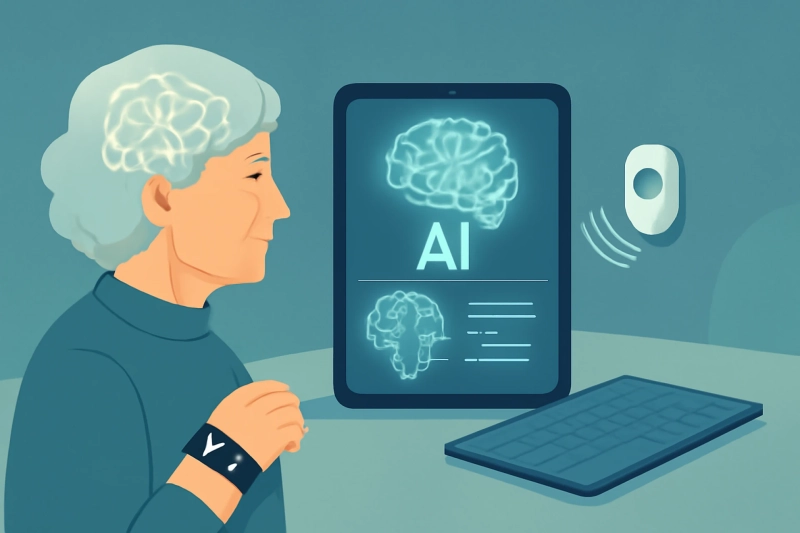
As dementia rates continue to rise globally, the need for more effective care solutions becomes increasingly urgent. Technological advancements, especially in artificial intelligence (AI) and smart devices, are shaping the future of dementia care in ways that were once thought to be impossible. Today, the integration of AI-powered systems and innovative smart devices is improving the quality of life for dementia patients while easing the burden on caregivers. This blog post explores how these technologies are transforming Alzheimer's care and how they could revolutionize dementia monitoring and treatment in the coming years.
1. The Role of AI in Dementia Care
Artificial intelligence has emerged as a game-changer in the healthcare industry, particularly in the realm of dementia care. AI is being leveraged to develop systems that assist caregivers and healthcare professionals by offering real-time monitoring and predictive insights into the patient's condition. This shift towards AI-powered tools is creating new opportunities to enhance patient safety, provide personalized care, and improve the overall quality of life for people with dementia.
AI can help detect early warning signs of Alzheimer's disease and other types of dementia by analyzing patterns in patient behavior and cognitive function. These systems can alert caregivers when a patient's condition requires attention, allowing for timely interventions. Over time, AI systems can learn from the patient's behavior and adapt to their specific needs, creating a more customized care experience.
2. Smart Devices: A New Era of Monitoring
Smart devices are becoming a key part of dementia care, offering more than just convenience—they provide critical insights into a patient's condition. Devices such as wearable sensors, smartwatches, and even sensor mats are now being used to monitor the daily activities of dementia patients. These devices track vital signs, detect falls, and monitor movement patterns, all of which are vital for managing the patient's health and safety.
For example, sensor mats placed under the patient’s bed or in the bathroom are designed to detect movement and alert caregivers if the patient has fallen or is wandering. These sensor mats for the elderly are a simple yet effective tool for monitoring patients without the need for constant supervision. They also help to identify any sudden changes in behavior that might indicate an emerging issue, allowing for early intervention.
3. The Best Products for Dementia Patients: A Shift Toward Smart Solutions
When it comes to choosing products for dementia care, technology is increasingly at the forefront. The best products for dementia patients now combine traditional care methods with cutting-edge technology. Whether it’s a sensor mat for elderly patients that detects unusual movements or an AI-powered monitoring system that tracks cognitive decline, the range of options available is growing.
Some of the most notable Alzheimer's care products include smart medication dispensers that remind patients when it's time to take their medication, AI-driven memory aids, and communication devices that help patients stay connected with loved ones. These products not only assist in managing the physical and cognitive symptoms of dementia but also provide peace of mind for caregivers who may not always be present.
4. How AI Can Enhance Fall Prevention
Falls are a common and dangerous issue for dementia patients. Due to their cognitive impairments, individuals with dementia often struggle with balance and spatial awareness, making them more prone to accidents. This is where AI-driven technology and sensor mats can play a crucial role. By using pressure mats for elderly patients, caregivers can receive alerts if a patient attempts to get out of bed or wander away from their designated area, reducing the risk of falls.
AI algorithms can also analyze movement patterns and alert caregivers if something seems out of the ordinary, such as a sudden change in gait or walking speed. With real-time alerts, caregivers can quickly assess the situation and prevent potential falls, improving overall safety and reducing the likelihood of serious injury.
5. Data-Driven Insights for Personalized Care
One of the most powerful aspects of AI and smart devices is their ability to gather and analyze data over time. This data-driven approach allows healthcare professionals to gain deeper insights into a patient's condition, which can be used to customize treatment plans. For example, AI can track changes in sleep patterns, eating habits, and physical activity, which are all critical indicators of cognitive health in dementia patients.
By analyzing this data, AI can offer personalized recommendations, helping caregivers to adjust routines or make environmental changes to improve the patient's well-being. This level of personalized care is a significant advancement compared to traditional methods, which often rely on generalized approaches that may not suit every patient’s needs.
6. The Rise of Remote Monitoring Systems
As the demand for dementia care continues to grow, remote monitoring systems are becoming a vital tool for managing care from a distance. These systems use a combination of AI, sensors, and smart devices to keep track of a patient’s activities and health status, offering caregivers real-time access to information. This allows family members or professional caregivers to monitor patients without needing to be physically present.
Remote monitoring systems often include alerts for abnormal behavior, such as a patient getting out of bed at odd hours, wandering, or forgetting to take medication. This technology not only provides peace of mind but also ensures that patients receive the appropriate care, even when family members or caregivers cannot be with them all the time.
7. AI-Powered Communication Tools: Bridging the Gap
For individuals with dementia, communication can often become a significant challenge. Whether it’s due to memory loss, difficulty finding the right words, or confusion, many patients struggle to express themselves. AI-powered communication tools are helping bridge this gap by enabling easier communication between patients and caregivers, as well as between patients and their families.
Devices that use AI to recognize speech patterns and assist with communication are transforming how dementia patients interact with others. These tools can provide reminders, help patients express their needs, and even translate gestures into words. This technology ensures that patients can maintain a sense of independence while staying connected to their loved ones.
8. Overcoming Challenges: Privacy and Security Concerns
While the integration of AI and smart devices into dementia care offers numerous benefits, it also raises concerns about privacy and security. The collection of sensitive health data through AI and sensors means that protecting patient information is more important than ever. Healthcare providers and caregivers must ensure that the systems they use comply with strict privacy regulations, such as HIPAA, to safeguard patient information.
Moreover, there is a need for ongoing education and awareness about how to securely use these technologies. Family members and caregivers must understand the potential risks associated with AI systems, including the importance of data encryption and maintaining secure access to patient information.
9. The Future of Dementia Care: What Lies Ahead
Looking ahead, the future of dementia care is poised to undergo a significant transformation thanks to advancements in AI and smart technology. As these systems continue to evolve, we can expect even more sophisticated products that offer enhanced monitoring, better prediction models, and more personalized care. From AI-driven care plans to smarter sensor mats for the elderly, the future is bright for dementia patients and their families.
In the coming years, we may also see the integration of virtual reality (VR) and augmented reality (AR) into dementia care, providing immersive experiences that can stimulate cognitive function and enhance emotional well-being. As technology continues to advance, we can be confident that the future of dementia care will be safer, more efficient, and more compassionate than ever before.
Conclusion: Embracing Technology for Better Care
AI and smart devices are no longer just futuristic concepts; they are already playing an essential role in enhancing dementia care today. With products like pressure mats for elderly patients, AI-driven monitoring systems, and Alzheimer’s care products, the landscape of dementia care is evolving rapidly. As we continue to embrace these technologies, the future of dementia care looks brighter than ever, offering new hope for those living with Alzheimer's disease and other forms of dementia.
By integrating AI and smart devices into daily care routines, caregivers can offer better, more personalized care while improving patient safety and quality of life. The next decade promises exciting advancements in dementia care that will change how we approach the treatment and management of cognitive decline.