



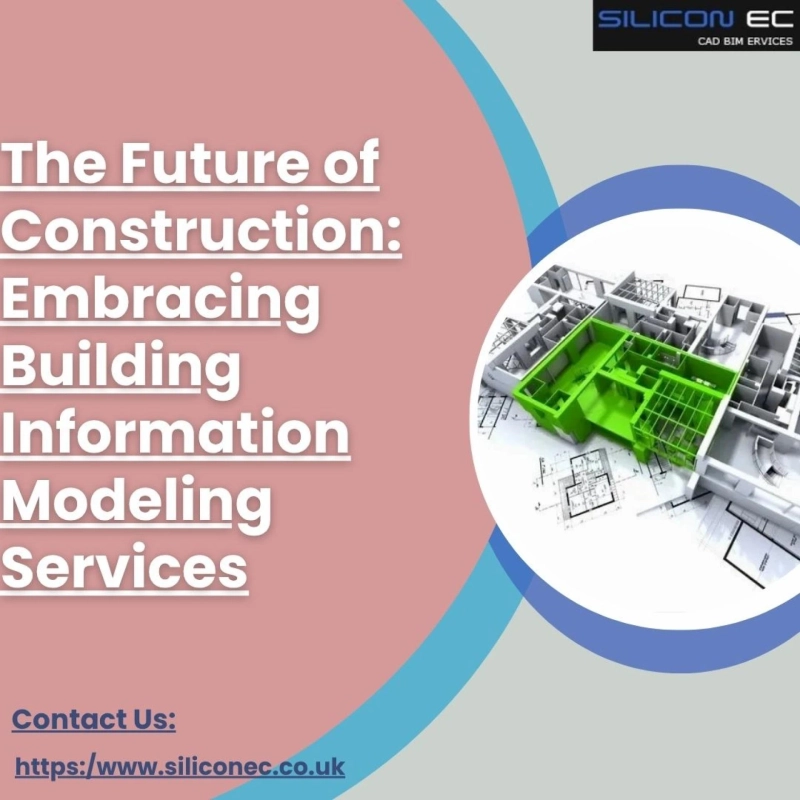
Our construction industry is changing faster than ever before. From small residential projects to massive commercial developments technology has started to play a major role in every phase of design, planning and execution. One of the most significant innovations driving this transformation is Building Information Modeling, commonly known as BIM.
Building Information Modeling services are no longer just an optional tool for forward-thinking firms they are becoming the new standard that everyone from architects to engineers to contractors relies on for delivering successful projects. In this article we will explore why BIM is shaping the future of construction, how it works and what benefits it offers to all stakeholders involved in building projects.
Understanding Building Information Modeling Services
At its core Building Information Modeling is a process that uses intelligent 3D models to create a digital representation of a structure's physical and functional characteristics. Unlike traditional 2D drafting BIM includes much more information, such as materials, structural data, cost estimates, timelines and maintenance information.
When a project team uses BIM services they are not just drawing lines on paper or on a screen they are building a comprehensive virtual model of the project long before construction begins. This model can be shared, updated and reviewed in real-time by everyone involved.
For example an architect can create the initial design, an engineer can analyze structural performance, a contractor can plan the construction sequence and a facility manager can use the same model for future maintenance. BIM makes all of this possible in a single, shared environment.
Why the Industry Is Moving Toward BIM
There are many reasons why BIM services are becoming the go-to solution for construction companies and design firms around the world:
- Better Collaboration
- Traditional workflows often rely on separate drawings and documents created by different disciplines. This leads to confusion, delays and costly mistakes. In our BIM everyone works from the same model making it easier to coordinate, detect clashes and resolve issues before they become problems on site.
- Greater Accuracy
- BIM models are highly detailed and accurate. They contain data about dimensions, materials and specifications reducing the risk of errors that commonly occur in 2D drafting. This accuracy ensures that all stakeholders are working with reliable information from start to finish.
- Improved Efficiency
- By visualizing every aspect of a project in 3D, teams can plan construction sequences, material deliveries and labor allocation more efficiently. Our BIM saves time by automating many tasks such as quantity take-offs and clash detection.
- Cost Savings
- Errors and rework are among the biggest sources of wasted money in construction. BIM services help avoid these issues reducing change orders and delays. Additionally better planning leads to smarter purchasing decisions and more predictable budgets.
- Enhanced Visualization
- Clients and stakeholders can see exactly what the finished building will look like before construction begins. This clarity improves decision making and helps secure approvals faster.
- Sustainability and Lifecycle Management
- Our BIM allows teams to analyze energy performance, lighting, heating, cooling and other factors that impact sustainability. The model also becomes a valuable resource for managing the building throughout its lifecycle.
The Core Components of BIM Services
Building Information Modeling services are made up of several essential components that support the entire process of designing, constructing and operating a building:
3D Modeling
The foundation of BIM is a detailed 3D model of the building, including architectural, structural and MEP (mechanical, electrical and plumbing) systems.
Data Management
Each component in the model carries rich information about its properties and behavior which can be extracted and analyzed as needed.
Collaboration Platforms
BIM relies on cloud-based collaboration tools that allow project teams to access and update the model in real-time.
Clash Detection
One of the most valuable aspects of BIM is its ability to detect clashes between different building systems before construction starts. This proactive approach prevents costly delays.
4D and 5D BIM
BIM can incorporate time (4D) and cost (5D) data into the model enabling teams to create more precise construction schedules and budgets.
How BIM Changes Project Delivery
In the traditional design-bid-build process information moves in a linear fashion from designers to contractors to owners. This often leads to gaps in communication and accountability. BIM introduces an integrated approach known as Integrated Project Delivery (IPD).
This shift is significant because it not only improves outcomes but also transforms the relationships between project stakeholders. Designers, engineers, contractors and owners all have access to the same information reducing misunderstandings and creating a more efficient workflow.
Real-World Benefits of Embracing BIM
Across the world companies that have adopted BIM services are seeing measurable benefits:
🔹 Reduced Change Orders – By identifying issues early BIM helps avoid costly rework during construction.
🔹 Faster Project Delivery – Streamlined workflows and better planning translate into shorter timelines.
🔹 Improved Quality – Higher accuracy in design and documentation leads to better quality buildings.
🔹 Increased Client Satisfaction – When clients can visualize the finished product they feel more confident in the process and the results.
🔹 Better Facility Management – The digital model serves as a valuable tool for maintenance and future renovations.
Barriers to Adoption and How to Overcome Them
While the advantages are clear some companies still hesitate to invest in BIM. The most common barriers include:
Upfront Costs – Implementing BIM software and training staff requires an initial investment. However, these costs are often offset by the savings achieved through improved efficiency and fewer errors.
Learning Curve – Teams may feel overwhelmed by new tools and workflows. Investing in training and working with experienced BIM consultants can ease this transition.
Resistance to Change – Shifting from traditional drafting methods to BIM requires a cultural change within organizations. Clear communication of the benefits and a step-by-step approach can help overcome this resistance.
The Role of BIM Consultants and Service Providers
Many companies choose to work with specialized BIM service providers who have expertise in creating, managing, and delivering BIM models. These consultants help organizations implement BIM successfully by offering services such as:
- Revit BIM modeling
- BIM coordination and clash detection
- 4D construction sequencing
- 5D cost estimation
- Scan to BIM services (using laser scanning to create as-built models)
- BIM training and implementation support
By partnering with a BIM services provider, firms can reduce risk and speed up their journey toward digital transformation.
Future Trends in Building Information Modeling
The future of construction will be shaped by even more advanced BIM capabilities. Here are some trends to watch:
Integration with Artificial Intelligence
AI tools will further automate clash detection scheduling and design optimization.
Virtual and Augmented Reality
VR and AR technologies will enable immersive design reviews and on-site guidance using BIM models.
Digital Twins
A digital twin is a live continuously updated model of a building that integrates real-time sensor data. It enables facility managers to monitor and optimize performance throughout the building’s life.
Sustainability Analytics
BIM will play a growing role in achieving net zero energy goals by enabling more precise analysis of environmental impacts.
Conclusion: Why Now Is the Time to Embrace BIM
Our industry is evolving, and Building Information Modeling services are no longer just a trend they are the new foundation of smart, efficient and sustainable construction. Whether you are an architect aiming to create precise designs, an engineer coordinating complex systems, or a contractor seeking to streamline project delivery, BIM is the key to staying competitive.
The earlier you embrace BIM the more you stand to gain. With its ability to improve collaboration, reduce errors, save costs and deliver higher-quality outcomes, BIM is reshaping what is possible in construction.
By investing in Building Information Modeling services today your organization can build the future with confidence, clarity and unmatched precision.