



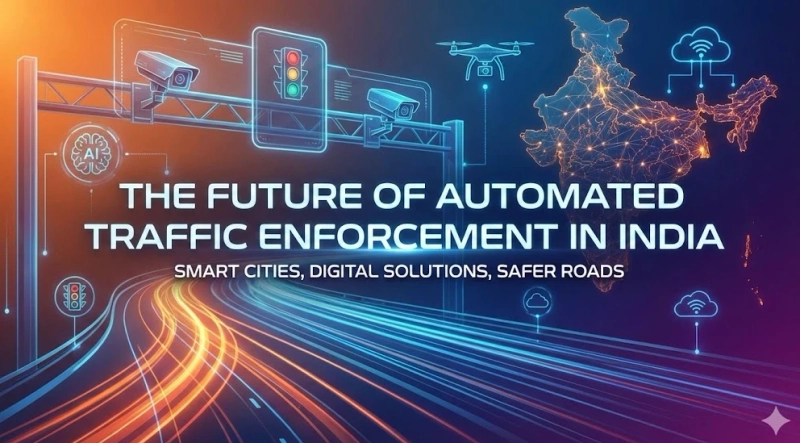
The rise of technology has transformed numerous sectors, and traffic enforcement in India is no exception. With a rapidly growing population and an increasing number of vehicles on the road, ensuring road safety has become a significant challenge. Traditional methods of traffic monitoring and enforcement are often inefficient and prone to human error. However, the introduction of automated traffic enforcement systems, particularly e-challan services, has brought about a revolution in how traffic violations are detected, penalized, and managed. In this blog, we will explore the future of automated traffic enforcement in India, focusing on the integration of e-challan systems and their potential benefits.
What is Automated Traffic Enforcement?
Automated traffic enforcement refers to the use of technology to monitor traffic laws and issue penalties for violations without the need for direct human involvement. This includes the use of cameras, sensors, and algorithms to detect violations such as speeding, running red lights, illegal parking, and more. In India, this system has evolved into e-challan services, where traffic violators receive electronic challans (fines) through SMS or email, which can be paid online.
The Current State of E-Challan in India
India has made significant progress in adopting e-challan systems across various states and cities. The system works by capturing traffic violations using surveillance cameras and traffic sensors. Once a violation is detected, an automated process generates a challan, which is then sent to the violator’s registered mobile number or email address.
For instance, cities like Delhi, Mumbai, Bangalore, and Pune have already implemented e-challan systems, making it easier for citizens to check and pay their fines online. The e-challan system offers several benefits, including:
- Convenience: Violation notifications and payments can be made through mobile apps or websites.
- Transparency: The system reduces human intervention, minimizing corruption and errors.
- Efficiency: Automatic detection and penalty generation make the process faster and more accurate.
Why E-Challan is the Future of Traffic Enforcement in India
The future of traffic enforcement in India lies in the continued evolution of e-challan systems. Here’s why automated systems are gaining momentum:
1. Enhanced Road Safety
The primary objective of traffic laws is to ensure road safety, and automated enforcement plays a crucial role in this. E-challans make it possible to detect violations in real-time, reducing the chances of accidents caused by violations like overspeeding, red light jumping, or wrong lane driving.
Automated systems are capable of monitoring a larger number of vehicles than human officers, thus covering more areas and ensuring compliance with road safety rules. With the increase in surveillance cameras and sensors, citizens are more likely to adhere to traffic laws, knowing that violations will be automatically detected.
2. Reduction in Human Error and Corruption
One of the most significant advantages of automated traffic enforcement is the reduction in human error. Human officers can make mistakes when issuing fines, or they might overlook certain violations. Automated systems, on the other hand, work 24/7, ensuring that every violation is captured accurately.
Additionally, automated systems reduce the opportunities for corruption, as they remove the need for direct human involvement in the fine issuance process. This creates a more transparent system where violators are held accountable without the possibility of tampering or negotiation.
3. Convenience for Citizens
E-challan systems have made it incredibly convenient for citizens to manage their traffic fines. With the rise of mobile apps and websites, checking and paying fines has never been easier. Most e-challan platforms offer an intuitive interface where citizens can simply enter their vehicle registration number or challan number to check for pending fines.
Moreover, the ability to pay fines online or through mobile wallets eliminates the need to visit RTO offices or banks. This makes the process hassle-free, saving time and effort for both citizens and authorities.
4. Data-Driven Decision Making
The data collected through automated systems provides valuable insights into traffic patterns and violations. By analyzing this data, authorities can identify high-risk areas, peak violation times, and frequent offenders. This helps in optimizing traffic management, allocating resources more effectively, and implementing preventive measures in areas with high traffic violations.
5. Reduced Traffic Congestion
Automated enforcement systems contribute to reducing traffic congestion by discouraging rule violations. When drivers know that violations will be automatically detected, they are more likely to follow traffic laws, leading to smoother traffic flow. This is particularly important in metropolitan cities where traffic jams are a daily issue.
The Role of Technology in Shaping the Future of Traffic Enforcement
The future of automated traffic enforcement in India is intrinsically tied to advancements in technology. Here are some key technologies that are expected to shape the future of e-challan systems:
1. Artificial Intelligence and Machine Learning
Artificial intelligence (AI) and machine learning (ML) are set to revolutionize traffic enforcement. These technologies can improve the accuracy of violation detection by analyzing complex data in real-time. AI can identify subtle violations, such as vehicle lane violations or distracted driving, which may be difficult for traditional systems to detect.
AI-powered systems can also optimize traffic light timings, reducing congestion and improving overall traffic flow. Machine learning algorithms can continuously improve the system’s ability to detect and penalize violations by learning from previous data.
2. Integration with Smart City Infrastructure
As Indian cities work towards becoming smarter, the integration of e-challan systems with other smart city technologies will play a crucial role in enhancing traffic enforcement. Smart traffic lights, automated vehicle registration plate recognition, and sensor-based systems can seamlessly work together to create an interconnected network that monitors and manages traffic efficiently.
3. Cloud Computing and Big Data
Cloud computing and big data technologies will enable better storage, analysis, and management of traffic data. With the help of cloud storage, data from various sensors, cameras, and devices can be stored and accessed in real-time. Big data analytics will allow authorities to predict traffic patterns, detect trends, and make data-driven decisions to improve traffic safety.
4. Internet of Things (IoT)
IoT-enabled devices will further enhance the capabilities of automated traffic enforcement systems. Smart sensors embedded in roads or vehicles can communicate with traffic management systems to provide real-time data on traffic conditions, road safety, and vehicle behavior. This can help authorities take immediate action to prevent accidents or manage traffic congestion.
Challenges in Implementing Automated Traffic Enforcement
While the future of automated traffic enforcement in India looks promising, several challenges remain:
- Privacy Concerns: The extensive use of surveillance cameras and data collection raises concerns about privacy. Ensuring that data is used responsibly and only for traffic enforcement is crucial.
- Infrastructure Costs: Implementing and maintaining automated enforcement systems requires significant investment in infrastructure, including cameras, sensors, and data centers.
- Public Awareness: Educating the public about the benefits and working of e-challan systems is essential for the successful adoption of automated traffic enforcement.
Conclusion
The future of traffic enforcement in India is bright, with e-challan systems paving the way for a more efficient, transparent, and data-driven approach to road safety. As technology continues to evolve, automated enforcement systems will become increasingly sophisticated, helping reduce traffic violations, accidents, and congestion. By embracing these systems, India can create safer roads for everyone, making it a model for the future of smart transportation.