



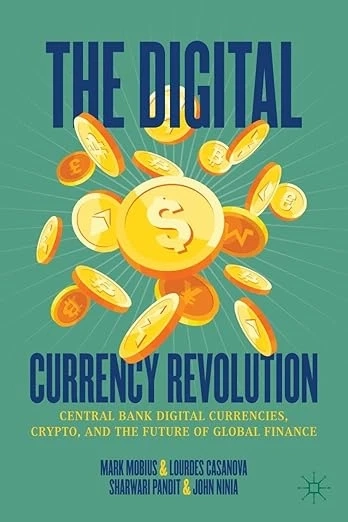
Money is going digital, and the transformation is happening faster than most people realize. What was once a futuristic idea is now becoming reality in countries around the world. Central banks, governments, and financial institutions are racing to adapt to a new era where physical cash may no longer be king. Understanding this shift isn't just for economists anymore—it affects everyone who uses money.
This Book Covers the Explosion of Digitalization and Financial Technology
Over the past ten years, emerging markets have experienced unprecedented growth in digital finance. Mobile payment systems and financial technology platforms have transformed how millions of people handle their money. In many developing countries, people who never had bank accounts now make payments with their phones. This digital revolution has created alternative financial systems that operate independently of traditional banks. These new systems have grown so powerful that central banks can no longer ignore them. The response has been swift: governments are now fast-tracking their own digital currency solutions, moving Central Bank Digital Currencies from theoretical concepts to actual pilot programs.
This Book Covers the Rapid Global Adoption of CBDCs
The interest in CBDCs has spread across the world at an astonishing pace. According to the Atlantic Council's CBDC tracker, more than 95% of the global economy is now considering some form of digital currency. This isn't just a handful of innovative countries experimenting—it's nearly every major economy on the planet. What makes this even more remarkable is the speed. Just a few years ago, CBDCs were barely discussed. Today, they're being tested, refined, and prepared for launch in multiple nations simultaneously.
This Book Covers How Emerging Markets Are Leading the Way
While most of the world is interested in digital currencies, emerging markets have moved beyond interest to action. These countries have raced ahead in implementing pilots and launching various CBDC models. Developing nations often face unique challenges that make them ideal testing grounds for new financial technology. Whether it's reaching unbanked populations, reducing corruption, or building more efficient payment systems, emerging markets have compelling reasons to innovate quickly.
This Book Covers the Emergence of Digital Payments, Cryptocurrencies, and CBDCs
The book examines how digital payments, cryptocurrencies, and CBDCs all emerged and evolved. As emerging markets experiment with these futuristic financial instruments, the book provides detailed case studies from a diverse range of countries. Each nation brings its own economic and social context to the table. By exploring these real-world examples, readers can see how different societies approach the same technological challenges in vastly different ways.
This Book Covers Both the Positive and Negative Consequences Globally
Digital currencies promise many benefits, but they also come with serious risks. The book provides an updated overview of initiatives worldwide, examining both their advantages and drawbacks. On one hand, digital currencies can increase financial inclusion, speed up transactions, and reduce costs. On the other hand, they raise troubling questions about privacy and the concentration of power in central banks. The book doesn't shy away from these concerns, presenting a balanced view of what digital currencies mean for society.
This Book Covers Privacy Debates and U.S. Concerns About Government Control
Among the most common arguments against CBDCs are concerns about privacy and central bank autonomy. Critics worry that digital currencies give governments unprecedented access to personal financial information. In the United States, these concerns are particularly acute. American critics argue that if physical cash becomes obsolete, the government gains far more control over citizens' spending and financial transactions. Every purchase, every transaction, every financial decision could potentially be monitored. This represents a fundamental shift in the relationship between individuals and the state—one that many find deeply troubling.
This Book Covers the Potential Disruption of the Global Financial Order
Finally, the book explores how wholesale and retail CBDCs, cryptocurrencies, stablecoins, cross-border payment instruments, and digital payment systems could disrupt the entire global financial order. These aren't small changes—they're potentially revolutionary. The book engages with the ongoing policy debates and conflicts surrounding financial payments and digital currencies. At stake is nothing less than the future strength and relevance of physical currency itself.
Want to understand how digital currencies will reshape your financial future? The Digital Currency Revolution provides clear, accessible insights into one of the most important economic transformations of our time. Whether you're curious about cryptocurrency, concerned about privacy, or simply want to understand where money is headed, this book is your guide. Available now on Amazon and Barnes & Noble.