



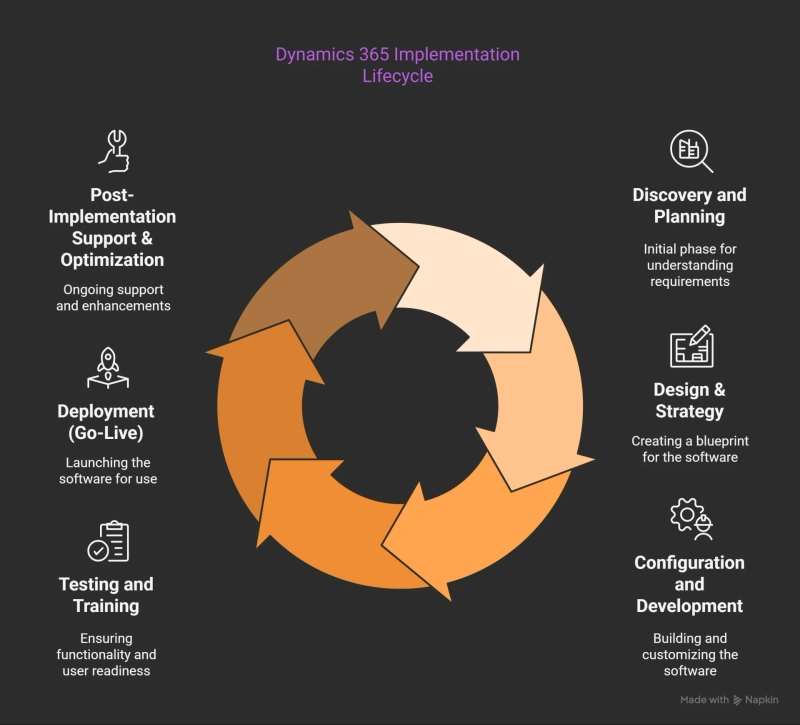
In today’s competitive digital age, businesses need smart solutions to stay efficient, agile, and customer-centric. A well-executed Dynamics 365 implementation can bring your entire business together—from sales and service to finance and operations—on one powerful platform. But what does it take to implement Dynamics 365 the right way? Let’s break down the full journey, step by step.
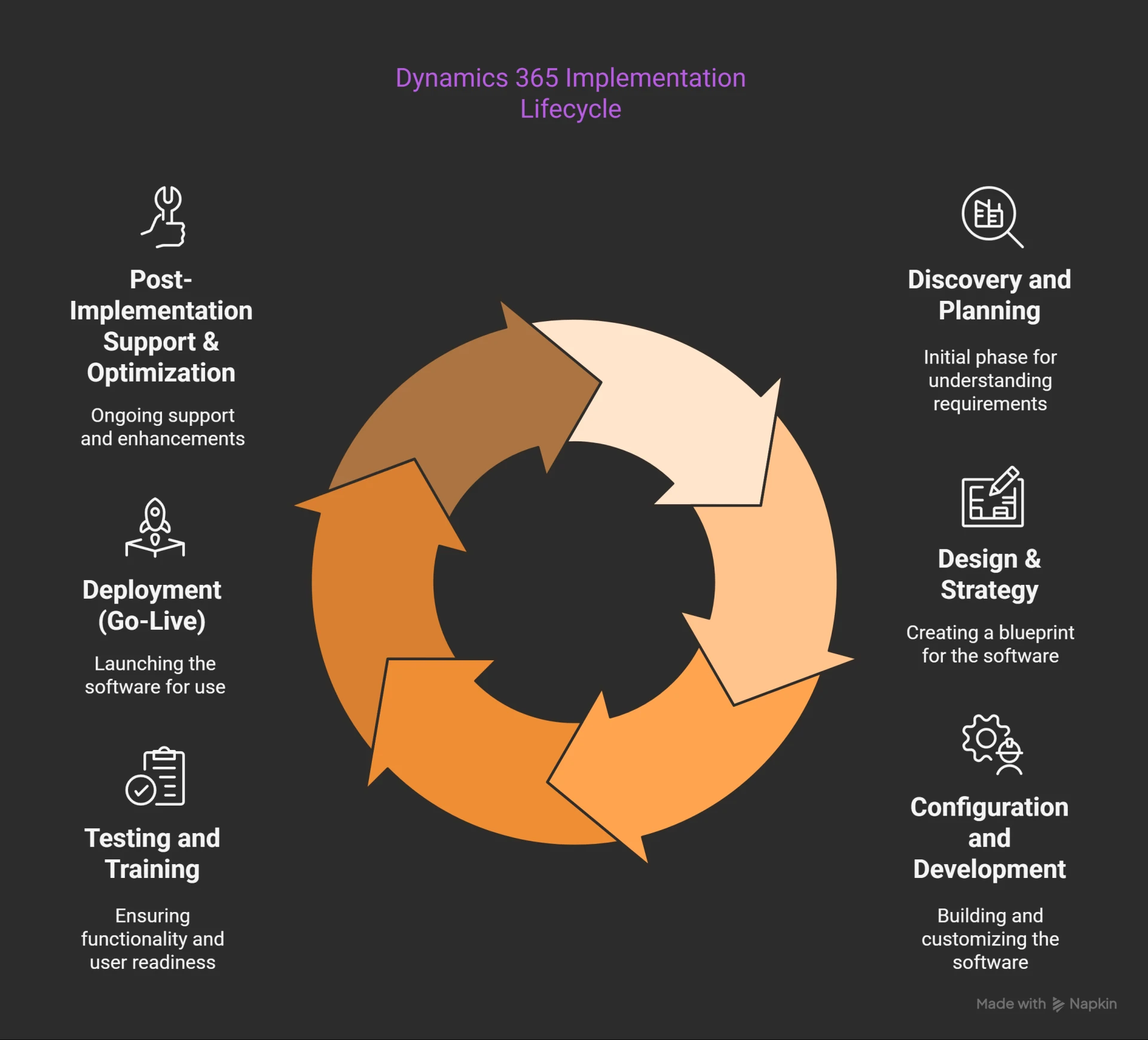
Phase 1: Discovery & Planning
Every Dynamics 365 implementation starts with a deep dive into your business goals and challenges. This discovery phase is critical in setting a strong foundation for the rest of the project.
Key actions:
- Identifying pain points across departments
- Interviewing key stakeholders and decision-makers
- Choosing the right Dynamics 365 modules for your business
- Defining success metrics (KPIs) and setting a realistic timeline
This stage ensures everyone is aligned before the technical work begins.
Phase 2: Solution Design
Once the goals are clear, the next step in the Dynamics 365 implementation process is designing how the solution will work for your business.
Key activities include:
- Mapping out business processes and workflows
- Deciding on customizations and third-party integrations
- Planning a data migration strategy
- Forming a project team including IT, management, and solution partners
This phase determines whether standard features will suffice or if the system needs to be customized for your operations.
Phase 3: Configuration & Development
Now, the system starts to take shape. During this stage of the Dynamics 365 implementation, the platform is tailored to your organization’s specific needs.
This involves:
- Setting up user roles, environments, and modules
- Developing custom apps, fields, or automation workflows
- Integrating with external systems like Outlook, SharePoint, or legacy tools
- Cleaning and preparing your data for migration
Collaboration between developers and business users is key here to ensure functionality meets real-world use.
Phase 4: Testing & Training
Before your Dynamics 365 solution goes live, it’s important to ensure everything functions correctly and users know how to use it.
Focus points:
- Conducting User Acceptance Testing (UAT)
- Fixing issues, bugs, and improving performance
- Training end-users based on their job roles
- Preparing documentation and user guides
A smooth Dynamics 365 implementation depends heavily on how well your teams are trained and supported.
Phase 5: Go-Live & Deployment
This is the big moment your Dynamics 365 implementation goes live. But success here depends on preparation and support.
What happens now:
- Creating a backup of old systems
- Finalizing data migration
- Monitoring system health and user feedback
- Providing on-demand support to fix early issues
A phased rollout, starting with essential functions, often helps reduce risks.
Phase 6: Post-Implementation Optimization
Your journey doesn’t end at go-live. Continuous improvement is essential for long-term success with your Dynamics 365 implementation.
Post-go-live priorities:
- Gathering feedback from users
- Analyzing KPIs and performance reports
- Making enhancements or expanding features
- Conducting system audits and health checks regularly
This ensures the system stays aligned with business growth and changing needs.
Challenges & How to Overcome Them
Common hurdles in any Dynamics 365 implementation include:
- User resistance: Engage users early and offer proper training.
- Poor data quality: Clean and standardize data before migration.
- Slow adoption: Ensure leadership support and continuous engagement.
Tackling these issues early leads to a smoother implementation experience.
Final Thoughts
A successful Dynamics 365 implementation can transform your business, integrating departments, streamlining operations, and enabling data-driven decisions. Each phase, from discovery to ongoing support, plays a crucial role in long-term success.
Want to unlock the full potential of Dynamics 365? Book your free consultation today and get expert help in driving your implementation forward.