



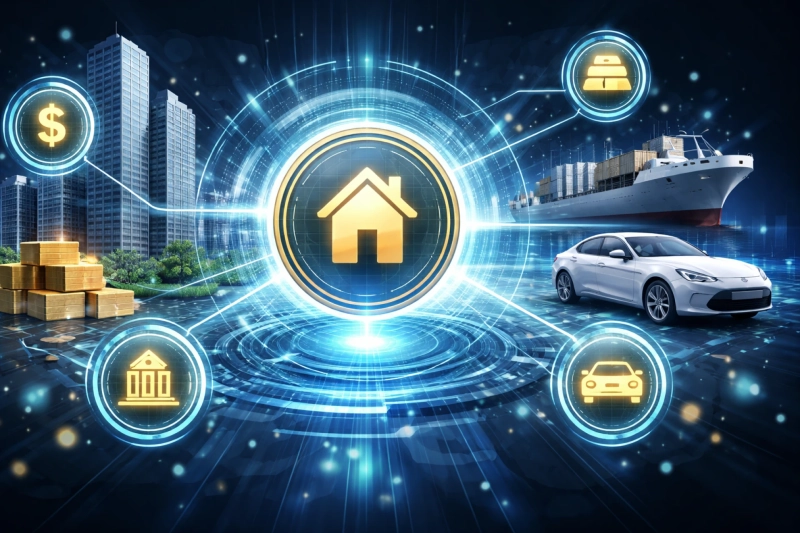
The rise of blockchain technology has enabled a revolutionary approach to investing, trading, and managing assets through tokenization. Tokenization involves converting ownership or rights to real world assets (RWAs) such as real estate, commodities, artwork, or even company shares into digital tokens on a blockchain. These tokens can then be bought, sold, or traded on blockchain networks, opening up new possibilities for accessibility, liquidity, and transparency.
Developing tokens for RWAs is no longer a niche innovation; it is becoming an integral part of modern finance and decentralized ecosystems. This blog explores the advantages of developing RWA tokens, the mechanisms involved, and the long-term benefits for investors, businesses, and the financial ecosystem as a whole.
Understanding Real World Asset Tokenization
Real world asset tokenization refers to the process of representing physical or tangible assets as digital tokens on a blockchain. Each token corresponds to a fraction of the asset’s value, granting the holder certain rights, such as ownership, dividend participation, or access to future profits.
For example, a commercial property worth $1 million can be divided into 10,000 tokens, each representing 0.01% ownership. Investors can buy, sell, or trade these tokens without the need to transfer the underlying asset physically, enabling fractional ownership and global market participation.
Tokenized RWAs often rely on smart contracts, which automate processes such as ownership transfer, dividend distribution, collateralization, and compliance with regulatory frameworks. By doing so, tokenization combines the efficiency and transparency of blockchain with the value of tangible, real-world assets.
Advantages of Developing Tokens for Real World Assets
The tokenization of RWAs offers several strategic, financial, and operational advantages, reshaping how assets are managed and traded.
1. Increased Liquidity
One of the most significant benefits of RWA tokenization is enhanced liquidity. Traditionally, assets like real estate, fine art, or private company shares are highly illiquid, meaning they cannot be sold quickly without significant price concessions. Tokenization allows these assets to be traded digitally on secondary markets, providing investors with instant access to liquidity.
Investors no longer need to wait weeks or months to sell property or shares, as blockchain-based tokens can be transferred and settled almost instantly. This liquidity also attracts a wider range of investors, including retail participants, who may not have the capital to invest in entire assets.
2. Fractional Ownership
Tokenization allows for fractional ownership, enabling multiple investors to hold a portion of a high-value asset. For example, a luxury property or a rare piece of artwork can be divided into thousands of tokens, allowing even small investors to participate.
Fractional ownership democratizes access to previously exclusive markets and reduces the entry barrier for high-value investments. It also encourages diversification, as investors can hold fractional stakes in multiple assets rather than committing all capital to a single investment.
3. Global Accessibility
RWA tokens are accessible to anyone with an internet connection and a compatible digital wallet. This global accessibility eliminates geographical barriers, enabling international investors to participate in markets that were previously limited by local regulations or logistics.
For instance, an investor in Europe could acquire tokens representing U.S. real estate or gold bullion without needing to travel, sign complex paperwork, or interact with intermediaries. This expands investment opportunities and increases the potential investor base for asset owners.
4. Transparency and Security
Blockchain provides a transparent and immutable ledger for recording all transactions associated with tokenized assets. Investors can verify ownership, track token transfers, and monitor asset history, which enhances trust and accountability.
Smart contracts further improve security by automating transactions and enforcing rules without human intervention. For example, dividend distributions, ownership transfers, or collateralized lending processes can be executed automatically, reducing the risk of fraud or errors.
5. Reduced Costs and Intermediaries
Tokenization reduces the need for traditional intermediaries such as brokers, banks, and notaries. By digitizing asset ownership and automating processes through smart contracts, tokenization lowers administrative and transactional costs.
Investors benefit from reduced fees, faster settlements, and less paperwork, while asset owners can raise capital more efficiently. This efficiency is particularly advantageous for high-value assets where intermediary costs can be significant.
6. Faster Settlement and Trading
In traditional finance, asset transfers and settlements can take days or weeks due to manual verification, bank transfers, and regulatory compliance checks. RWA tokenization enables near-instant settlement, as blockchain records transactions in real-time.
This speed is especially valuable for high-frequency trading or cross-border transactions, allowing token holders to quickly buy, sell, or transfer their interests in real-world assets. Faster settlement enhances market efficiency and reduces counterparty risk.
7. Improved Capital Efficiency
Tokenization allows assets to be used as collateral for loans or other financial instruments, increasing capital efficiency. For instance, tokenized property can be leveraged to secure decentralized finance (DeFi) loans, enabling investors to access liquidity without selling the underlying asset.
This creates opportunities for innovative financial products and services, including lending, borrowing, staking, or yield generation, all anchored to real-world assets.
8. Regulatory Compliance and Legal Clarity
Tokenization can be designed to comply with local and international regulations by embedding compliance rules into smart contracts. KYC (Know Your Customer), AML (Anti-Money Laundering), and security token regulations can be automatically enforced during transactions, ensuring legal adherence without manual intervention.
This capability increases investor confidence, especially for institutional participants who require strict compliance protocols. Platforms offering tokenized RWAs can, therefore, bridge traditional finance with blockchain-based DeFi, fostering adoption in regulated markets.
9. Diversification of Investment Portfolios
Tokenized assets allow investors to diversify their portfolios more effectively. By holding fractional tokens of multiple real-world assets, investors can spread risk across real estate, commodities, art, or private equity, reducing exposure to any single asset or market.
Diversification is a fundamental principle of wealth management, and tokenization provides a practical and efficient method to implement it in a digitally native investment ecosystem.
10. Programmable and Automated Asset Management
Tokenized RWAs can leverage programmable features through smart contracts. These features enable automated management of assets, such as:
- Dividend distribution based on rental income or profits
- Dynamic asset allocation within investment funds
- Automated liquidation or collateral management
This automation reduces human error, increases efficiency, and ensures predictable execution of asset-related actions, providing both investors and asset managers with greater control and reliability.
11. Potential for Secondary Markets and Trading Platforms
Once assets are tokenized, they can be traded on secondary markets or specialized token exchanges. This creates an ecosystem where investors can liquidate holdings, speculate on asset prices, or access derivative products backed by real-world assets.
Secondary markets increase liquidity, improve price discovery, and attract global investors, making tokenization more appealing and sustainable as an investment model.
12. Alignment with the Future of Digital Finance
Tokenization aligns with the broader trend toward digital finance, including decentralized finance (DeFi), blockchain-based lending, and programmable money. By developing tokens for RWAs, businesses and investors position themselves at the forefront of a financial revolution that emphasizes transparency, efficiency, and global accessibility.
This alignment is particularly relevant for institutional investors, fintech platforms, and real estate developers seeking to leverage blockchain technology to unlock new capital streams and markets.
Applications of RWA Tokens
Tokenization is applicable across multiple sectors, providing tangible value to investors and asset owners:
- Real Estate: Fractional ownership, rental income distribution, and cross-border investment.
- Commodities: Tokenized gold, silver, oil, and other physical goods for trading and collateral.
- Art and Collectibles: Digital representation of high-value items for fractional investment.
- Private Equity and Venture Capital: Tokenized shares of private companies to enhance liquidity and access.
- Infrastructure Projects: Tokenization of revenue streams from tolls, utilities, or renewable energy projects.
These use cases demonstrate the versatility of tokenized RWAs, creating new opportunities for investment and capital raising.
Conclusion
Developing tokens for real-world assets offers a wide range of advantages that transform traditional finance into a more accessible, efficient, and transparent system. The key benefits include increased liquidity, fractional ownership, global accessibility, reduced costs, faster settlement, programmable asset management, and regulatory compliance.
By tokenizing assets, investors gain the ability to participate in previously inaccessible markets, diversify portfolios, and utilize their assets for additional financial opportunities. Asset owners, in turn, benefit from faster capital raising, broader investor access, and reduced reliance on intermediaries.
As blockchain adoption grows and digital finance continues to evolve, tokenizing real-world assets is poised to become a core strategy for modern investment and wealth management, bridging the gap between tangible assets and the digital economy.