
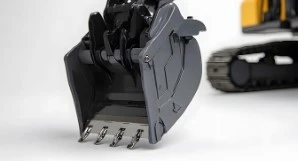
Every year, there is a new attachment that promises to “change everything.” Most do not. In reality, productivity still comes down to having the right tools for the work you actually do. Contractors investing in excavator attachments australia in 2026 are less interested in shiny extras and more focused on attachments that earn their keep day after day.
This guide is not about trends. It is about what actually works on Australian job sites, based on soil conditions, regulations, and the kind of work that keeps machines busy.
Buckets: Still the Workhorse, Still Underrated
Buckets are boring. Until you use the wrong one. General-purpose buckets handle a lot, but that does not mean one bucket fits all. Australian soil conditions vary widely. Clay-heavy ground behaves very differently from sandy or rocky sites. Most serious operators keep:
- A general-purpose bucket for everyday work
- A trenching bucket for services and utilities
- A heavy-duty bucket for abrasive or rocky ground
Swapping buckets costs minutes. Fighting the wrong bucket costs hours.
Hydraulic Hammers: When Digging Isn’t Enough
Sometimes the ground simply refuses to cooperate. Hydraulic hammers are essential for demolition, rock breaking, and stubborn ground conditions. Across Australia, they are common on infrastructure projects, roadworks, and sites near quarry or hard rock zones.
The common mistake is poor sizing. Too small and it struggles. Too large and it stresses the carrier. Matching the hammer to the excavator matters more than brand loyalty.
Augers: Precision Where It Counts
Augers save time when holes need to be cleaned, consistent, and accurately placed. They are widely used for fencing, piling, footings, and landscaping. On tighter sites, augers reduce spoil and cleanup, which clients notice even if they never mention it.
Bit selection matters. Soil, rock, and mixed ground all require different setups. One-size-fits-all usually ends in frustration.
Grapples: Control Over Chaos
Grapples are one of those attachments you do not think you need until you use one properly.
They excel in:
- Demolition cleanup
- Land clearing
- Recycling and material handling
On sites where debris control matters, grapples reduce manual handling and improve safety. They also make operators look far more coordinated than they feel.
Tilt Buckets: Simple, Effective, Often Enough
Not every job needs a tiltrotator. Tilt buckets offer angled control without the cost or complexity of full rotation systems. For grading, shaping, and finishing work, they hit a practical balance between flexibility and simplicity. For many contractors, a tilt bucket delivers most of the benefit with far less investment.
Compactors: Because Ground Prep Is Never Optional
Poor compaction causes problems later. Always. Excavator-mounted compactors are essential for trench work, footings, and backfill. They speed up processes and reduce reliance on separate machines or manual compaction methods. In 2026, efficiency is about reducing handoffs between machines. Compactors do exactly that.
Rippers: Old-School but Still Relevant
Rippers rarely get attention, but they solve specific problems extremely well.
They are useful for:
- Breaking hard ground
- Loosening compacted soil
- Assisting with excavation in tough conditions
Sometimes the simplest attachment is the right one. Rippers prove that regularly.
Matching Attachments to Australian Conditions
Australian job sites are hard on equipment. Heat, dust, abrasive soils, and long operating hours place serious stress on attachments. That is why durability, serviceability, and local support matter. Cheap imports with limited parts availability often cost more in downtime than they save upfront.
Training and Compatibility Matter More Than People Admit
Attachments do not work in isolation. Hydraulic capacity, coupler compatibility, operator training, and maintenance schedules all affect performance. An attachment that looks perfect on paper can underperform badly if the setup is wrong.
In 2026, smart contractors factor training and dealer support into every attachment purchase. It is no longer optional.
Building a Practical Attachment Setup
No contractor needs everything. The most effective fleets build their attachment setup around the work they do most often. Over time, they add tools that solve recurring problems, not hypothetical ones.
That mindset applies across all excavator attachments. When attachments are chosen deliberately, productivity improves without adding complexity. Treating machinery attachments as long-term assets rather than impulse purchases usually pays off.
Excavator attachments are not about having the biggest lineup on site. They are about making the machine you already own work harder, smarter, and more efficiently.
In 2026, the best attachment setup is the one that fits your jobs, your operators, and your environment. Contractors who invest deliberately will outperform those chasing every new release. Everything else is just noise.