



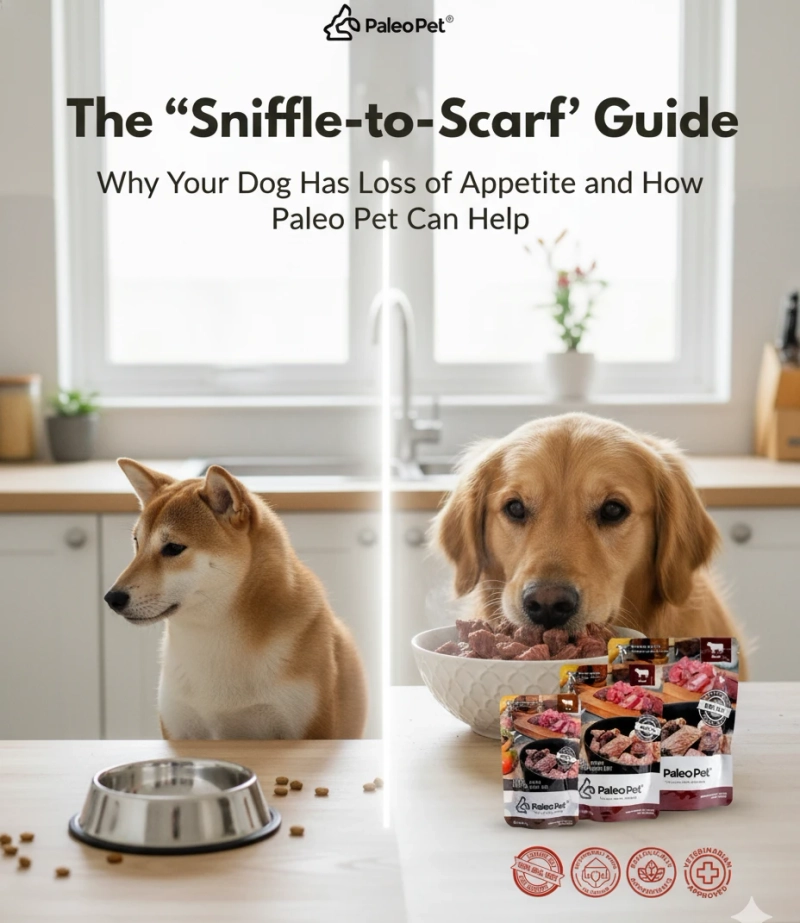
As a devoted Pinoy pet parent, there are few things more worrying than watching your beloved dog turn their nose up at their food bowl. That sudden, inexplicable loss of appetite in dogs (medically known as anorexia or hyporexia) is an instant red flag. It’s a moment of silent distress that cuts straight to the core of their well-being.
At Paleo Pet Philippines, we understand this anxiety intimately. We don't just sell food; we provide the foundational nourishment for a long, vibrant life. Based on our extensive experience in whole-food nutrition and working closely with local pet owners, we’ve compiled this comprehensive guide. We’ll help you decode what your dog is trying to tell you and give you the expert, actionable steps you need to go from a worried "sniffle" to a satisfied "scarf."
Part 1: First, Rule Out the Red Flags When to Call Your Vet IMMEDIATELY
The very first step when your dog is refusing food is to distinguish between a temporary "picky phase" and a genuine medical emergency. A persistent loss of appetite is often the first and sometimes only visible sign of a serious underlying health issue.
🚨 Veterinary Emergency Checklist: Don't Wait!
If your dog exhibits a loss of appetite along with any of the following symptoms, please contact your veterinarian immediately (or an emergency pet clinic in Metro Manila or Cebu):
- Prolonged Refusal: An adult dog skipping food for more than 48 hours, or a puppy/senior dog skipping more than one full day/two meals.
- Vomiting or Diarrhea: Especially if it contains blood or is persistent.
- Lethargy/Weakness: Your dog is unusually tired, sluggish, or unresponsive.
- Excessive Thirst or Urination: This can signal serious issues like kidney disease or diabetes.
- Signs of Pain: Whining, trembling, reluctance to move, or sensitivity around the abdomen or mouth.
- Pale Gums: A sign of shock, severe dehydration, or anemia.
Expert Insight: Many serious conditions common in Filipino pets, like Parvovirus (in puppies), kidney failure (in seniors), or a foreign body obstruction (from swallowing objects), begin with a sudden refusal to eat. Your immediate action can be life-saving.
Part 2: Decoding the Root Cause More Than Just a "Picky Eater"
Once a medical crisis is ruled out by your vet, we can explore the common, non-emergency reasons behind your dog's sudden food aversion. These fall into three main categories: medical/physical, environmental/behavioral, and dietary.
1. The Physical & Hidden Ailments
Sometimes, the cause is physical pain that prevents your dog from eating, even if they want to.
- Dental Disease: This is perhaps the most common reason for pseudo-anorexia (wanting to eat but being unable). A broken tooth, severe gingivitis, or an abscess makes chewing painful. If your dog approaches the bowl then backs away, dental pain might be the culprit.
- Nausea/Upset Stomach: A temporary bout of gastritis (stomach inflammation) from eating something inappropriate (dietary indiscretion, or pag-kaing bawal) can cause acute nausea. They might lick their lips, drool, or eat grass.
- Medication Side Effects: Certain antibiotics, NSAIDs, or other treatments can temporarily suppress appetite or cause nausea. Consult your vet to see if this is a known side effect.
2. The Behavioral & Emotional Triggers
Dogs are creatures of habit and routine. Stress can have a profound impact on their desire to eat.
- Stress and Anxiety: A sudden change in routine moving house, having houseguests, thunderstorms (bagyo), separation anxiety, or the introduction of a new pet/baby can trigger a temporary loss of appetite in dogs.
- Learned Pickiness (The Human Trap): If your dog refuses their food, but eagerly gobbles up a piece of longganisa or a chicharon treat, you might have reinforced a picky behavior. They’ve learned that holding out long enough results in a "better" reward.
- Environmental Factors: The location or state of the bowl matters! Is the bowl near a loud appliance? Is it a metal bowl that clangs? Is it dirty? Competition from another pet can also cause a dog to avoid their meal.
3. The Dietary Disconnect (The Paleo Pet Perspective)
The food itself is often the most overlooked cause, especially for chronic "picky eaters."
- Stale or Spoiled Food: In the Philippines' warm climate, dry kibble can easily go rancid or stale, losing its flavor and appeal.
- Ingredient Fatigue: Feeding the same processed food every single day can lead to dietary boredom. Dogs thrive on the aroma, texture, and natural flavor variety found in whole, fresh foods.
- Lack of Palatability: Many highly processed pet foods contain minimal real meat and are coated in fats and artificial flavors to make them appear appealing, but they lack the dense, natural aroma of real, human-grade protein.
Part 3: From Sniffle to Scarf The Paleo Pet Solution
If you've cleared the medical red flags and suspect the issue is behavioral, environmental, or dietary, you can now focus on encouraging a natural, enthusiastic appetite. This is where a focus on bio-appropriate, whole-food nutrition the Paleo Pet philosophy shines.
The Paleo Pet Advantage for Encouraging Appetite
Paleo Pet meals are crafted with 100% human-grade, single-source meat, using prime cuts and organs, without any fillers, preservatives, or artificial flavorings. This is key because:
- High Palatability: The natural, rich aroma of real meat (like our Chicken, Beef, or Pork Meat Pouches) is an incredibly powerful appetite stimulant far more effective than the synthetic coatings on kibble.
- Gut-Friendly: Our meals are designed to be easily digestible, reducing the potential for tummy upset or inflammation that often suppresses appetite. A healthy gut means a happy eater.
- No Room for Pickiness: When presented with genuinely appealing, nutritious food, dogs are less likely to hold out. Our success with countless picky eaters across the Philippines is a testament to the power of real food.
Expert-Approved Tips to Reignite Appetite
- Warm It Up (The Aroma Trick): Simply warming the food can make a huge difference. A quick, gentle microwave blast or placing our sealed Paleo Pet pouch in hot water for a few minutes significantly enhances the meat’s natural aroma, making it irresistible.
- Elevate the Bowl: For senior dogs or breeds with neck/joint issues (like many large or arthritic Filipino dogs), a raised bowl can alleviate discomfort, making the act of eating painless and encouraging.
- Introduce Novelty with a Topper: If you’re transitioning from kibble, use a small amount of Paleo Pet as an extremely high-value topper. The combination of the meat's texture and smell will often convince a hesitant dog to finish the entire bowl.
- Try a 'Reset' Meal: For a dog who has had an upset stomach or is just being stubborn, a temporary bland diet (boiled chicken breast and white rice/sweet potato, as recommended by your vet) can reset the digestive system before transitioning to a whole-food diet like Paleo Pet.
- Remove the Bowl After 15 Minutes: This is crucial for behavioral pickiness. If they don't eat it, take it away. Offer it again at the next scheduled mealtime. This teaches them that food is only available at specific times, eliminating the expectation of "something better."
Conclusion: Trust Your Instincts, Choose Real Nutrition
A temporary loss of appetite in dogs is a common occurrence, but persistent refusal is a serious warning sign that must be addressed with urgency. As responsible Pinoy pet owners, our primary responsibility is to observe, consult our veterinarians, and provide the best possible nourishment.
If the problem is not medical, the solution is often simple: ditch the fillers and artificial enhancers and return to the diet nature intended.
Paleo Pet Philippines is committed to providing food that not only meets nutritional requirements but is also so naturally delicious and palatable that it encourages even the most reluctant eater to dive in. From a hesitant sniffle to a fully satisfied scarf, we are here to support your dog’s journey to robust health and enthusiastic mealtimes.
🐾 Take Action Now!
Don't let worry linger over a half-eaten bowl. If your dog is currently facing a dietary challenge, try the power of real, human-grade nutrition.
Click here to explore the Paleo Pet Meat Pouches and find the high-palatability, whole-food solution that ends mealtime anxiety for good!