



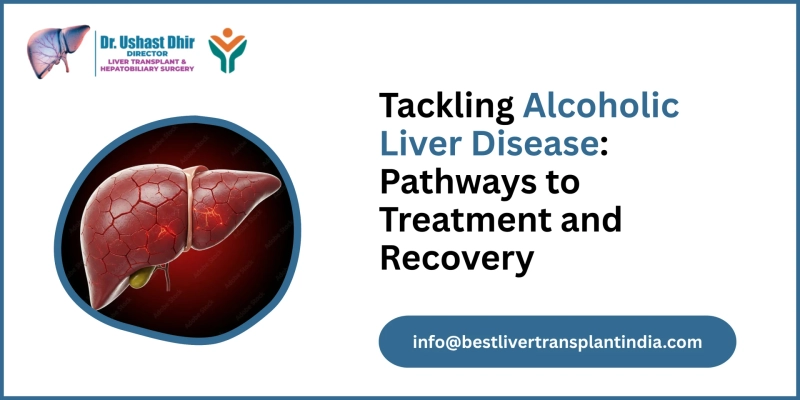
Alcoholic Liver Disease (ALD) remains one of the most significant yet preventable causes of liver injury worldwide. At the heart of caring for ALD is the need for expertise—such as that offered by Dr Ushast Dhir, Director and Head of the Department of Liver Transplantation and Hepato-Biliary Surgery at Sir Ganga Ram Hospital, New Delhi. Through an integrated and multi-modal approach, ALD can be managed from early stages of fatty change through to advanced cirrhosis or liver failure. In this article, we'll explore the nature of ALD, the spectrum of its progression, and the various treatments offered on the main website of Best Liver Transplant India (the hosting portal of Dr Dhir’s service), including lifestyle-based therapies, medical interventions, and advanced transplant options.
Understanding Alcoholic Liver Disease (ALD)
ALD constitutes a spectrum of liver damage caused by prolonged and excessive alcohol consumption—from simple fatty liver (steatosis), to alcoholic hepatitis, to cirrhosis and ultimately end-stage liver failure. The process begins when the liver’s ability to metabolise alcohol safely is overwhelmed, leading to inflammation, scarring and loss of function.
Typical stages include:
- Alcoholic fatty liver: deposition of fat in liver cells; reversible with abstinence.
- Alcoholic hepatitis: inflammation of the liver with symptoms (e.g., jaundice, ascites) and a risk of acute decompensation.
- Alcoholic cirrhosis: chronic scarring of the liver, portal hypertension and functional decline; when irreversible, it may lead to liver failure. Given this spectrum, the earlier ALD is identified and managed, the better the outcomes.
Treatments & Interventions
The service offerings include liver transplantation (living donor and deceased donor), robotic and laparoscopic hepatobiliary surgery, liver cancer treatment, and management of liver cirrhosis, including alcoholic liver disease. The treatments relevant to ALD can be grouped into three broad categories:
Lifestyle modification & medical management
The very foundation of ALD treatment is abstinence from alcohol. Without stopping further injury, even the best therapies will have a limited effect.
- Nutritional support is critical: Many ALD patients are malnourished, and correcting protein-calorie deficits helps stabilise the liver and general health.
- In cases of alcoholic hepatitis, medical therapies (such as corticosteroids) may be applied to reduce inflammation.
- Managing complications (ascites, variceal bleeding, encephalopathy) forms part of specialist care alongside hepatobiliary and transplant teams.
Surgical and interventional hepatobiliary procedures
- For patients with ALD who develop tumours (e.g., hepatocellular carcinoma) or gall-bladder/bile duct complications, the practice led by Dr Dhir offers advanced laparoscopic and robotic surgery.
- These options often serve to either treat complications or prepare for eventual transplant by optimising organ function and surgical readiness.
Liver transplantation
When ALD has progressed to end-stage liver failure and the liver cannot recover despite abstinence and medical support, transplantation is the definitive option.
- On the website, this includes both Living Donor Liver Transplant (LDLT) and Deceased Donor Liver Transplant (DDLT), supervised by Dr Dhir and his team.
- Transplant candidacy in ALD must include a multidisciplinary assessment: liver status, alcohol history, social support and more.
- Post-transplant, lifelong follow-up, immunosuppression management, abstinence and psychosocial support are essential for success.
Why choose the team of Dr Ushast Dhir for ALD management?
- Dr Dhir is a highly experienced hepatobiliary and transplant surgeon, having carried out many complex procedures and transplants, including living-donor operations.
- His profile emphasises a complete spectrum of care: from laparoscopic/robotic surgery to full transplant services — meaning that patients with ALD can access integrated treatment under one roof.
- The portal of Best Liver Transplant India aims to cater to international patients, offering urgent transplant options and full support.
- Given ALD requires not just surgery but also lifestyle, nutrition, addiction support and long-term follow-up, the comprehensive approach evident in this practice is a strong fit.
Conclusion
Alcoholic Liver Disease need not always progress to irreversible damage — with early recognition, total abstinence, nutritional and medical support, many patients can halt or reverse liver injury. However, when ALD advances to cirrhosis or end-stage liver failure, more advanced interventions become necessary. Under the expert leadership of Dr Ushast Dhir at Best Liver Transplant India, patients have access to the full range of therapies: from lifestyle and medical management to minimally invasive surgery and liver transplantation (LDLT or DDLT). If you or a loved one is facing ALD, it is vital to seek expert hepatobiliary care early and to understand that tailored interventions exist to restore health, prolong life and improve quality.