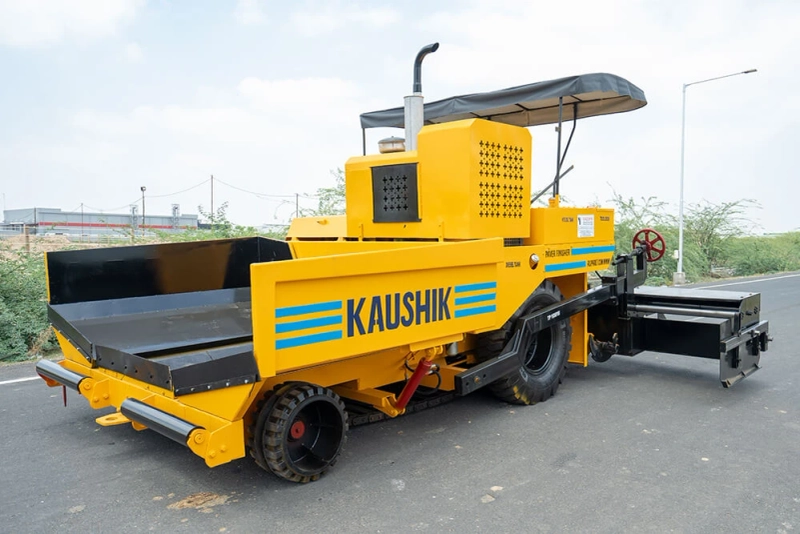
Sustainability in the construction equipment sector has moved from “nice to have” to an operational imperative. In 2026, manufacturers — from global giants to regional specialists — are redesigning products, processes, and business models to cut emissions, shrink resource footprints, and meet tougher customer and regulatory expectations. Below I unpack the most important trends shaping the industry this year and give clear actions manufacturers can take to stay competitive and responsible.
1. Electrification and low-emission powertrains
One of the clearest shifts is toward electric and hybrid machines. Leading OEMs have accelerated development of battery-electric and fuel-cell powered excavators, loaders, and compactors — driven by urban emissions rules, total-cost-of-ownership improvements on high-hour sites, and customer demand for quieter, zero-tailpipe solutions. Electrification also opens opportunities for smarter energy recovery and modular powerpacks that can be swapped or upgraded over a machine’s life.
2. Low-carbon materials and “green steel”
Raw materials — especially steel — are responsible for a large share of a machine’s embodied carbon. In 2026 we’re seeing manufacturers pilot and integrate low-carbon steel and recycled content into serial production, supported by emerging green-steel suppliers and industry partnerships. Shifts in the steel supply chain (hydrogen-DRI, EAF using renewable power, and fossil-free pilot projects) are making lower-carbon metal accessible at scale, letting OEMs cut upstream emissions without redesigning entire platforms.
3. Designing for circularity and longer life
Circular economy principles are moving into product design: modular architectures, fasteners and joints suited to disassembly, standardized replacement modules, and remanufacturing programs. Manufacturers want their parts to be easily recovered, refurbished, and re-used — reducing waste, lowering raw-material demand, and unlocking new revenue from aftermarket remanufacture and certified refurbished machines. Several industry writeups predict that design-for-disassembly and parts reuse will be a core spec for new mid-size machines coming to market.
4. Life Cycle Assessment (LCA) and robust environmental accounting
Buyers and regulators increasingly expect lifecycle-level transparency: what’s the total greenhouse-gas, water, and resource footprint from raw-material extraction through production, operation and end-of-life? Manufacturers are adopting formal LCA methods and integrating them with ISO 14001 environmental management to quantify impacts, identify hotspots, and prioritize design or supplier changes. That data also supports green procurement and helps sales teams make stronger TCO/environmental claims.
5. Process efficiency, renewables, and on-site decarbonization
Sustainability isn’t only product-focused. Plant electrification, waste heat recovery, more efficient machining, and on-site renewables (solar + battery for factories) are lowering Scope 1 and 2 emissions across manufacturing networks. Many firms are combining lean manufacturing with energy audits to cut material waste and energy intensity per unit — an approach that improves margins while shrinking footprints. Recent projects in steel and metals supply chains further reinforce the industrial pull toward decarbonized inputs and cleaner plants.
6. Digitalization, telematics and predictive maintenance
Connected machines let owners run equipment more efficiently and extend asset life. Telematics data enables optimized fuel (or energy) use, load balancing, remote diagnostics, and predictive maintenance — all of which reduce lifecycle emissions and downtime. Manufacturers offering digital service platforms, over-the-air updates, and performance analytics can shift the value proposition from unit sales to uptime and outcomes, while collecting ESG-relevant usage data for LCA and reporting.
7. Policy, standards and market pressures
Governments and buyers are tightening rules and procurement practices. Urban low-emission zones, public tenders favoring low-carbon solutions, and industry commitments to net-zero are pushing OEM roadmaps. Voluntary standards and procurement protocols are also becoming purchasing filters: buyers now prefer suppliers with verifiable LCA disclosures, remanufacturing programs, and ISO 14001 or equivalent certifications. These external pressures make sustainability a topline consideration for R&D and market strategy.
Practical steps manufacturers should adopt in 2026
- Set measurable targets — commit publicly to short- and medium-term goals (e.g., % reduction in embodied carbon per unit by 2028) and map those to product and supplier actions.
- Adopt LCA early in design — use LCA to compare materials, powertrain options, and end-of-life scenarios before freezing specifications.
- Modularize and standardize — design common electronic, battery, or hydraulic modules across product lines to simplify upgrades and remanufacture.
- Build remanufacturing and spare-parts ecosystems — set up certified refurbishment centers and take-back programs; these lower lifecycle impact and create recurring revenue.
- Secure low-carbon supply chains — engage with steel and components suppliers that have credible green-steel or recycled content plans; consider long-term offtake agreements.
- Electrify pilot lines and product tiers — target compact and high-duty-cycle applications first where electrification yields the fastest TCO and emissions wins.
- Measure and disclose — publish annual environmental reports, LCA summaries, and progress against ISO 14001 or equivalent targets to build buyer trust.
Why this is good business
Sustainable practices reduce operating costs (energy, materials, and warranty exposure), attract clients who prioritize climate outcomes, and open access to green finance and public tenders. They also lower regulatory risk as emissions rules tighten. Forward-looking companies that embed sustainability into product architecture and supply-chain decisions gain both market differentiation and resilience.
Closing: combining responsibility with competitiveness
By 2026, sustainability in construction equipment manufacturing isn’t an add-on — it’s a design and commercial imperative. Whether it’s swapping a diesel powertrain for an electric module, specifying low-carbon steel, or offering a certified remanufactured unit, the practical steps listed above make it possible to shrink environmental impact while improving margins and customer outcomes.
If you’re at an OEM or parts supplier thinking through next steps, start with an LCA on a single product line and pilot modular electrification or a parts take-back program. For manufacturers such as Kaushik Engineering Works, integrating these priorities will help secure both customers and compliance in an industry that’s rapidly redefining what “built sustainably” means.