



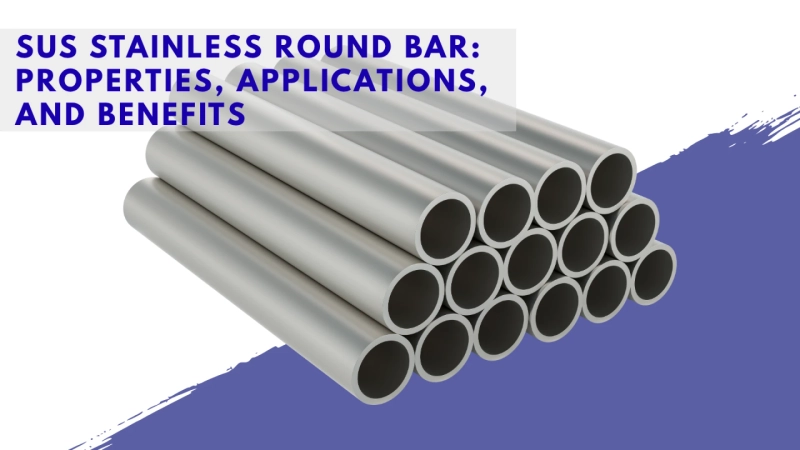
The selection of appropriate construction and industrial materials is paramount in a demanding environment like Thailand's, characterized by high humidity, coastal proximity in many regions, and rapid infrastructure development. Among the most reliable and versatile materials available, SUS stainless round bar—the standard Japanese Industrial Standard (JIS) designation for stainless steel—stands out as a critical component in countless sectors, offering a superior balance of strength, durability, and corrosion resistance.
This article will explore the key properties of the most common austenitic SUS grades used in the Thai market, detail their wide-ranging applications in local construction and manufacturing, and outline the significant benefits that make them indispensable for projects requiring long-term reliability and minimal maintenance. Understanding these aspects is essential for engineers, fabricators, and project managers looking to maximize value and performance.
Key Properties of SUS 304 and SUS 316
Stainless steel is primarily an iron alloy with a minimum of chromium, which forms a protective, self-healing oxide layer, granting it its signature corrosion resistance. Within the austenitic family, SUS 304 and SUS 316 are the two most prevalent grades utilized throughout Thailand's industrial landscape.
SUS 304 Round Bar: The Versatile Workhorse
SUS 304, often referred to as the standard "18/8" stainless steel for its chromium and nickel content, is the most widely used stainless steel grade globally. In Thailand, it is valued for its excellent formability, weldability, and resistance to general corrosion in non-chloride environments. Its key properties include:
- Corrosion Resistance: It performs excellently in fresh water, architectural, and food/beverage applications, resisting rust in moist and mildly acidic settings.
- Mechanical Properties: It provides high tensile strength, ductility, and toughness, making it suitable for a variety of structural and functional parts.
- Cost-Effectiveness: Relative to other high-performance alloys, SUS 304 is the more economical choice, offering a balanced combination of quality and price.
SUS 316 Round Bar: The Marine Grade Specialist
SUS 316 is the second most common austenitic grade and a significant upgrade from 304, particularly in challenging coastal and chemically aggressive areas. The crucial difference is the addition of to molybdenum, which dramatically improves its performance. Its superior properties include:
- Chloride Corrosion Resistance: The molybdenum addition makes SUS 316 exceptionally resistant to pitting and crevice corrosion, especially in environments high in chlorides, such as coastal regions, marine atmospheres, and areas with high salt pollution.
- High-Temperature Strength: It exhibits higher creep, stress-to-rupture, and tensile strength at elevated temperatures compared to SUS 304, making it suitable for high-heat applications.
- Low-Carbon Grades (304L/316L): Low-carbon variants like SUS 316L are often preferred in welding applications as the reduced carbon content minimizes the risk of sensitization (intergranular corrosion) during the welding process.
Widespread Applications in the Thai Market
The unique properties of SUS stainless round bar make it an essential raw material across numerous Thai industries, from heavy manufacturing to the most delicate processing environments.
Construction and Architectural Uses
In Thailand’s humid, often corrosive climate, stainless steel is a material of choice for infrastructure built for longevity.
- Structural and Reinforcement: Round bars are used as structural components, fasteners, and reinforcement in construction, particularly in coastal areas like Phuket and Pattaya where superior corrosion resistance is mandatory.
- Architectural Elements: For aesthetic and functional reasons, SUS round bar is utilized for railings, handrails, balustrades, and fittings in commercial and residential buildings, favored for its smooth surface finishes like polished or bright bar.
Manufacturing and Machinery
The robust mechanical properties of the round bar are vital for producing precision parts for industrial equipment. Thai manufacturers rely on SUS stainless steel for components requiring high precision and resistance to wear.
- Shafting and Bearings: SUS round bars are machined into motor shafts, printer shafts, and water pump shafts, as well as components for machinery and bearings in various plants.
- Automotive and Electronics: They serve as raw material for a wide array of automotive and machinery parts, reflecting the country's strong position in these manufacturing sectors.
Chemical, Marine, and Food Processing Industries
These sectors demand materials that are not just strong but also impervious to specific corrosive agents or stringent hygiene requirements.
- Marine and Offshore: SUS 316 is the dominant material for boat fittings, marine hardware, and coastal construction due to its resistance to seawater and chloride-rich environments.
- Food and Beverage: The non-reactive nature of SUS 304 makes it indispensable for sanitary equipment, fixtures, food processing machinery, and brewery equipment, ensuring high hygiene standards are maintained.
- Chemical and Petrochemical: SUS 316’s high resistance to chemicals and aggressive media, often including heat, makes it ideal for heat exchangers, condensers, and other critical process equipment.
Fabrication and Technical Considerations in Thailand
Working with stainless steel requires specialized knowledge and adherence to best practices to ensure the final product maintains its intended properties. Fabricators in Thailand adhere to international standards, such as ASTM A276/A276M and JIS G4303, to guarantee quality.
Available Forms and Finishes
SUS round bars are available in various conditions and finishes to suit specific application needs in the local market.
- Hot Rolled and Forged: These bars offer good strength and are typically used for large structural components or parts that require further machining.
- Cold Drawn/Bright Bar: Cold-working processes enhance the bar’s mechanical strength, improve dimensional tolerance, and produce a smoother, brighter surface finish, which is highly sought after for precision machining and aesthetic applications.
- Polished and Centreless Ground: Precision finishes like centreless ground and polished are vital for shafts and fittings where dimensional accuracy and a high-quality surface finish are critical to performance and hygiene (e.g., in pharmaceutical or food plants).
Welding Practices
Austenitic stainless steels, including SUS 304 and SUS 316, generally exhibit excellent weldability using standard arc welding processes like TIG (Tungsten Inert Gas) and MIG (Metal Inert Gas). However, maintaining corrosion resistance during fabrication is crucial, especially in a high-demand environment.
- Sensitization Prevention: For SUS 316, particularly in thicker sections or applications where corrosion resistance is paramount, using the low-carbon variant (316L) or a matching low-carbon filler metal (like 316L) is a key best practice in Thailand to mitigate the risk of sensitization.
- Heat Control and Shielding Gas: Welders employ low heat input and fast travel speeds to control heat buildup and minimize warping. The use of inert shielding gases (e.g., argon) is standard to prevent the formation of an oxide layer, or 'heat tint,' which can reduce the material's inherent corrosion resistance.
- Post-Weld Treatment: After welding, post-weld cleaning, often involving mechanical removal of scale or the application of pickling paste for chemical treatment and passivation, is necessary to restore the chromium oxide layer and ensure maximum corrosion resistance.
Conclusion
The SUS stainless round bar is more than just a raw material; it is a fundamental pillar of Thailand's diverse industrial and construction landscape. From the basic corrosion resistance of SUS 304 supporting everyday structures and equipment to the specialized, chloride-resistant properties of SUS 316 safeguarding marine and chemical installations, these materials offer an unmatched combination of longevity, strength, and reliability. By understanding the specific properties of each grade and adhering to rigorous fabrication standards, engineers and manufacturers across Thailand can ensure that their projects are built to last, providing long-term performance and minimizing the need for costly maintenance.
FAQs
What is the primary difference between SUS 304 and SUS 316 round bar?
The main difference lies in the addition of molybdenum to SUS 316. This alloying element provides SUS 316 with superior resistance to pitting and crevice corrosion, especially in environments containing chlorides, such as coastal or marine atmospheres (like the Gulf of Thailand or the Andaman Sea coast) and chemical processing plants. SUS 304 is suitable for general applications but not recommended for prolonged exposure to salt spray or high-chloride chemicals.
What is a "Bright Bar" finish, and why is it important in Thailand?
A Bright Bar finish refers to a round bar that has undergone cold drawing, peeling, or grinding processes to achieve a smooth, bright, and dimensionally precise surface. This finish is crucial for applications in Thailand requiring high precision, such as shafts for motors or pumps, as well as for aesthetic applications like architectural railings, where a clean, polished look is desired and where hygiene—as in the food industry—is a priority.
Are there any special considerations for welding SUS stainless steel in a hot and humid climate?
Yes. While SUS 304 and 316 are easily welded, the high heat and humidity can contribute to faster oxidation and scale formation during welding. To maintain corrosion resistance, fabricators in Thailand must use an inert shielding gas like argon, control the welding heat input to avoid "sensitization" (especially with standard 316), and perform a post-weld cleaning and passivation treatment to restore the protective chromium oxide layer.