
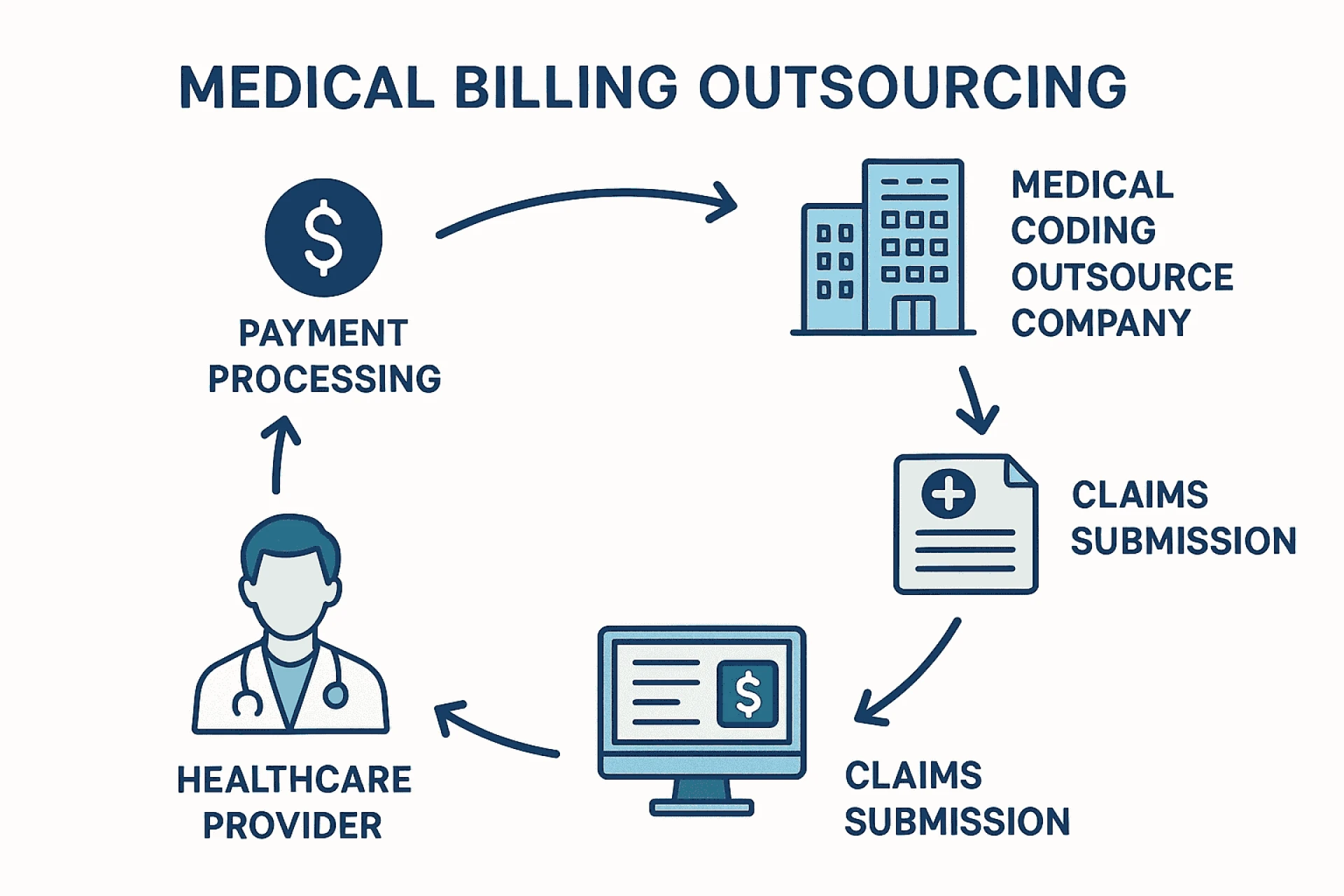
Driving Financial Health Through Revenue Cycle Management Services
In today’s healthcare environment, financial stability is not just about increasing patient volume—it’s about managing every step of the revenue process with precision. Healthcare organizations of all sizes face mounting pressures from regulatory changes, insurance complexities, rising operational costs, and administrative burdens. This is where revenue cycle management (RCM) services play a critical role. When done right, RCM not only improves cash flow but also enhances patient satisfaction and ensures the long-term sustainability of healthcare practices.
Revenue cycle management is the backbone of financial performance in healthcare. It covers the entire patient journey—from the first appointment request to the final payment collection. While many providers focus on clinical outcomes, financial outcomes are equally important. Without effective revenue cycle processes, even the best care delivery models struggle to survive financially.
Understanding the Revenue Cycle
The revenue cycle begins when a patient schedules an appointment and provides insurance information. From there, a series of administrative and financial steps take place: insurance verification, charge capture, coding, claim submission, payment posting, and denial management. Each step must be executed accurately to prevent revenue leakage.
Something as minor as a missing modifier in a claim or an outdated insurance credential can result in rejected payments. For busy practices, it becomes difficult to stay on top of these moving parts, which is why many providers turn to professional RCM services.
Why Revenue Cycle Management Services Matter
Healthcare reimbursement is no longer simple. Insurers have become stricter, patient responsibility has increased due to high-deductible plans, and compliance regulations continue to evolve. These factors create a challenging environment where manual processes are no longer sufficient.
Revenue cycle management services bring structure, expertise, and technology-driven solutions to tackle these challenges. Their purpose is not just to process claims, but to optimize every stage for maximum reimbursement and minimal delays. Instead of reacting to revenue issues, RCM takes a proactive approach—identifying the root causes of denials, improving documentation accuracy, and ensuring clean claims submission.
Key Components of an Effective Revenue Cycle
1. Patient Scheduling and Insurance Verification
The process starts with accurate patient data. Verifying insurance eligibility before a visit helps prevent claim denials and unexpected out-of-pocket expenses for patients. Revenue cycle experts ensure that every detail—from coverage dates to co-payments—is verified ahead of time.
2. Medical Coding and Charge Capture
Accurate medical coding is essential for compliant billing. Professional coding ensures that services are billed at the correct level of detail and in accordance with payer guidelines. Proper charge capture ensures no services rendered go unbilled.
3. Claims Submission
Submitting a clean claim on the first attempt is one of the most important revenue cycle objectives. Each rejected or denied claim adds time and cost. RCM services use advanced software to scrub claims and reduce errors before they are submitted.
4. Payment Posting
Timely and accurate payment posting helps practices reconcile accounts and understand revenue patterns. Any discrepancies are quickly identified, preventing delays in revenue recognition.
5. Denial Management and Appeals
Claim denials are one of the most common revenue blockers. RCM teams investigate the cause of each denial, correct it, and resubmit with supporting documentation. More importantly, they track recurring denial trends and implement process improvements to prevent future issues.
6. Patient Billing and Collections
Today’s patients expect transparency and convenience. Revenue cycle services offer clear billing communications, online payment options, and flexible payment plans. A strong patient billing approach improves collection rates while maintaining patient trust.
Benefits of Partnering with Revenue Cycle Management Experts
Improved Cash Flow
A streamlined revenue cycle leads to faster reimbursements and fewer billing disruptions. Practices experience steady cash flow, which is essential for operational stability.
Reduction in Claim Denials
Trained RCM professionals understand payer policies and billing requirements, reducing errors that lead to claim rejections.
Operational Efficiency
Outsourcing administrative work allows staff to focus on patient care rather than paperwork. This not only improves internal productivity but also enhances patient experience.
Regulatory Compliance
Healthcare regulations continue to change, and penalties for non-compliance can be significant. RCM experts constantly stay updated with the latest rules and ensure that billing practices align with regulations.
Scalability
As healthcare organizations grow, their administrative workload increases. RCM services provide scalable solutions that adapt to growth without disrupting operations.
The Role of Technology in Revenue Cycle Success
Modern revenue cycle management combines human expertise with advanced technology. Automation tools reduce manual errors, predictive analytics identify risk areas, and dashboards provide transparency into revenue performance. Providers can track reimbursement timelines, monitor denial rates, and gain insight into financial health through real-time reporting.
Artificial intelligence and machine learning are increasingly used to analyze payer trends and recommend process improvements. These technologies help predict denials before they happen and ensure faster resolution.
Creating a Patient-Focused Revenue Cycle
While financial processes are at the core of RCM, the ultimate goal is to enhance patient engagement. An efficient revenue cycle creates a smoother experience for patients—fewer billing surprises, quicker insurance validation, and clearer financial communication. When patients understand their coverage and payment responsibilities upfront, it builds trust and increases satisfaction.
Conclusion: A Strategic Investment in Financial Health
Revenue cycle management is not just an administrative function—it is a financial strategy. In a healthcare system that continues to evolve, providers cannot afford revenue disruptions or inefficient processes. Partnering with a reliable RCM service enables healthcare organizations to maintain financial integrity, improve patient care, and focus on long-term growth.
By taking control of the revenue cycle, providers ensure that every service delivered is accurately captured, billed, and reimbursed—turning financial challenges into opportunities for operational excellence.