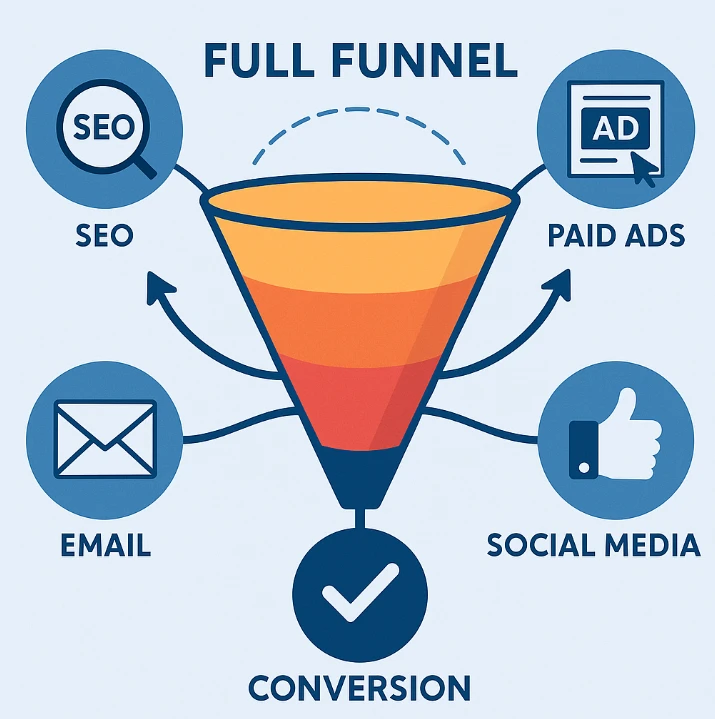
Marketing professionals know the value of reaching customers at every stage of their buying process. A full funnel marketing strategy helps businesses connect with potential customers from their first interaction through final purchase and beyond.
This comprehensive approach ensures no opportunities slip through the cracks and helps build lasting relationships with customers. Modern marketing requires attention to each stage of the customer journey, making a well-planned funnel strategy more valuable than ever.
Understanding Marketing Funnel Basics
The concept of a marketing funnel breaks down customer interactions into distinct stages. Each stage represents a different level of engagement, from initial awareness to final purchase.
Understanding these stages helps create more effective marketing campaigns. The funnel concept works across industries and business types, though specific approaches may vary based on products and target markets.
Awareness Stage
At the top of the funnel, potential customers first learn about products or services. They might notice social media posts, read blog articles, or see targeted advertisements.
Content at this stage should inform and engage without pushing for immediate sales. Many successful businesses focus heavily on this stage, knowing that strong awareness creates opportunities throughout the rest of the funnel.
Consideration Stage
Middle-funnel activities focus on building trust and showing value. Potential customers compare options and look for solutions to their problems.
Detailed product information, comparison guides, and case studies work well here. This stage often determines whether prospects continue toward purchase or look elsewhere for solutions to their needs.
Decision Stage
Bottom-funnel content helps convert interested prospects into buyers. People at this stage need final convincing through promotional offers, product demonstrations, or direct contact with sales teams. Timing matters greatly here - reaching out too early can seem pushy, while waiting too long might lose the sale to competitors.
Creating Effective Content
Top Funnel Content
Blog posts, social media updates, and general videos work well for awareness. This content should address common questions and problems within the target market. The goal here focuses on building brand recognition and trust. Content at this stage needs to grab attention quickly while providing real value to the audience.
Middle Funnel Content
Detailed guides, email newsletters, and product comparisons help educate interested prospects. This content shows how specific products or services solve real problems. Case studies and testimonials provide social proof at this stage. The key lies in maintaining interest while gradually moving prospects toward purchase decisions.
Bottom Funnel Content
Special offers, product demonstrations, and direct communication help close sales. Content here should remove final doubts and make purchasing easy. Clear calls to action guide prospects toward making decisions. Personal attention often makes the difference at this stage, whether through sales calls, custom demos, or targeted email campaigns.
Measuring Success
Different metrics matter at each funnel stage:
Top Funnel MetricsWebsite visits
- Social media engagement
- Content views
- Email signups
Middle and Bottom Funnel MetricsTime on site
- Return visits
- Sales inquiries
- Conversion rates
Implementing the Strategy
Research and Planning
Successful full funnel marketing strategy implementation starts with understanding the target audience. Research should reveal common problems, preferred content types, typical buying timelines, and key decision-making factors. This research phase saves time and resources by focusing efforts on the most effective approaches.
Good planning also includes competitive analysis. Understanding how others approach similar markets helps identify opportunities and avoid common pitfalls. This knowledge shapes content creation and distribution strategies throughout the funnel.
Content Creation
Each piece of content should serve a specific purpose within the funnel. Writers and designers need clear guidelines about brand voice, target audience needs, conversion goals, and distribution channels. Quality matters more than quantity - poorly created content can harm the brand and waste resources.
Content creation should follow a consistent schedule. Regular updates keep the funnel active and engaged with prospects at all stages. Planning content in advance helps maintain quality while meeting deadlines.
Distribution Methods
Different channels work better for different funnel stages. Social media might work well for awareness, while email marketing often drives final conversions. Testing reveals which channels perform best for each type of content. Smart distribution plans consider both timing and platform choice.
Channel selection should match target audience preferences. Some groups respond better to video content, while others prefer written materials. Understanding these preferences improves content performance across all funnel stages.

Optimizing Performance
Regular Analysis
Weekly or monthly reviews show what works and what needs improvement. Looking at performance data helps marketing teams adjust their strategies over time. These reviews should consider both quantitative metrics and qualitative feedback from customers and sales teams.
Analytics help identify bottlenecks in the funnel where prospects often drop out. Understanding these points enables targeted improvements that can significantly boost overall funnel performance.
Content Updates
Existing content needs regular updates to stay relevant. New information, changing market conditions, and customer feedback guide these updates. Fresh content keeps the funnel working effectively. Updates should preserve what works while improving underperforming elements.
Regular content audits help identify outdated materials that need refreshing. These audits also reveal gaps in the funnel where new content might help move prospects forward.
Testing New Approaches
Marketing teams should test new ideas regularly. Small experiments with different content types or distribution methods can lead to big improvements. Successful tests can then roll out across the entire funnel. Testing helps teams stay innovative while managing risks.
Common Challenges
Resource Management
Creating content for every funnel stage takes time and effort. Teams need to balance resources across all stages while maintaining quality. Good planning helps prevent resource bottlenecks. Project management tools and clear processes help teams work more efficiently.
Consistency Issues
Messages must stay consistent across all funnel stages. Mixed messages confuse customers and reduce trust. Clear guidelines help maintain consistency throughout the funnel. Regular team communication ensures everyone understands current messaging priorities and brand standards.
Looking Forward
Marketing funnels continue changing as technology and customer behaviors evolve. Successful teams stay flexible and adjust their strategies based on results.
Regular training helps teams stay current with new marketing methods. The future will likely bring new tools and techniques, but the basic principles of moving prospects through awareness to purchase will remain important.
Final Thoughts
Building an effective full funnel marketing strategy takes time and attention. Success comes from understanding customer needs at each stage and creating relevant content to meet those needs.
Regular monitoring and adjustments keep the funnel working smoothly over time. Organizations that commit to maintaining and improving their marketing funnel often see better results than those focusing on single-stage campaigns.