



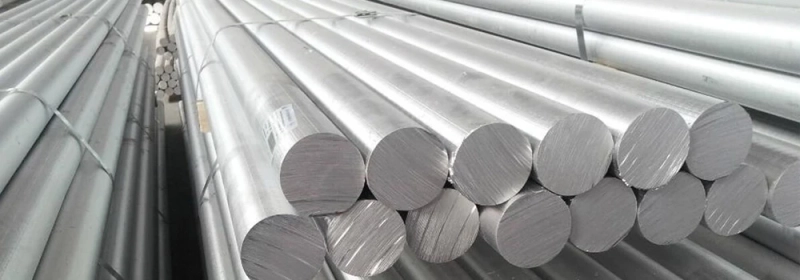
Are you worried about finding reliable stainless steel bars that won't corrode halfway through your project? You're not alone. Many companies face massive headaches when their steel materials fail quality standards or arrive late. The good news is that choosing a stainless steel bars manufacturer in Italy has quietly become one of the world's most trusted sourcing decisions for high-quality materials, and understanding why could change everything about your procurement strategy. Italian manufacturers have built a reputation for precision, reliability, and excellence that spans decades.
What Makes Italian Stainless Steel Manufacturing Special
Italy produces approximately 300,000 tons of specialty steel annually through its advanced manufacturing facilities. The country's stainless steel market was valued at USD 7.42 billion in 2024 and projects growth at a CAGR of 4.66% through 2032 . These numbers tell an important story. Any stainless steel bars manufacturer in Italy combines decades of traditional metalworking expertise with cutting-edge production technology. The result is stainless steel bars that meet the strictest international standards while maintaining competitive pricing. Companies based in cities like Vicenza, Milan, and Bolzano operate some of Europe's most sophisticated steel production plants. These facilities use electric arc furnaces and continuous casting methods that ensure consistent quality across every batch. The attention to detail starts from raw material selection and continues through every stage of production.
The Technology Behind Italian Steel Excellence
Modern Italian steel plants don't rely on outdated methods. They've invested heavily in automation and quality control systems that monitor every aspect of production. Temperature controls stay precise within fractions of a degree. Chemical composition gets tested multiple times during each production run. Surface finishing processes use advanced machinery that creates bars with exact dimensional tolerances. Many Italian manufacturers produce round bars, square bars, flat bars, hexagonal bars, and angle bars in various grades including 304, 316, 904L, and specialty alloys. The production capability extends to blooms, billets, ingots, wire rod, and reinforcement bars (about-us). Cold drawing processes achieve superior surface finishes and mechanical properties. Hot rolling creates bars suitable for heavy-duty applications. Each method serves specific industry needs, from construction to medical devices.
Key Industries That Depend On Italian Stainless Steel Bars
The versatility of Italian stainless steel bars makes them essential across multiple sectors. The automotive industry uses these bars for exhaust systems, drive shafts, and structural components. Construction companies rely on them for building frameworks, architectural features, and outdoor installations that resist weather damage. The food processing sector needs stainless steel that meets strict hygiene standards. Italian bars made from food-grade steel work perfectly for equipment like storage tanks, conveyor systems, and processing machinery. Medical device manufacturers choose Italian stainless steel for surgical instruments, implants, and diagnostic equipment because the material offers biocompatibility and sterilization resistance (market-reports/europe-stainless-steel-market). The marine industry benefits from corrosion-resistant properties essential for ship components and offshore platforms. Chemical plants use specialty grades that withstand aggressive substances. Power generation facilities install these bars in turbines and heat exchangers. Even the aerospace sector depends on high-strength variants for aircraft components.
Understanding Italian Steel Bar Grades And Specifications
Grade Type
Key Properties
Common Applications
Corrosion Resistance
304 Series
Good formability, weldability
Kitchen equipment, architecture
Moderate
316 Series
Superior corrosion resistance
Marine, chemical processing
Excellent
904L
High alloy content
Oil & gas, pharmaceuticals
Outstanding
Duplex
Double strength, lower nickel
Desalination, LNG projects
Superior
Nitronic 50
Wear resistance, high strength
Mining, industrial machinery
Very Good
The European stainless steel market reached USD 61.63 billion in 2024 with cold bars and wire segments growing at 7.12% CAGR (/market-reports/europe-stainless-steel-market). Italy contributes significantly to this growth. Different grades serve different purposes. The 300 series dominates applications requiring good corrosion resistance and aesthetic appeal. The 316 grade adds molybdenum for enhanced protection against chlorides and acids. Companies working near coastal areas or handling chemicals often specify 316 grade as minimum requirement. Duplex stainless steel offers roughly double the strength of standard austenitic grades while using less nickel. This makes it cost-effective for high-stress applications. The mechanical properties vary by grade and processing method. Cold-drawn bars achieve higher tensile strength than hot-rolled equivalents. Bright bars feature smooth surface finishes suitable for precision applications.
Quality Control Standards In Italian Manufacturing
Italian manufacturers follow rigorous testing protocols that exceed basic requirements. Every production batch undergoes chemical composition analysis using spectrometry. Mechanical testing verifies tensile strength, yield strength, and elongation properties. Non-destructive testing methods like ultrasonic inspection detect internal flaws. Surface quality checks ensure bars meet dimensional tolerances and finish requirements. Many Italian facilities hold ISO 9001 certification for quality management systems. Some also maintain ISO 14001 for environmental management. Product-specific certifications include PED for pressure equipment and various maritime classification society approvals. Documentation accompanies every shipment. Material test certificates provide full traceability from raw materials to finished products. This level of quality assurance reduces risk for buyers. Projects stay on schedule because materials arrive meeting specifications. Warranty claims drop significantly when using certified Italian bars.
The Real Cost Savings Of Choosing Italian Steel Bars
Price alone never tells the complete story. Initial purchase costs might seem higher compared to some alternatives, but total ownership costs favor quality Italian products. Superior corrosion resistance means longer service life. A structure built with premium stainless steel bars can last decades without replacement. Maintenance requirements drop dramatically. Components don't need frequent inspection or coating renewal. Labor costs for installation decrease because bars arrive with accurate dimensions and consistent properties. Fabricators spend less time dealing with material variations. Welding procedures become more predictable with uniform composition. The global stainless steel market expects growth at 5.0% CAGR reaching USD 320.37 billion by 2032 (stainless-steel-market-106481). Italy's market specifically projects reaching USD 14.87 billion in 2025 (Source: https://www.fortunebusinessinsights.com/stainless-steel-market-106481). These growth figures reflect increasing recognition of quality Italian steel's value proposition. Project delays from material failures cost far more than any savings from cheaper alternatives. Insurance premiums may decrease when using certified materials with proven track records.
Environmental Considerations And Sustainability
Italy leads Europe in steel recycling practices with over 80% of stainless steel getting recycled (market-reports/europe-stainless-steel-market). This circular economy approach reduces environmental impact significantly. Stainless steel remains infinitely recyclable without loss of properties. Old components get melted down and reformed into new bars maintaining the same quality standards. Italian manufacturers increasingly adopt green production methods. Electric arc furnaces using recycled scrap require less energy than traditional blast furnaces. Some facilities now produce steel with carbon footprint reductions up to 75% compared to conventional methods. Water treatment systems minimize industrial discharge. Air filtration captures particulates from production processes. The European Union's strict environmental regulations push Italian manufacturers toward cleaner operations. Carbon pricing through the EU Emissions Trading System incentivizes efficiency improvements. Companies investing in renewable energy sources for their plants reduce both emissions and long-term operating costs. Buyers concerned about supply chain sustainability find Italian manufacturers responsive to environmental reporting requirements.
How To Select The Right Italian Stainless Steel Bar Supplier
Finding a reliable stainless steel bars manufacturer in Italy requires research beyond basic price comparisons. Start by verifying production capacity. Can they handle your volume requirements consistently? Check their technical capabilities. Do they produce the specific grades and dimensions you need? Request sample materials for testing before committing to large orders. Physical samples reveal actual quality better than specifications alone. Review certification documentation carefully. Valid ISO certificates and material test reports indicate serious quality commitment. Ask about delivery times and logistics capabilities. Italian manufacturers with experience in export markets understand international shipping requirements. Communication matters significantly. Suppliers should respond promptly to technical questions and provide clear documentation. Some companies maintain distribution networks or service centers that simplify ordering and reduce lead times. Payment terms and minimum order quantities affect cash flow planning. Understand these requirements upfront to avoid surprises. Visit production facilities when possible. Seeing manufacturing processes firsthand builds confidence in supplier capabilities. Check references from existing customers in your industry. Their experiences reveal how suppliers handle challenges and support long-term relationships.
The Future Of Italian Stainless Steel Bar Manufacturing
Technology continues advancing in Italian steel plants. Artificial intelligence systems now optimize production parameters in real-time. Predictive maintenance using sensor data reduces unplanned downtime. Digital twins simulate production changes before physical implementation. Industry 4.0 concepts transform traditional manufacturing into smart factories. Global stainless steel production reached 48.0 million tonnes in the first nine months of 2025, showing 3.0% growth. Italian manufacturers position themselves to capture premium market segments. Investment in research and development creates new specialty alloys. Collaboration with universities and research institutes drives innovation. The transition to hydrogen-based steel production represents a major industry shift. Some Italian facilities pilot hydrogen reduction processes that eliminate carbon emissions entirely. These technologies will mature over the next decade, positioning early adopters as market leaders. Demand from renewable energy projects grows steadily. Wind turbines, solar installations, and hydrogen infrastructure all require corrosion-resistant steel components. Italian manufacturers develop products specifically for these emerging applications. The construction sector's focus on sustainable buildings increases demand for durable materials that reduce lifetime environmental impact.