



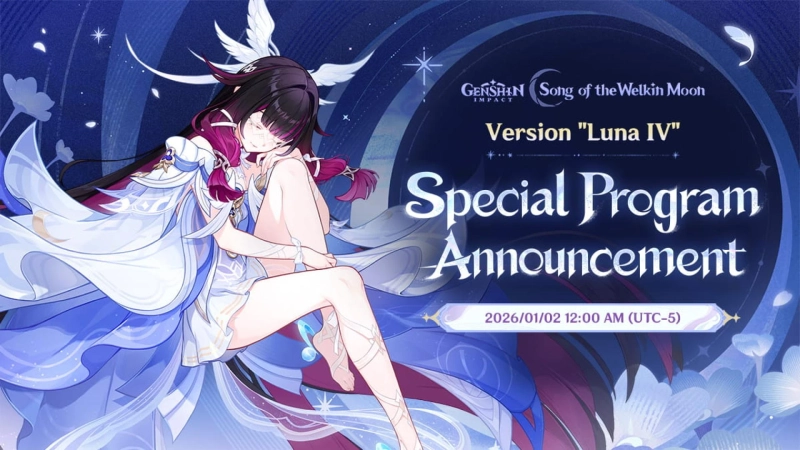
Genshin Impact has always stood out for its ability to blend gameplay with rich storytelling, symbolism, and emotional resonance. With the release of Song of the Welkin Moon: Postlude, HoYoverse once again demonstrates how trailers can function as narrative art rather than simple promotional material. Closely tied to A Traveler on a Winter’s Night, this postlude trailer offers players a layered experience filled with symbolism, atmosphere, and subtle lore revelations. At the heart of this presentation lies Columbina, whose presence elevates the trailer into one of the most enigmatic and thought-provoking pieces of recent Genshin storytelling, driven by Poetic Narration and profound Deep Lore Symbolism.
The Meaning Behind Song of the Welkin Moon: Postlude
Song of the Welkin Moon: Postlude serves as more than a musical epilogue. It feels like a reflective pause, a quiet moment after the emotional crescendo of earlier narrative arcs. The title itself suggests continuation rather than closure, implying that the story of Teyvat, its gods, and its hidden truths is far from complete. The gentle pacing, haunting melodies, and carefully chosen imagery invite players to contemplate the unseen forces shaping the world.
This postlude format allows the developers to explore abstract themes that might not fit neatly into standard quests. Memory, loss, destiny, and longing all surface through visual metaphors rather than direct exposition. In doing so, the trailer rewards attentive viewers who are willing to look beyond surface-level storytelling.
A Traveler on a Winter’s Night as a Narrative Frame
A Traveler on a Winter’s Night acts as the emotional and thematic framework for the trailer. Winter in Genshin Impact is often associated with stillness, reflection, and hidden danger, making it an ideal setting for introspective storytelling. The Traveler’s journey through a cold, quiet world mirrors an internal journey through uncertainty and unanswered questions.
The winter night setting emphasizes isolation, yet it also creates space for clarity. Snow-covered landscapes, pale moonlight, and distant echoes reinforce the feeling that the Traveler is standing at a crossroads. This narrative moment does not rush toward action but instead lingers on mood, suggesting that understanding the truth of Teyvat requires patience and emotional awareness as much as strength.
Columbina and Her Silent Power
Among all the figures hinted at in the trailer, Columbina commands the most attention. Known as one of the Fatui Harbingers, her portrayal here diverges from expectations of overt menace or aggression. Instead, she appears calm, distant, and almost ethereal. This portrayal reinforces the idea that her power lies not only in combat but in perception, memory, and emotional influence.
Columbina’s presence feels symbolic rather than confrontational. She is less a character delivering dialogue and more a concept embodied in form. Her gaze, posture, and surroundings suggest someone deeply connected to the underlying truths of the world. This makes her role in the trailer especially compelling, as she seems to observe rather than intervene, reinforcing her reputation as one of the most mysterious figures in the Fatui hierarchy.
Deep Lore Symbolism Woven Into Visuals
The trailer excels in its use of Deep Lore Symbolism. Moons, reflections, and fragmented imagery appear repeatedly, hinting at cycles, duality, and forgotten histories. The Welkin Moon itself has long been associated with blessings, fate, and the passage of time in Genshin Impact. By centering the postlude around this symbol, the trailer subtly connects personal journeys with cosmic forces.
Shadows and light play a crucial role, often blurring the line between reality and memory. These visual choices suggest that much of Teyvat’s truth exists in the spaces between what is remembered and what has been erased. For lore-focused players, these symbols invite speculation about ancient civilizations, Celestia’s influence, and the true cost of divine intervention.
The Role of Poetic Narration
One of the defining features of the trailer is its Poetic Narration. Rather than straightforward explanation, the narration relies on metaphor, rhythm, and emotion. This approach aligns perfectly with Genshin Impact’s broader narrative philosophy, where meaning is often implied rather than stated outright.
The poetic tone encourages multiple interpretations, allowing each viewer to connect with the content in a personal way. Some may focus on themes of loss and remembrance, while others may see foreshadowing of future conflicts or revelations. This open-ended narration strengthens the emotional impact and ensures the trailer remains relevant long after its initial viewing.
Emotional Resonance and Player Interpretation
What makes Song of the Welkin Moon: Postlude particularly effective is its trust in the audience. The trailer does not attempt to guide interpretation too rigidly. Instead, it presents an emotional landscape and allows players to explore it mentally, much like the open world of Teyvat itself.
This approach deepens player engagement, as fans are encouraged to discuss theories, symbolism, and character motivations. Columbina’s quiet presence, the winter setting, and the poetic narration all serve as catalysts for community analysis and speculation.
A Bridge Between Past and Future
As a narrative piece, the trailer functions as a bridge. It reflects on past events while subtly pointing toward what lies ahead. The Traveler’s journey is far from over, and the questions raised here suggest that future updates will delve even deeper into the nature of gods, fate, and rebellion.
For players seeking a detailed breakdown of the trailer and its narrative context, the full analysis can be found in the official coverage of the Song of the Welkin Moon: Postlude and A Traveler on a Winter’s Night on Games4ndChill, which explores the symbolism and themes in greater depth.
Conclusion
Song of the Welkin Moon: Postlude stands as a testament to Genshin Impact’s evolving storytelling ambition. Through A Traveler on a Winter’s Night, the haunting presence of Columbina, layered Deep Lore Symbolism, and evocative Poetic Narration, the trailer transcends traditional game marketing. It becomes a piece of narrative art that invites reflection, interpretation, and emotional connection, reminding players that in Teyvat, every journey is as much about understanding as it is about adventure.