



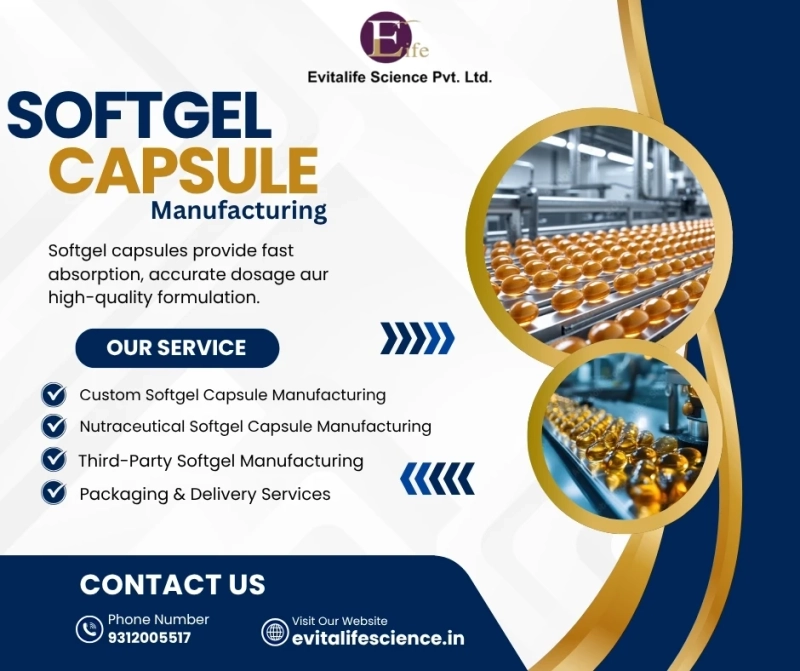
Softgel capsules have become one of the most preferred dosage forms in the nutraceutical, pharmaceutical, and dietary supplement industries. Their popularity continues to rise because of their high bioavailability, ease of swallowing, enhanced stability, and ability to deliver both liquid and semi-solid formulations. Behind every softgel capsule is a highly advanced manufacturing process that involves precision, specialized equipment, strict quality control, and scientific expertise. In this article, we explore the complete process of softgel capsule manufacture, the advantages of this dosage form, essential quality parameters, and why many global brands choose specialized manufacturers for their softgel production.
Introduction to Softgel Capsules
Softgel capsules—also known as soft gelatin capsules—are single-piece, hermetically sealed units filled with active ingredients in liquid or semi-solid form. They are made from a gelatin-based shell combined with plasticizers like glycerin or sorbitol, which give them their soft, flexible texture.
This unique structure allows manufacturers to encapsulate a wide variety of ingredients, including oils, nutrients, herbal extracts, lipophilic compounds, and fat-soluble vitamins. Softgels offer several benefits such as improved absorption, long-term stability, elegant appearance, and enhanced patient compliance.
As the demand for nutraceuticals and supplements increases worldwide, the need for reliable and high-quality softgel capsule manufacturers has grown significantly. The manufacturing process, however, requires a controlled environment, advanced encapsulation machines, and skilled technical teams.
Raw Materials Used in Softgel Capsule Manufacturing
Softgel manufacturing begins with selecting high-quality raw materials. These materials play an essential role in determining the capsule’s performance, stability, texture, and appearance. Key raw materials include:
1. Gelatin
The primary ingredient for the softgel shell. It can be sourced from:
- Bovine gelatin
- Porcine gelatin
- Fish gelatin (used for halal, kosher, or vegetarian formulations)
2. Plasticizers
Added to give flexibility and softness to the capsule shell:
- Glycerin
- Sorbitol
- Propylene glycol
3. Purified Water
Used to hydrate gelatin and maintain proper shell formation.
4. Colorants and Opacifiers
Used to enhance the appearance or protect light-sensitive ingredients.
5. Fill Materials
These are the active ingredients and their carriers:
- Essential oils
- Omega-3 fatty acids
- Vitamins A, D, E, K
- Herbal extracts
- Nutraceutical blends
- Suspensions or semi-solids
The Complete Softgel Capsule Manufacturing Process
Softgel manufacturing is a precision-driven process. Here’s a step-by-step overview:
1. Preparation of Gelatin Mass
The first step involves creating a homogeneous gelatin mass. Gelatin, water, and plasticizers are mixed in stainless-steel tanks at controlled temperatures.
This mixture is heated and continuously stirred to remove air bubbles and ensure proper viscosity.
2. Preparation of Fill Material
Simultaneously, the active ingredients are blended to make the fill material. The mixture must have the right viscosity and stability for encapsulation. This step also includes:
- Homogenizing oils
- Maintaining temperature
- Ensuring uniform dispersion
3. Encapsulation Using Rotary Die Machines
This is the heart of softgel manufacturing. Rotary die encapsulation machines press the gelatin ribbons and fill material together to form softgels.
The process includes:
- Producing two thin sheets (ribbons) of gelatin
- Pumping the fill material between the ribbons
- Cutting and sealing the capsules with precision dies
Each capsule is formed, filled, and sealed within milliseconds, ensuring consistency and accuracy.
4. Drying and Tumble Drying
Freshly formed softgels contain high moisture and must be dried to achieve the right hardness.
They are placed in tumble dryers and then transferred to controlled drying rooms for 24–48 hours. This stage helps maintain capsule shape, strength, and stability.
5. Inspection and Sorting
Every capsule passes through quality checks to detect imperfections such as:
- Leaks
- Air bubbles
- Shape deformities
- Inconsistent fill volume
Only capsules meeting strict quality standards move to the next step.
6. Cleaning and Polishing
Softgels are cleaned using specialized polishing machines to remove excess oil and give them a glossy, attractive finish.
7. Packaging
After confirming stability, capsules are packed in:
- Blister packs
- Bottles
- Bulk containers
- Packaging ensures protection from heat, moisture, and contamination.
Advantages of Softgel Capsules
1. Higher Bioavailability
Softgels improve the absorption of fat-soluble and oil-based nutrients, ensuring better therapeutic effects.
2. Easy to Swallow
Soft, smooth, and tasteless capsules make them ideal for adults and children.
3. Oxidation Protection
Hermetically sealed structure prevents oxygen exposure, prolonging shelf life.
4. Uniform Dosage
Every capsule contains an accurate and consistent amount of the active ingredient.
5. Versatile Formulations
Softgels can handle:
- Oils
- Suspensions
- Lipid-based ingredients
- Herbal extractions
6. Aesthetic Appeal
They come in attractive colors, shapes, and sizes, enhancing brand identity.
Quality Control in Softgel Manufacturing
Quality assurance is critical for softgel capsule production. Manufacturers follow strict guidelines such as GMP, ISO, and HACCP. Key tests include:
1. Disintegration Test
Ensures the capsule dissolves properly in the digestive system.
2. Leakage Test
Checks for structural integrity and sealing quality.
3. Microbial Testing
Prevents contamination and ensures safety.
4. Stability Testing
Verifies product performance over time under various conditions.
5. Weight Variation Test
Ensures consistent and accurate dose delivery.
Why Brands Choose Professional Softgel Manufacturers
Partnering with an expert manufacturer provides:
1. Advanced Encapsulation Technology
High-speed rotary die machines deliver superior accuracy and efficiency.
2. Customized Formulation Support
Manufacturers help brands create specialized formulations based on market needs.
3. Cost-Effective Solutions
Bulk production reduces overall manufacturing costs.
4. Regulatory Compliance
Manufacturers follow strict global guidelines to maintain product safety and legality.
5. Private Label & Third-Party Production
Brands can launch their own softgel products without investing in infrastructure.
The Future of Softgel Manufacturing
With increasing demand for nutraceuticals, herbal supplements, and pharmaceutical-grade products, the future of softgel manufacturing looks highly promising. Innovations such as vegetarian softgels, plant-based gelatin alternatives, seamless softgels, and nano-formulated ingredients are transforming the industry.
Sustainability and clean-label formulations are also driving the evolution of softgel technology. Manufacturers are focusing on improving bioavailability, stability, and environmentally friendly production.
Conclusion
Softgel capsule manufacturing is a sophisticated process that requires advanced technology, precise formulation techniques, and stringent quality control. From raw material selection to encapsulation, drying, inspection, and packaging, every step plays a crucial role in delivering high-quality softgels to the market.
For brands looking to launch supplements or nutritional products, partnering with a reliable softgel capsule manufacturer ensures premium quality, consistency, and customer satisfaction. As consumer demand continues to grow, softgel capsules remain one of the most effective, appealing, and trusted dosage forms in the global health industry.