


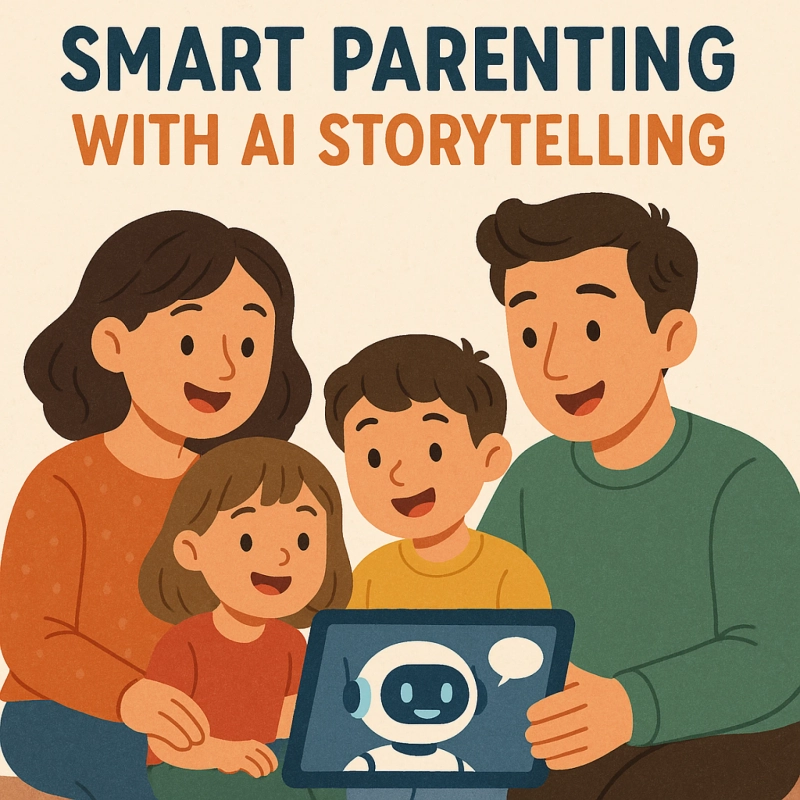
Parenting in the digital age is both exciting and challenging. With technology influencing every corner of our lives, parents today often find themselves looking for ways to make screen time healthy, productive, and meaningful for children. Amid this search, a fascinating trend has emerged — AI storytelling for kids. This innovative approach blends artificial intelligence with the timeless art of storytelling, creating personalized, interactive learning experiences that align beautifully with the principles of smart parenting.
The Essence of Smart Parenting
Smart parenting goes beyond managing routines or setting boundaries. It is about being intentional, adaptive, and making technology a supportive partner in raising emotionally balanced, curious, and confident children. Smart parenting involves:
- Encouraging active rather than passive digital experiences.
- Fostering creativity, empathy, and emotional intelligence through meaningful content.
- Balancing technology use with human connection.
- Using data-driven insights and digital tools that genuinely support learning and well-being.
AI storytelling sits at the heart of these principles by turning technology into an active participant in a child’s creative and cognitive development.
How AI Storytelling Works
AI storytelling platforms, like ZoodleMe and others, use advanced natural language processing and generative AI to create unique stories customized to each child’s preferences, age, and developmental stage. Parents or children simply input a few details such as the child’s name, favorite character type, or theme, and the AI instantly generates a creative narrative.
The story output can adapt features like:
- Character names and personalities resembling the child or their friends.
- Age-appropriate language and moral lessons.
- Themes aligned with emotional or educational needs — friendship, kindness, problem-solving, bravery, etc.
- Multilingual narration for cultural and linguistic learning.
Unlike traditional storybooks, AI-powered stories are dynamic — they can evolve as the child grows, providing an ever-expanding, personally meaningful storyworld.
The Educational Value of AI Storytelling
For children aged 3 to 12, storytelling is one of the most powerful vehicles for cognitive, emotional, and social growth. When AI personalizes these stories, the impact multiplies.
- Enhances Language Skills: Listening to or reading personalized stories expands vocabulary, improves sentence comprehension, and encourages expressive speech. Because children relate to stories featuring their own names or experiences, they stay more engaged, increasing retention and concept understanding.
- Boosts Creativity and Imagination: AI storytelling invites children to become co-creators. They can change characters, invent endings, or suggest new settings. This creative participation transforms storytelling into a design exercise that sparks imagination and innovation.
- Promotes Emotional Intelligence: Many AI story platforms are built with themes that subtly teach empathy, resilience, and self-awareness. For example, a story about a child overcoming fear of the dark can help children emotionalize courage in their own contexts.
- Encourages Cultural Awareness: By integrating different cultural elements, languages, or traditions, AI stories expose children to global perspectives early, nurturing open-mindedness and compassion.
The Role of Parents in AI Storytelling
Smart parenting with AI storytelling works best when parents stay actively involved. The goal isn’t to let technology replace human interaction but to use it as a bridge for meaningful connection.
- Co-Experience the Stories: Reading or listening together allows parents to discuss story morals, ask reflective questions, and make connections to real-life situations. For example, after a story about sharing, parents can ask, “Can you think of a time you shared something with a friend?”
- Encourage Creativity Beyond the App: Parents can prompt children to draw scenes from the stories, act them out as role plays, or invent alternate endings. This extends the experience beyond the screen and reinforces comprehension through creative play.
- Use Stories as Emotional Tools: AI stories can help parents address specific emotional or behavioral topics — like confidence, friendship, or fears — through gentle, relatable narratives. The personalized element makes the lessons feel natural and non-confrontational.
- Track Development: Some AI storytelling platforms provide progress analytics, showing trends in reading habits, vocabulary improvement, or emotional expression themes. Smart parents can use these insights to tailor further activities or story themes.
The Balance Between Technology and Human Touch
Despite its transformative benefits, smart parenting requires maintaining balance. Technology, even in its most educational form, should not replace human warmth, empathy, or spontaneity. AI stories are tools that guide and inspire, but it is the parent’s participation that shapes their depth and meaning.
Parents can set healthy digital boundaries by defining dedicated storytimes, ensuring they are part of relaxing daily rituals rather than constant exposure. For younger children, a mix of screen and off-screen storytelling ensures a more holistic sensory experience.
AI Storytelling as a Global Movement
Around the world, AI storytelling platforms are gaining momentum not only in homes but also in schools and educational programs. They are helping children from diverse linguistic and cultural backgrounds access stories in their native tongues or in aspirational second languages.
Multilingual AI story platforms promote inclusivity, supporting global literacy efforts.
Furthermore, for children with learning differences — such as dyslexia or ADHD — AI storytelling can adjust pacing, simplify text, or include interactive prompts that maintain focus and motivation.
Key Benefits Summarized
- Personalization: Stories created around the child’s interests and emotional needs.
- Interactivity: Opportunities for kids to choose characters, direct storylines, and create endings.
- Language Development: Vocabulary growth through contextual learning.
- Cultural Learning: Exposure to diverse settings and moral viewpoints.
- Family Bonding: Shared storytelling experiences that enrich relationships.
- Emotional Support: Gentle guidance through stories that address fears and challenges.
How ZoodleMe Leads the Smart Parenting Mission
AI Storytelling App like ZoodleMe are pioneering this transformation by providing safe, child-friendly AI environments that blend entertainment with education. Parents can select topic categories — like adventure, kindness, animals, or problem-solving — and let the AI generate a unique narrative suited for bedtime or daily learning sessions.
ZoodleMe’s multilingual and imaginative approach mirrors the essence of smart parenting: combining love, learning, and technology responsibly. Through its adaptable AI engine, the app turns traditional storytelling into a lifelong learning experience — one that grows alongside the child.
Future Possibilities of AI Storytelling
The next evolution of AI storytelling is moving toward immersive multimodal experiences — stories enhanced with sound, visuals, and voice interaction. In the near future, children might converse with story characters in real time, influence outcomes by solving puzzles, or explore story worlds using augmented reality.
This evolution will deepen engagement and transform storytelling from a one-way activity into a multidimensional educational journey. For smart parents, this is an opportunity to guide children through interactive worlds where curiosity meets creativity and technology meets imagination.
The Heart of Smart Parenting
At its core, smart parenting is not about depending on technology — it’s about using it wisely, with empathy and purpose. AI storytelling makes that possible by turning digital time into emotionally rich, mentally stimulating experiences. It rekindles the ancient tradition of storytelling while embracing modern innovation, helping children grow into thoughtful, confident, and compassionate individuals.
In the end, the smartest thing parents can do is remain co-learners and co-dreamers with their children. AI storytelling simply gives them a new way to do it — one story, one imagination, and one shared moment at a time.