



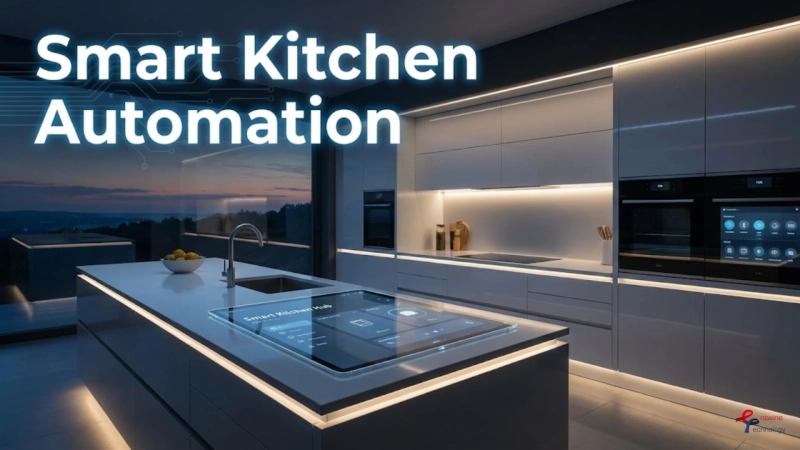
Running a restaurant kitchen today is a constant balancing act. Margins are tight, customer expectations are high, and staffing is more unpredictable than ever. This is exactly why Hospitality Automation Solutions in India are becoming a serious conversation point for restaurant owners, not as a luxury, but as a practical business decision.
Smart kitchen automation isn’t about replacing chefs with robots. It’s about using technology to remove inefficiencies that silently drain profits every single day. Let’s break down what it really means and, more importantly, how the return on investment actually works.
What Is Smart Kitchen Automation?
Smart kitchen automation uses connected devices, software, and data-driven systems to manage kitchen operations with minimal manual intervention. Think of it as giving your kitchen a brain that tracks, learns, and optimizes everything from inventory to cooking workflows.
Common examples include:
- Automated inventory and stock monitoring
- Smart cooking equipment with preset controls
- Order management systems integrated with POS
- AI-based demand forecasting
- Energy-efficient appliances with real-time monitoring
Each of these tools targets one core problem: waste, delays, or inconsistency.
Why Restaurants Are Investing in Kitchen Automation
Here’s the thing. Most kitchens don’t lose money because food isn’t selling. They lose money because processes break down behind the scenes.
Restaurants turn to smart kitchen technology because it helps:
- Reduce dependency on manual labor
- Improve order accuracy and speed
- Control food costs and inventory shrinkage
- Maintain consistency across shifts and outlets
In short, automation brings predictability to an unpredictable environment.
Key Cost Areas Impacted by Smart Kitchen Automation
1. Labor Costs
Automation streamlines repetitive tasks like order routing, inventory logging, and prep scheduling. This reduces overstaffing during slow hours and burnout during peak hours.
Even a 10–15% improvement in labor efficiency can significantly impact monthly operating costs.
2. Food Wastage and Inventory Loss
Smart inventory systems track usage patterns in real time. Ingredients nearing expiry are flagged early, and over-ordering becomes rare.
Restaurants using automated inventory management often see food wastage drop by 20–30%.
3. Energy Consumption
Smart appliances adjust power usage based on demand. Equipment turns off automatically during idle times, and energy leaks are identified instantly.
Lower energy bills quietly add to your ROI every month.
4. Maintenance and Downtime
Predictive maintenance systems detect equipment issues before breakdowns happen. Fewer emergency repairs mean fewer disruptions during service hours.
ROI Breakdown: How Automation Pays for Itself
- Short-Term ROI (0–6 Months)
- Immediate reduction in food wastage
- Faster order processing
- Lower error rates during peak hours
Many restaurants start seeing measurable savings within the first few months, especially in inventory and labor optimization.
- Mid-Term ROI (6–18 Months)
- Stabilized staffing costs
- Improved kitchen throughput
- Better supplier negotiations due to accurate data
At this stage, automation stops being an expense and starts functioning like a profit protection layer.
- Long-Term ROI (18+ Months)
- Scalability across multiple outlets
- Consistent brand experience
- Strong operational data for expansion decisions
This is where automation delivers compounding returns.
Real-World Use Cases
- QSRs and Cloud Kitchens
High order volumes and tight delivery timelines make automation almost essential. Smart kitchens help maintain speed without compromising quality.
- Casual and Fine-Dining Restaurants
Automation handles backend operations so chefs can focus on creativity, presentation, and guest experience.
- Multi-Outlet Restaurant Chains
Centralized kitchen data ensures consistency across locations while simplifying management and reporting.
Hidden Benefits That Improve ROI Over Time
Some gains don’t show up immediately on balance sheets, but they matter.
- Consistent food quality builds repeat customers
- Reduced staff stress improves retention
- Data-backed decisions eliminate guesswork
- Scalability becomes easier and less risky
These indirect benefits often become the biggest ROI drivers in the long run.
Is Smart Kitchen Automation Right for Your Restaurant?
You’re probably ready if:
- Food costs feel unpredictable
- Staff turnover is high
- Inventory management relies on manual checks
- Scaling feels risky or chaotic
Automation doesn’t remove control. It gives you more of it, backed by real data.
Conclusion
Smart kitchen automation is no longer about future trends. It’s about present-day survival and growth. When implemented thoughtfully, the ROI goes far beyond cost savings. It improves efficiency, consistency, and long-term scalability.
For restaurants evaluating Hospitality Automation Solutions in India, the real question isn’t whether automation works. It’s how long you can afford to run without it.