


Electric Overhead Traveling (EOT) cranes play a critical role in modern industrial material handling. Among the most widely used systems are the single girder EOT crane and the double girder EOT crane, each designed to meet different lifting requirements, workspace conditions, and operational demands. These cranes improve productivity, enhance safety, and reduce manual effort across industries such as manufacturing, steel, power plants, warehouses, and heavy engineering facilities.
Understanding the features, advantages, and applications of single and double girder EOT cranes helps businesses choose the right lifting solution for long-term efficiency and reliability.
Single Girder EOT Crane – Cost-Effective and Efficient Lifting
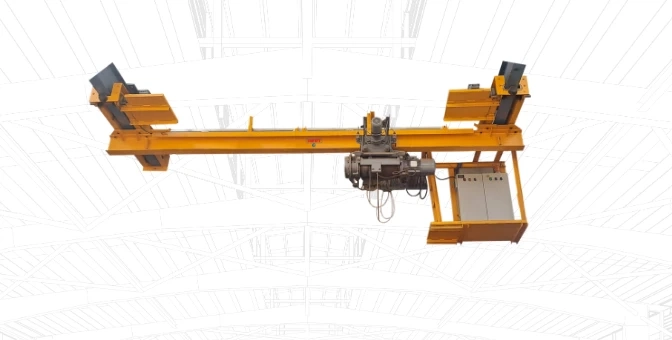
A single girder EOT crane consists of one main bridge girder supported by end carriages on either side, with an electric hoist traveling along the girder. This crane design is widely preferred for light to medium-duty lifting operations and is known for its simplicity, affordability, and efficient performance.
Design and Construction
Single girder EOT cranes are designed with a compact structure, making them ideal for facilities with limited headroom. The hoist is usually placed under the girder, allowing smooth load movement while optimizing available space. These cranes are lightweight compared to double girder systems, which reduces load on the building structure and lowers installation costs.
Lifting Capacity and Span
Typically, single girder EOT cranes are used for lifting capacities ranging from 1 ton to 20 tons, with moderate spans. They are suitable for workshops, assembly units, warehouses, and maintenance bays where heavy-duty lifting is not required on a continuous basis.
Advantages of Single Girder EOT Crane
One of the main benefits of a single girder EOT crane is its cost-effectiveness. It requires less steel, simpler runway beams, and reduced power consumption. Maintenance is also easier due to fewer components. These cranes offer reliable performance, smooth operation, and adequate safety features for daily industrial use.
Applications
Single girder EOT cranes are commonly used in:
- Manufacturing workshops
- Small to medium warehouses
- Automotive plants
- Fabrication units
- Maintenance and repair facilities
Their ease of operation and lower investment cost make them an excellent choice for businesses seeking efficient lifting without complex requirements.
Double Girder EOT Crane – Heavy-Duty Performance and Precision
A double girder EOT crane features two parallel bridge girders with a crab-type hoist traveling on top of the girders. This design allows for higher lifting capacities, longer spans, and superior operational control, making it suitable for demanding industrial environments.
Design and Engineering
Double girder EOT cranes are engineered for strength, stability, and durability. The hoist mechanism is mounted on top of the girders, enabling maximum hook height and better load positioning. This design also allows for additional features such as maintenance walkways, operator cabins, and advanced safety systems.
Lifting Capacity and Span
Double girder EOT cranes can handle heavy loads, typically ranging from 10 tons to over 100 tons, depending on design requirements. They support longer spans and higher lifting heights, making them ideal for large production halls and heavy manufacturing facilities.
Advantages of Double Girder EOT Crane
The primary advantage of a double girder EOT crane is its ability to handle heavy and continuous loads with high precision. These cranes offer excellent stability, smoother travel, and better control during lifting operations. They are also highly customizable, allowing integration with automation systems, specialized grabs, magnets, or other attachments.
Applications
Double girder EOT cranes are widely used in:
- Steel plants and rolling mills
- Power plants
- Heavy engineering industries
- Shipyards
- Large manufacturing facilities
Their robust construction and advanced features make them a long-term solution for high-capacity lifting needs.
Single vs Double Girder EOT Crane – Choosing the Right Option
Selecting between a single girder EOT crane and a double girder EOT crane depends on several factors, including load capacity, duty cycle, available space, and budget.
- Single girder EOT cranes are ideal for lighter loads, lower duty cycles, and cost-sensitive projects.
- Double girder EOT cranes are suitable for heavy loads, frequent usage, higher lifting heights, and demanding industrial operations.
A proper assessment of operational needs ensures optimal performance, safety, and return on investment.
Safety and Compliance
Both single and double girder EOT cranes are designed to meet industrial safety standards and regulations. Features such as overload protection, emergency stop systems, limit switches, and smooth braking mechanisms enhance operator safety and load control. Regular inspection and maintenance further ensure safe and reliable crane operation.
Conclusion
Single girder EOT cranes and double girder EOT cranes are essential material handling solutions that cater to a wide range of industrial lifting requirements. While single girder cranes offer economical and efficient performance for light to medium-duty applications, double girder cranes provide unmatched strength, precision, and durability for heavy-duty operations.
Investing in the right EOT crane system improves workflow efficiency, reduces downtime, and enhances workplace safety. With proper design, installation, and maintenance, these cranes deliver long-lasting performance and significant operational value for industrial facilities.