



After pouring time and energy into your social media posts, do you feel like no one is seeing it anymore? Are you experiencing shadow banning? Shadow banning is a frustrating and underhanded issue, and one that's causing problems for creators, brands, and everyday users everywhere. This hidden consequence of a user going against community guidelines raises questions regarding fairness and transparency online. Let's look a little deeper into what shadow banning is, how it works, why stonewalling takes place, and how to navigate away from its negative implications to ensure that your content receives proper visibility.
What Is Shadow Banning?
Shadow banning is a type of 'stealth moderation' used on social media that reduces the visibility of a user’s content on the platform without notification. Your posts are still published—you can still share, comment and engage—but it may never appear to be a part of the public feeds. It is similar to talking quietly in a busy room, where no one can hear you. Other terms for this term include:
- Stealth banning
- Ghost banning
- Comment ghosting
Platforms use shadow banning to limit access to content deemed as spam, deceitful, abusive, or harmful. There are a lot of ways you can tell that you are perhaps shadow banned, but common examples are when your profile or hashtags stop showing up in searches, an abrupt drop engagement, or your features are suddenly limited in the account, and worse of all you were never notified in the first place.
How Does Shadow Banning Work?
While platforms rarely disclose that they shadow ban, it's clear when users experience it. Platforms typically utilize two mechanisms:
1. Reduced Visibility
Content remains on your profile but is excluded from:
- Hashtag Search Results
- Explore/discovery pages
- Followers' feeds
Even your loyal followers might miss your posts, which drastically reduces your reach
2. Algorithm-ic Suppression
Algorithms can restrict your content from:
- Showing up in feeds
- Being recommended
- Receiving likes, shares, and comments
Shadow banning is hard to identify because users can only realize they are being shadow banned through evidence of the effects
Why Do Platforms Shadow Ban Users?
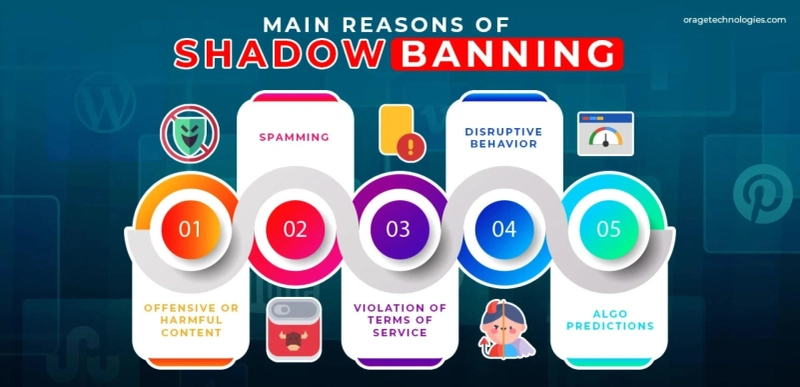
Shadow banning is not random. Most common instances are caused by:
- Offensive Content: Hate speech, bullying, adult content, or misinformation.
- Spam: Posting too much, commenting too much, or use excessive hashtags.
- Violation of Terms: Breaking the platform rule.
- Distracting Behaviour: Trolling, aggressive disputes, or misuse of the report feature.
- Significant Risk/AI Prediction: AI indicating risk based on previous conduct.
- Bots Behaviour: Accounts that operate like a bot.
The Debate Surrounding Shadow Banning
Shadow banning incites heated debates because of its covert nature. The two issues at play are:
- Lack of Transparency: Because there is no notification of shadow banning, users are often confused and don't trust the platform.
- Bias: Users claim they are being targeted without merit and algorithmic bias appears to be at play.
- Censorship: Some view shadow banning as a form of censorship that violates their free speech, regardless of the need for moderation.
- AI Oversight: Automated decisions about banning a user do not identify who is responsible for the ban.
- Impact on Creators: The reduced engagement that comes with shadow banning can affect a creator's revenue and growth.
How to Identify Shadow Banning
Platforms don't issue a notice about shadow banning, however here are some clues to watch for:
- Engagement Drop: Sudden, unexplained drops in likes, comments, or views.
- No Hashtags: Posts will not appear in hashtag searches, even by people who do not follow you.
- Missing-Follower Inaction: Your followers strangely never see your content in their feed or they think that you are inactive.
- Comment Dead Zone: You comment on other users posts, and no one replies to your comment.
- Analytics Discrepancy: You see on your analytics platform that you're regularly getting engagement, but their engagement drops off for random weeks (you did not stop posting).
If you experience multiple indicators at once, you could be shadow banned.
Which Platforms Employ Shadow Banning?
All platforms appear to have different ways of describing shadow banning (let's call it "content suppression"), which they will usually attribute to usually violating the policy or rules by posting spamming content. Here's a brief description of what each platform does:
- Instagram: Uses flags to suggest rule-breaking, illegal, or suggestive content, and then you could miss certain search results.
- Facebook: Ads limitations based on narrowed visibility through questionable post links that are controversial or repeated.
- Reddit: Shadow banned rule-breakers until 2015 when it changed policy to suspensions with notifications.
- YouTube: Determines viewability before search visibility to content, which is opposite shadow ban.
- Twitter: Twitter uses visibility filtering to limit misrepresented spammy content or will hide misleading content.
- TikTok: Hides posts if the guidelines are violated, so if posted topic violates their community guidelines you will be hidden from the "For you" page.
An obvious way to lower your chances would be to not engage in risky content or to stop using banned hashtags.
How To Avoid Shadow Banning
The best method is to prevent a shadow ban. To reduce your chances of being shadow banned:
- Follow The Guidelines: Follow the community guidelines for whatever platform you are on.
- Limit Spamming: Don't spam by overpoting or using automation requests.
- Use Appropriate Hashtags: Don't use hashtags that aren't relevant, or banned hashtags.
- Be Copyright Compliant: Don't post someone else's material without permission, or if copyrighted.
- Don't Post Controversial Content: Don't post illegal content, or really divisive topics.
- Moderate Follow/Unfollow Rates: Don't mass follow people (new) for followers.
- Don't Spam with Clickbait: Don't put clickbait titles or make misleading content.
- Create an Authentic Community of Follows: Create genuine relationship with your audience, the content they want.
- Check Performance: Be sure to check how content is performing often.
Remember to keep your content quality high and diversify your platforms, if you are shadow banned it is not permanent as with any platform feed / algorithm adjustment.
What to Do If You're Shadow Banned
If you suspect you have been shadow banned, you can attempt to address the situation in the following ways:
- Pause Posting: Stop posting content for between 48-72 hours to reset the algorithm.
- Review Rules: You can cleanse your account for missed violations.
- Clean Up Content: Remove any posts that were flagged, and take action to edit out violations on your posts.
- Change Hashtags: You can try to test new, relevant hashtags.
- Contact Support: You can contact customer support for the platform; the quality of the help will vary from platform to platform.
- Revive your engagement: Encouraging your followers to engage with your brand authentically will help start to rebuild the algorithm.
What Should You Remember
Shadow banning tactics provide balance between moderation, abuse, and free expression to the platform; and the platform will see this trend as necessary. Creators will see shadow banning as hindrance and an obstacle to keep their audiences engaged. Remaining aware of the issue and acting strategically will keep your account active and engaging, while being creative while still talking about your brand.