



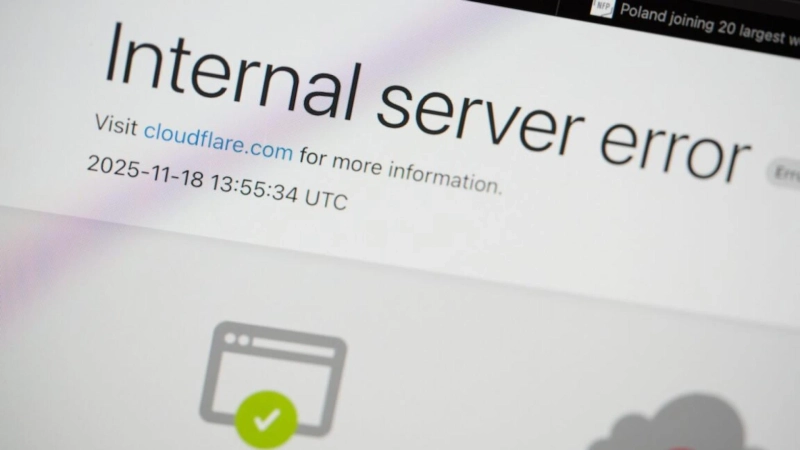
The Cloudflare outage sparked widespread speculation about cyberattacks and DDoS incidents. For many users and security teams, the sudden failure of critical infrastructure raised immediate concerns about malicious activity. In reality, this outage was the result of a configuration bug, not an attack. Understanding these nuances is essential for security teams and IT professionals to correctly assess risk and respond effectively.
Initial Fears: DDoS and Cyberattacks
When a major internet provider fails, the instinct is often to assume a cyberattack. Large-scale downtime can resemble Distributed Denial of Service (DDoS) events:
- Surge in error messages and failed requests
- Intermittent connectivity across platforms
- Visible website outages on global services like ChatGPT, X, and Canva
Security teams initially feared the worst, triggering emergency response protocols. Cloudflare quickly clarified that there was no evidence of malicious activity and that the Cloudflare Outage was caused by an internal configuration issue.
Not All Outages Are Malicious
Many outages are due to internal errors rather than attacks. In this case:
- A malformed feature file in Cloudflare’s bot management system caused cascading failures.
- Edge nodes entered restart loops, affecting traffic handling globally.
- Systems that protect websites from attacks (WAF, bot mitigation) inadvertently created service disruptions.
Recognizing that not all failures are malicious helps security teams avoid unnecessary panic and focus on root-cause analysis. Leveraging AI-ML solutions and predictive analytics technologies can help differentiate between actual threats and configuration errors.
Security Systems as Risk Vectors
Ironically, security-oriented systems themselves can introduce risk when misconfigured:
- Bot management and WAF rules may crash if feature files exceed size limits.
- Automated filtering and rate-limiting mechanisms can trigger restart loops.
- Over-reliance on a single provider’s security services increases exposure to outages.
Security teams must understand that their protective tools are not infallible. Monitoring and testing failover scenarios are critical.
Best Practices When Security Providers Fail
- Redundant Systems: Maintain backup DNS, CDN, and security providers where feasible. Multi-provider strategies reduce single points of failure.
- Fail-Safe Configurations: Ensure bot management and firewall rules are tested under stress to prevent self-inflicted outages.
- Monitoring & Alerts: Use anomaly detection, logging, and data analytics to detect unusual behavior, whether malicious or accidental.
- Incident Response Playbooks: Have clear procedures when upstream security providers fail, including communication plans and rollback strategies.
- Periodic Review: Regularly audit security policies and dependencies to identify potential vulnerabilities within protective systems themselves.
Teams leveraging AI business solutions, machine learning services, and NLP solutions can enhance threat detection while also modeling safe failover responses.
Conclusion
The Cloudflare outage illustrates that not all internet disruptions are attacks. Misconfigurations in critical security layers can inadvertently become risk vectors. For security teams, the key lessons are:
- Avoid assuming malicious intent for every outage.
- Build redundancy and fail-safes into security infrastructure.
- Test and monitor security systems as rigorously as production services.
- Use intelligent analytics and AI-powered monitoring to distinguish between threats and internal errors.