




SEBI and Its Role in Financial Markets
- What is SEBI?
The Securities and Exchange Board of India (SEBI) is the apex regulator of securities markets in India. Established in 1988 and given statutory powers in 1992, SEBI ensures the financial market operates fairly, efficiently, and transparently.
- SEBI’s Regulatory Mandate
- Protect investor interests
- Promote and regulate the securities market
- Enforce compliance among market participants
- Why SEBI Certification Matters
In an era where misinformation and financial scams are rampant, SEBI certifications act as a credibility stamp for analysts and advisors, ensuring their recommendations are professional and unbiased.
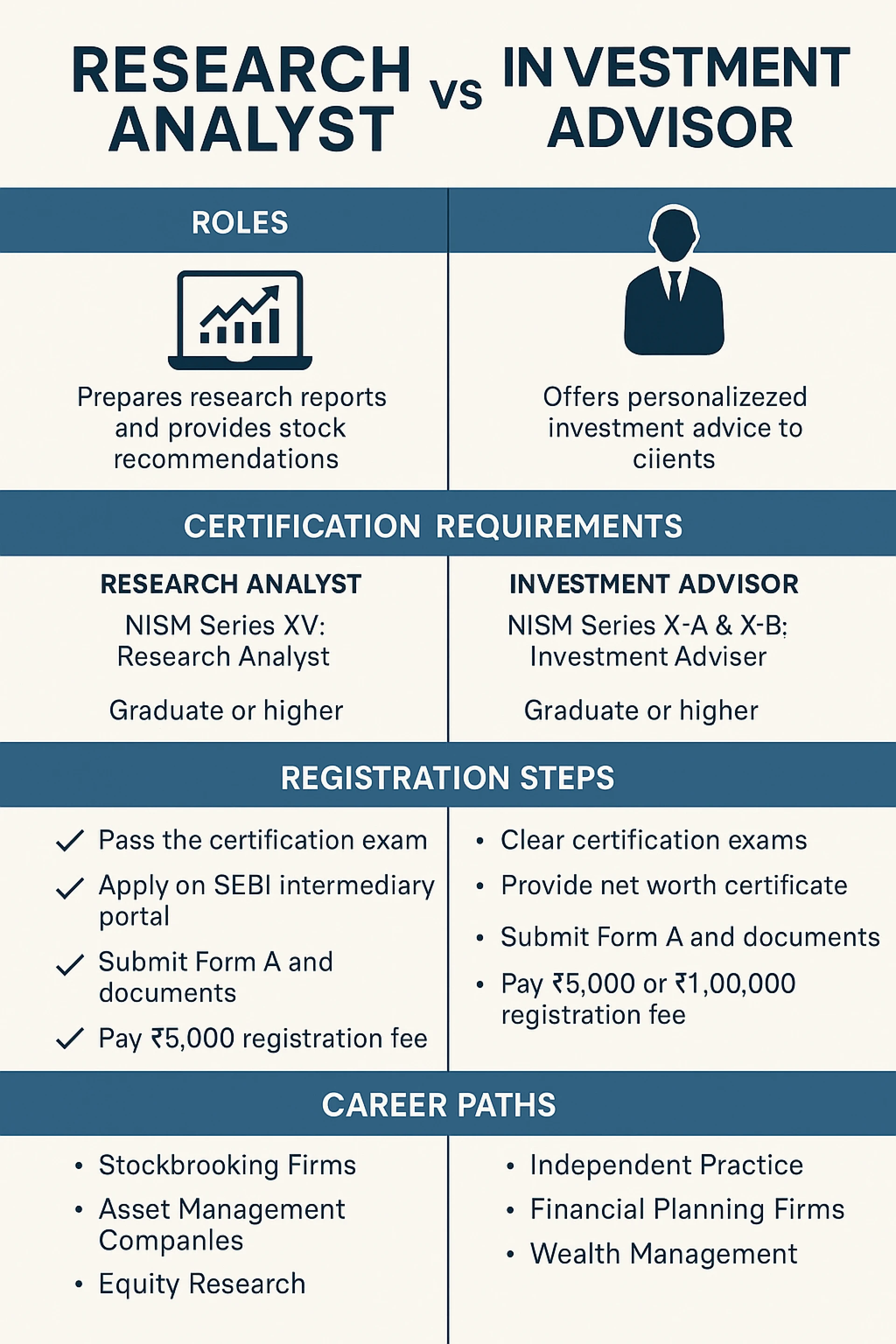
Difference: Research Analyst vs Investment Advisor
- Key Role Differences
- Research Analyst (RA): Analyzes financial data to provide research reports and investment insights.
- Investment Advisor (IA): Offers personalized investment advice based on a client’s financial goals.
- Regulatory Scope
- RAs cannot offer direct investment advice.
- IAs must adhere to a fiduciary standard and are liable for advice rendered.
- Who Needs Which Certification?
If you provide stock tips or publish reports, get RA certification. If you offer personal financial planning or portfolio advice, opt for IA registration.
Eligibility Criteria for Certification
- Educational Requirements
- Graduate in any discipline (minimum)
- Additional certifications (like CFA, MBA Finance) are advantageous
- Work Experience
- Minimum 1 year for RA
- Minimum 5 years (or relevant qualifications) for IA
- Other Prerequisites
- Must clear NISM exams
- No criminal or financial fraud history
Benefits of Being SEBI Registered
- Builds credibility with investors
- Complies with legal regulations
- Enables broader career opportunities
- Provides access to institutional clients
- Ensures transparent and ethical practices
Step-by-Step Guide to Become a SEBI Registered Research Analyst
- Pass the NISM Series XV (Research Analyst) Exam
- Create a login on SEBI’s intermediary portal
- Fill and submit Form A
- Upload required documents
- Pay registration fee of ₹5,000
- Await approval and license issuance
Step-by-Step Guide to Become a SEBI Registered Investment Advisor
- Clear NISM Series X-A & X-B Exams
- Apply via SEBI intermediary portal
- Submit net worth certificate (₹5 lakh for individuals)
- Upload Form A with relevant documents
- Pay ₹5,000 (individual) or ₹1,00,000 (non-individual)
- Get license post verification
Exams and Certifications Required
RoleRequired ExamDurationValidityResearch AnalystNISM Series XV2 hours3 yearsInvestment AdvisorNISM Series X-A & X-B4 hours total3 years
Documentation Required for SEBI Registration
- PAN and Aadhaar card
- Educational degree certificate
- NISM certification
- Passport-sized photograph
- Net worth certificate (IA only)
- Self-declaration of clean record
Compliance Requirements Post Certification
- Maintain client interaction records
- Disclose potential conflicts
- File annual compliance reports
- Undergo periodic audits
Costs Involved in SEBI Certification
ItemRAIANISM Exam Fee₹1,500₹3,000SEBI Registration₹5,000₹5,000 (individual)Renewal (every 5 years)₹5,000₹5,000 – ₹10,000Audit & Compliance₹5,000+ annually₹10,000+ annually
Common Mistakes to Avoid During Registration
- Submitting expired NISM certificate
- Incomplete document upload
- Ignoring audit compliance
- Not maintaining net worth balance (for IA)
SEBI Code of Conduct for Analysts & Advisors
- Prioritize investor interest
- Disclose any conflict of interest
- Avoid misleading claims
- Maintain record of advice offered
Violations can lead to penalties, suspension, or blacklisting.
Challenges Faced by SEBI Certified Professionals
- Building trust among retail clients
- Staying updated with SEBI circulars
- Adapting to evolving compliance needs
- Growing clientele in competitive markets
Career Opportunities Post Certification
- Financial institutions (mutual funds, brokerages)
- Independent consultancy
- Corporate advisory roles
- Online investment platforms
- Financial planning firms
SEBI registration significantly enhances employability and career growth.
FAQs on SEBI Registered Research Analyst & Investment Advisor Certification
- Can I be both RA and IA simultaneously?
Yes, but you need to apply for both certifications separately and comply with both regulations.
- How long is the NISM certificate valid?
Most NISM certifications are valid for 3 years. You must renew before expiry.
- Is SEBI certification mandatory to give stock tips online?
Yes, giving tips or publishing research without SEBI registration is punishable under law.
- What is the minimum investment for an IA?
Individual IAs must show a net worth of ₹5 lakh via a CA-certified statement.
- Can I practice independently after registration?
Yes, you can offer freelance advisory services or launch your own practice.
- How long does SEBI take to approve registration?
The process usually takes 2 to 3 months, depending on documentation and verification.
Conclusion: Building a Credible Financial Career
Becoming a SEBI Registered Research Analyst or Investment Advisor not only builds your credibility but also opens doors to a highly respected financial career. With the increasing demand for trustworthy advice, now is the right time to take this professional leap and align yourself with SEBI’s regulatory standards.