



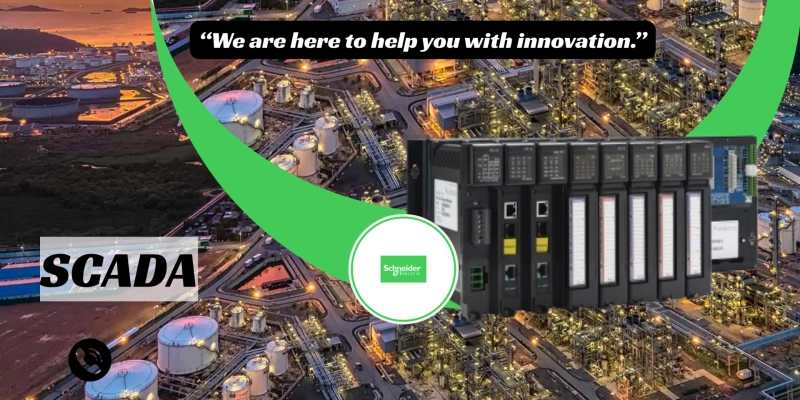
In Thailand's rapidly developing industrial landscape, from manufacturing plants in the Eastern Economic Corridor to power generation facilities across the country, efficiency and control are paramount. Businesses are constantly seeking ways to optimize operations, reduce downtime, and make smarter, data-driven decisions. This is where a SCADA system, or Supervisory Control and Data Acquisition, plays a transformative role. It is the invisible nervous system that allows modern industries to monitor and manage complex processes from a single, centralized location.
A SCADA system is a sophisticated combination of hardware and software designed to collect real-time data from a facility’s various devices and equipment, process that information, and then present it in an intuitive, visual format for human operators. This empowers them to not only supervise an entire operation from a control room but also to issue commands and make adjustments remotely. It is a fundamental technology that has revolutionized how industries in Thailand and worldwide maintain operational efficiency and safety.
What a SCADA System Is and How It Works
At its core, a SCADA system provides a high-level overview and control of industrial processes, often across vast geographical areas. It is an architecture that links the field-level equipment to a central control room, enabling operators to "supervise" and "acquire data" from a safe and convenient location.
The Four Main Components
A typical SCADA system consists of four key components that work in synergy to achieve remote monitoring and control.
- Human-Machine Interface (HMI)
This is the graphical user interface that allows human operators to interact with the system. It displays real-time data in a visual format, such as animated diagrams, graphs, and dashboards, giving a clear picture of the plant's operational status. Through the HMI, operators can also issue commands, such as opening a valve or starting a motor.
- Remote Terminal Units (RTUs) and Programmable Logic Controllers (PLCs)
These are the microcomputers that act as the eyes and hands of the SCADA system in the field. RTUs and PLCs are connected to sensors and actuators (e.g., motors, valves, switches) on the equipment. They collect data (like temperature, pressure, and flow rate) and send it to the central computer, and they also receive commands from the control room to control the equipment.
- Communication Infrastructure
This is the network that connects the RTUs and PLCs to the supervisory system. It can be a combination of wired and wireless technologies, such as fiber optic cables, radio signals, or cellular networks. A robust and secure communication network is essential for transmitting data reliably and in real time.
- Supervisory System
This is the central computer system that runs the SCADA software. It's responsible for gathering all the data from the RTUs and PLCs, processing it, storing it in a database (historian), and then presenting it to the operator via the HMI. The supervisory system also manages alarms, logs events, and runs analytics to provide valuable insights.
SCADA's Impact on Modern Industries in Thailand
SCADA systems are not limited to a single industry. Their ability to provide real-time data and remote control makes them invaluable across a wide range of sectors in Thailand.
1. Power Generation and Utilities
In the power sector, SCADA is vital for monitoring and controlling power plants, electrical substations, and the vast network of transmission lines. Operators can monitor voltage, current flow, and circuit breaker status from a central control room. This allows for quick detection of faults, helps prevent blackouts, and optimizes the distribution of power to ensure a stable and reliable supply across the country.
2. Water and Wastewater Management
SCADA systems are essential for managing Thailand's water treatment and distribution networks. They monitor water flow, pressure, and quality in real time, and can automate processes like the addition of chemicals for purification. This ensures that a clean and safe water supply is consistently delivered to homes and businesses, and that wastewater is treated efficiently and responsibly.
3. Manufacturing and Production
From automotive factories to food and beverage production, SCADA systems are at the heart of modern manufacturing. They monitor the entire production line, from the speed of a conveyor belt to the temperature of a mixing tank. This allows plant managers to identify bottlenecks, optimize production schedules, and ensure that products are being made to a consistent quality standard. Alarms can be set to notify operators immediately if a machine malfunctions, allowing for a swift response that minimizes downtime.
4. Oil and Gas
For the oil and gas industry in Thailand, SCADA systems are used to monitor and control pipelines, refineries, and offshore platforms. They can detect leaks, monitor pressure and flow rates, and even automate emergency shutdowns in the event of a critical failure. This is crucial for both operational efficiency and for preventing environmental and safety hazards.
The Evolution of SCADA: From Monolithic to Modern
The history of SCADA is a story of continuous innovation. The first generation of SCADA systems in the 1960s were monolithic, with each system being a standalone entity that communicated with its own set of RTUs. The rise of networking in the 1980s led to distributed systems, where multiple control stations could exchange data. Today, modern SCADA systems are highly sophisticated, leveraging advanced technologies to provide even greater value.
Leveraging Cloud Computing and IoT
Modern SCADA systems are moving beyond the traditional closed-loop networks. They now integrate with cloud computing and the Internet of Things (IoT) to provide greater flexibility and data-driven insights.
- Cloud-Based SCADA
By hosting the supervisory system in the cloud, businesses can access their SCADA data from anywhere in the world, on any device. This is particularly useful for managers who need to monitor operations across multiple facilities in different locations. It also reduces the need for expensive on-premise servers and makes the system more scalable.
- Integration with IoT
The Internet of Things is blurring the lines between the digital and physical worlds. Modern SCADA systems can now integrate with a wider range of smart sensors and devices, providing even more detailed data from the field. This allows for predictive maintenance, where the system can analyze data to predict when a piece of equipment is likely to fail, enabling maintenance to be performed proactively and before a costly breakdown occurs.
Conclusion
SCADA systems are a fundamental and indispensable technology that powers modern industries in Thailand. By providing a clear, real-time overview of complex processes, they allow businesses to enhance efficiency, reduce costs, and ensure a safer working environment. From the energy sector to manufacturing and water treatment, the ability to collect, analyze, and act on data remotely is a game-changer. As technology continues to evolve, with the integration of cloud computing and IoT, SCADA systems will only become more powerful and essential for driving innovation and sustainable growth across the country's industrial landscape.
FAQs
1. What is the main difference between a SCADA system and a DCS?
The main difference lies in their scope. A SCADA system is designed for high-level, supervisory control of large-scale industrial processes, often spanning across wide geographical areas. A Distributed Control System (DCS), on the other hand, is designed for localized, intricate control of a single manufacturing plant or a specific process within a single facility.
2. Is a SCADA system hard to use?
No, modern SCADA systems are designed with user-friendly HMIs that make them intuitive to operate. The graphical interfaces are often customized to reflect the specific process being monitored, making it easy for an operator to quickly understand the status of a system and respond to alarms without needing to be physically on-site.
3. What kind of data can a SCADA system collect?
A SCADA system can collect a wide variety of data from sensors and field devices. This includes analog data like temperature, pressure, and flow rates, as well as digital data like the on/off status of a motor or a switch. It also logs events, alarms, and operator actions to create a detailed historical record of operations.
4. Are SCADA systems secure?
Cybersecurity is a significant concern for any modern control system. Reputable SCADA systems are built with robust security features, including network segmentation, firewalls, and user authentication, to protect against unauthorized access and cyber threats. Regular security audits and updates are crucial for maintaining a secure system.