



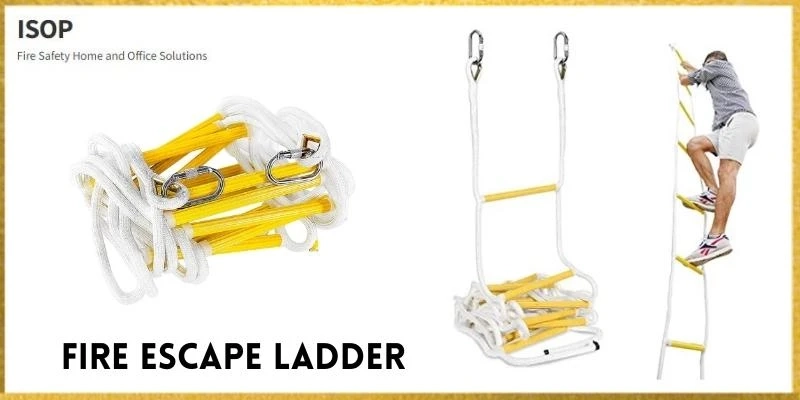
As a result of urbanization, high-rise structures are constructed. It is also critical that skyscrapers be built in such a manner that they fulfill all safety criteria. A fire escape must be provided in the case of an emergency or perhaps a fire hazard. In the case of an emergency, one of the most common options for safe emergency evacuations and fire escapes is the fire escape ladder.
There are two types of exits available to the housing complex: vertical and horizontal. This exists during an emergency and serves an important purpose. This article will tell you everything you want to know about the fire escape ladder 2 stories.
What is a Fire Escape Ladder?
A fire escape is a type of backup exit that is often positioned on the property\'s outside or, in rare cases, inside but distinct from the major components of the structure. It serves as just an exit route in the case of a fire or even other emergencies that renders the stairwells of a building unworkable.
Having just said, every building should include a fire escape ladder so that inhabitants may safely depart in an emergency. Because urbanization has necessitated the construction and design of structures in compliance with the laws and regulations, the structure should be suitably planned and constructed in compliance with the applicable fire safety criteria.
Key characteristics of residential fire escape ladders
Consider the following features when purchasing an escape ladder:
- Length. Standard fire escape ladder lengths are 15 feet & 25 feet. Choose the length according to the story the fire escape ladder will serve.
- Strength. A decent fire escape ladder must be able to withstand weights of up to 1,100 pounds.
- Size. Check that the ladder will fit in the window where it will be utilized. Some types are adjustable, but before you go buying, measure the width of the windows.
- Ease of use. Try out several models to find which one is the most user-friendly. In the case of a fire, you\'ll need to move swiftly. Therefore those who unfold rapidly have an edge.
- Standoffs. No, we\'re not referring to Wild West shootouts! Standoffs are protuberances that keep the escape ladder far from the house\'s wall, which is vital while a fire is heating that wall. They also aid in the stability of the ladder. Standoffs are included in good ladders.
- Anti-slip. Anti-slip rungs are essential for toddlers and people with mobility challenges.
Safety Tips:
- Fire escape ladders 2 stories shouldn\'t be utilized to escape from floors above the third story.
- Each occupied area on the second & third story just above the main level of the home should have an escape ladder.
- Buy escape ladders labeled by a widely known testing facility.
- Place escape ladders near windows where they may be rapidly accessed in an emergency.
- Make certain that everyone in your household understands where the fire escape ladders are kept.
- Before an emergency, inspect your escape ladder & read the manufacturer\'s instructions to ensure you understand how to use it.
- Practice erecting the ladder from a first-floor window to ensure that you can do it fast and accurately.
- Ensure that the place where the fire escape ladder will be utilized is easily accessible to all members of your household.
- If you install security bars on your windows, ensure they have emergency release devices within so they can be released swiftly in an emergency.
Understand how to use the fire escape ladder.
Don\'t sit back and relax after purchasing the ideal fire escape ladders. You must ensure that they are kept near the essential windows in each room that has one. Make certain that each allocated window opens so that everyone understands how to unlock & open those windows in an emergency.
You should also ensure that everyone in the family is familiar with how to use ladders. Under your supervision, young children should practice from a first-floor window. Include these practice sessions in a household fire drill.
It is never too late to create a family exit strategy for your house or to do annual fire drills. The more everyone trains for a probable fire emergency, the more adequately equipped they will be, and their reflexes in the event of a fire will indeed be quicker & much more automatic.
Conclusion:
A fire escape ladder is by far the most secure, effective, and widely utilized way of escape. An escape ladder could be utilized as a substitute option for fire escape when there is a lack of space, a limited budget, the property is aesthetically beautiful, or several escape routes are proposed.