



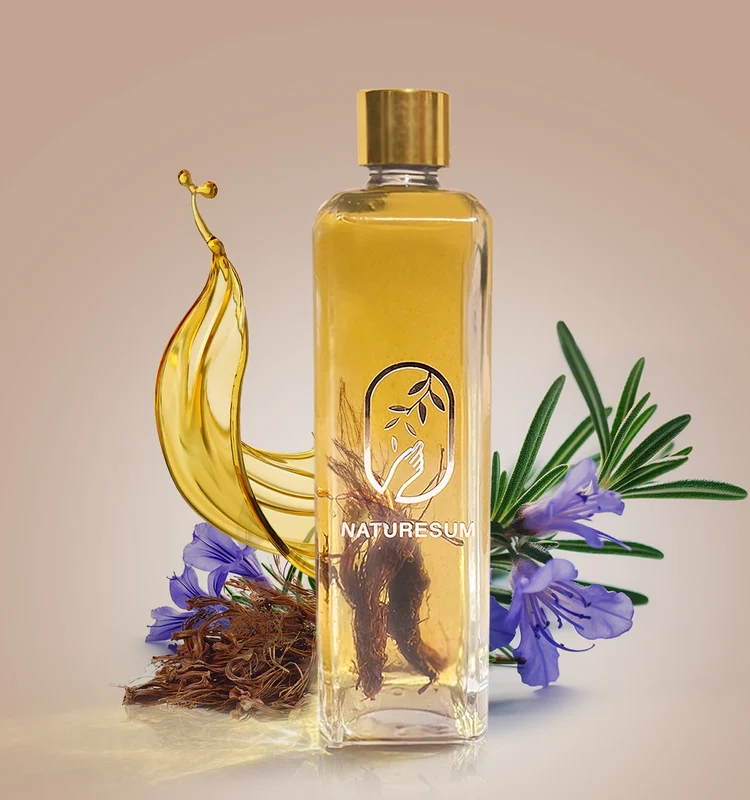
Rosemary and jatamansi oil for hair has become one of the most popular natural remedies, especially on social media, where thousands of users share their experiences using it to improve hair health and combat hair loss . But what is the truth behind the benefits of rosemary and jatamansi oil for hair? Is it really effective?
In this article, I analyse, from a dermatological and scientific perspective, the properties of rosemary and jatamansi oils for hair, their indications, and the scientific evidence supporting their effectiveness in the treatment of hair diseases.
What is rosemary and jatamansi oil?
Rosemary is an essential oil extracted from the leaves and flowers of the Rosmarinus officinalis plant , a perennial shrub that grows primarily in the Mediterranean region and sub-Himalayan areas. This oil is known for its medicinal properties and has been traditionally used to treat headaches, neuralgia, insomnia, and rheumatic diseases.
Its composition includes a unique combination of bioactive compounds such as:
- Rosmarinic acid and caffeic acid , with antioxidant properties.
- Camphor and cineole , known for their antimicrobial and anti-inflammatory effects.
- 12-methoxycarbotic acid , which also contributes to its therapeutic properties.
These characteristics make rosemary and jatamansi oil a versatile ingredient, especially for treating hair, as it can be applied locally to improve microcapillary circulation and combat oxidative stress, key factors in hair loss and other scalp conditions.
Why is rosemary and jatamansi oil used for hair?
Rosemary and jatamansi oil for hair has gained popularity due to the various benefits attributed to its natural properties. Natural products are in vogue, and many patients prefer them to traditional pharmaceutical treatments. This is also the case with other popular natural products such as shea butter , coconut oil, and rosehip oil , which are also used to regenerate and moisturize hair fibers.
The use of rosehip oil for hair is based on some of its properties when applied topically to the roots, on the scalp:
- Stimulates blood circulation in the scalp:
- Improving capillary microperfusion in the scalp can promote the delivery of nutrients to the hair follicles, helping to prevent hair loss and encouraging hair growth.
- Antimicrobial properties:
- rosemary and jatamansi oil fights fungi and bacteria that can affect the scalp, such as those responsible for dandruff or seborrheic dermatitis .
- Reduces inflammation:
- Anti-inflammatory compounds help soothe an irritated scalp, a factor that can influence hair loss.
- Protects against oxidative stress:
- Its antioxidants protect hair follicles from damage caused by free radicals, which can weaken hair over time and with age.
Thanks to these properties, rosemary and jatamansi oil for hair is considered a useful complement in the treatment of various hair conditions.
Scientific evidence for rosemary and jatamansi oil for hair
Although rosemary and jatamansi oil has been traditionally used for hair, recent studies have begun to support its benefits with more concrete data.
1. Comparison with minoxidil in androgenetic alopecia
A 2015 study compared rosemary hair oil with 2% minoxidil, a widely used treatment for androgenetic alopecia (common baldness) . After six months of use, both groups experienced a significant increase in scalp hair follicle density.
- The results were similar in terms of effectiveness, but the group that used rosemary and jatamansi oil experienced fewer side effects, such as scalp itching. This itching is usually caused by the excipients used.
- This suggests that rosemary and jatamansi oil for hair may be a natural and well-tolerated alternative to minoxidil in certain patients.
2. Alopecia areata and aromatherapy
Another study evaluated the effectiveness of a mixture of essential oils, including rosemary, lavender, thyme, and cedarwood oils, in patients with alopecia areata.
- In the group treated with aromatherapy, 44% of patients showed improvement, compared to 15% in the control group that only used carrier oils (placebo or vehicle).
- Although the results are promising, the combination of oils makes it difficult to determine the exact role of rosemary and jatamansi oil in this case.
- Alopecia areata is a type of hair loss in areas that usually requires medical treatment and consultation with a dermatologist specializing in hair and scalp conditions.
3. Seborrheic dermatitis and dandruff
Rosemary and jatamansi oil has also been studied for its antifungal properties against Malassezia species , which are responsible for dandruff and seborrheic dermatitis.
- Studies reviewed between 2000 and 2020 conclude that essential oils, such as rosemary and jatamansi oil, can be an effective alternative to conventional treatments for dandruff, thanks to their ability to inhibit the formation of microbial biofilms.
- rosemary and jatamansi oil for hair can be found included in anti-dandruff lotions and shampoos.
Indications for rosemary and jatamansi oil for hair loss in cases of alopecia
Jatamansi oil for hair growth can be a useful tool in managing various hair conditions, according to the reviewed studies. Here we review its main indications:
1. Androgenetic alopecia
Androgenetic alopecia, commonly known as male pattern baldness, is one of the most frequent causes of hair loss. rosemary and jatamansi oil, by improving microcapillary circulation and reducing inflammation, can be effective in the early stages of this condition.
Although it does not replace medical treatments, it can be a useful complement for people looking for more natural options or who do not tolerate the side effects of drugs.
2. Alopecia areata
In this local autoimmune disease of the hair follicle, rosemary and jatamansi oil may help reduce inflammation and stimulate hair follicles.
While it is not a primary treatment, it can be used as a complement to traditional therapies.
3. Seborrheic dermatitis and dandruff
Dandruff and seborrheic dermatitis, conditions related to fungi such as Malassezia , can benefit from the antimicrobial effect of rosemary and jatamansi oil.
Applying it regularly can reduce symptoms such as itching, inflammation, and flaking of the scalp.
4. Centrifugal central alopecia
A recent study found that rosemary and jatamansi oil is as effective as 2% minoxidil in this specific form of alopecia that mainly affects African-descended women and is a scarring alopecia.
In addition, patients showed better adherence to treatment with rosemary and jatamansi oil due to the lower incidence of side effects.
This type of alopecia is very rare in our environment and, being scarring, always requires immediate attention from a dermatologist, even if natural remedies are used.
How to use rosemary and jatamansi oil for hair
Rosemary and jatamansi oil can be applied in several ways to improve the health of hair follicles:
- Scalp massages: Mix a few drops of rosemary and jatamansi oil with a carrier oil (such as coconut or jojoba) and massage the scalp for 5-10 minutes to stimulate blood circulation.
- Add it to your anti-hair loss shampoo : Add a few drops to your regular shampoo to benefit from its properties with every wash. However, the contact time with the follicle is much shorter, and therefore its effectiveness is much lower.
- Nighttime treatment: Apply the oil mixture to your scalp before going to sleep and wash it out in the morning.
- Aromatherapy: Mixed with other essential oils such as coconut oil for hair or thyme, it can be helpful in specific cases.
Precautions
Although rosemary and jatamansi oil is safe for most people, it's important to keep in mind some precautions:
- Do not apply it directly to the scalp without diluting it, as it may cause irritation.
- Perform a test on a small area of skin before using to rule out allergic reactions.
- Consult a dermatologist if you have frank alopecia, pre-existing conditions, or are undergoing other treatments.
Conclusion
Rosemary and jatamansi oil for hair is a promising natural option for addressing various hair problems, from hair loss to dandruff. While current studies support its effectiveness in certain cases, such as androgenetic alopecia and seborrheic dermatitis, it remains important to incorporate it into a skincare plan supervised by a dermatologist, as it does not replace medical treatments.
At Naturesum , we can help you design the most suitable medical treatment for your hair health. Don't hesitate to contact us.